Tips
SPC Flooring: Is It Worth It? Pros and Cons
12 August 2026
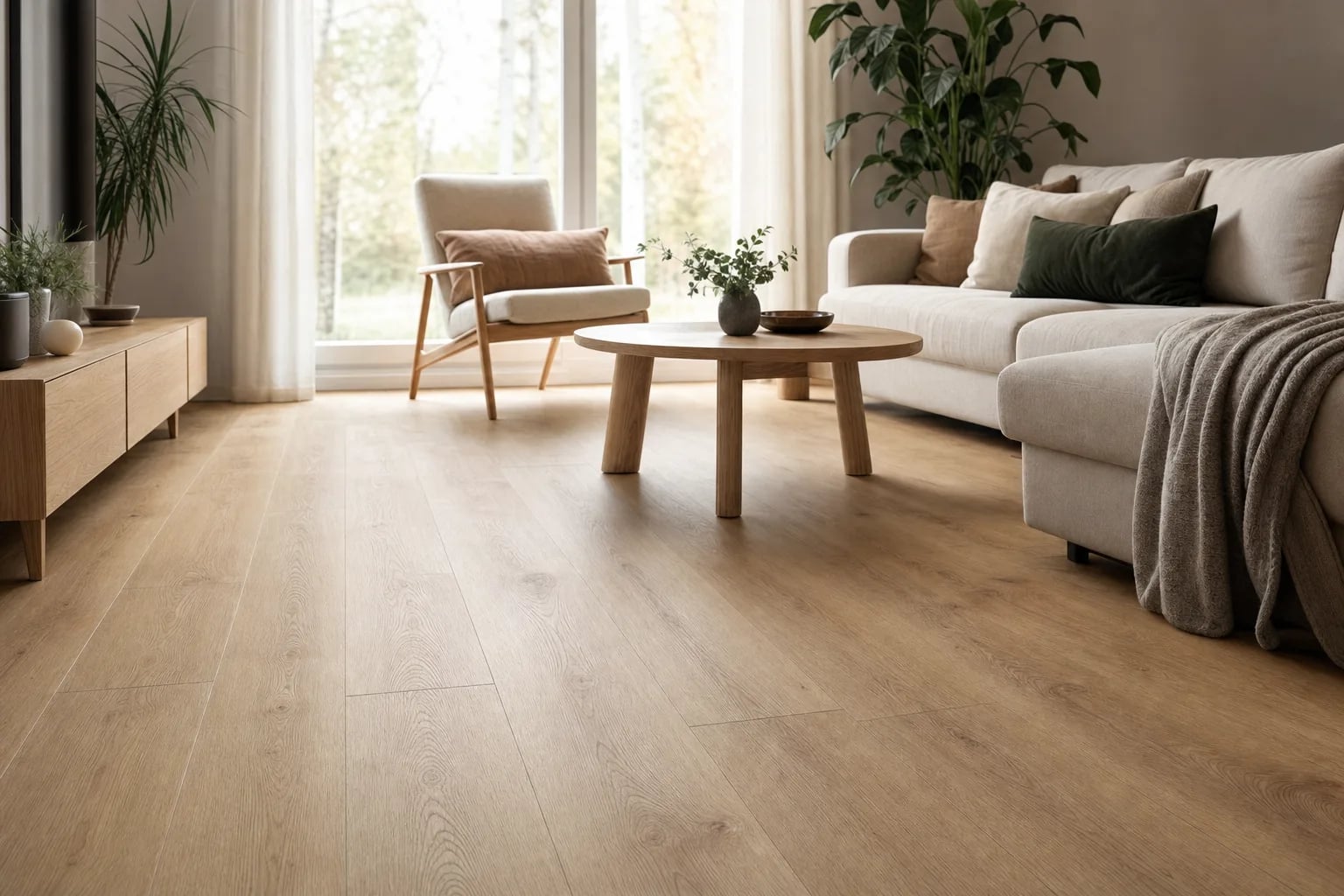
SPC flooring (Stone Polymer Composite) has, in just a few years, become one of the most popular flooring choices for homes and apartments. In the adverts it looks perfect: 100 % waterproof, tough, easy to install, convincingly wood- or stone-like. But is SPC really worth it in your case? In this honest guide we list every advantage and disadvantage without the marketing, with real technical figures, and say clearly who SPC suits — and who it doesn't.
What SPC flooring is and how it differs from "ordinary" vinyl
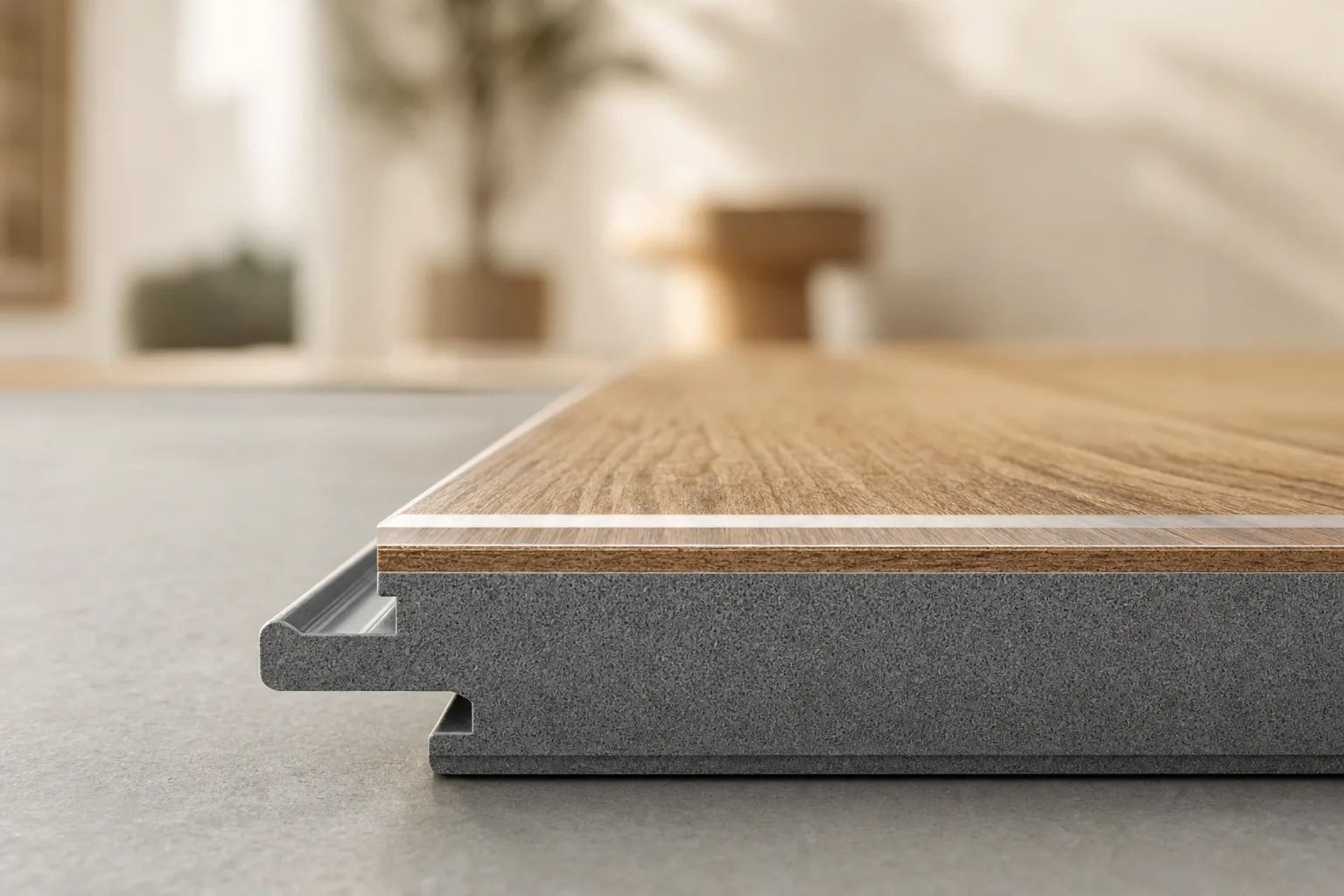
SPC is a rigid-core vinyl floor. Its core is made from a blend of limestone powder, PVC and stabilising additives, which makes it far harder and more stable than classic flexible vinyl. A typical SPC plank is built up of several layers: a protective UV lacquer, a transparent wear layer, a decorative design film (a wood or stone pattern), the solid SPC core and, very often, a pre-attached acoustic backing.
That is the key difference from flexible glue-down LVT vinyl: the SPC core barely expands or contracts as temperatures change, making it more reliable wherever the floor is exposed to heat or sunlight. If you want a deeper comparison, read our dedicated article SPC vs LVT vinyl or the complete vinyl flooring guide.
The advantages of SPC flooring
Let's start with why SPC has earned its reputation. These advantages are real, not marketing.
- 100 % waterproof. There is no wood fibre in the SPC core, so the boards don't swell or warp with moisture. That makes SPC ideal for kitchens, hallways, bathrooms, utility rooms and rooms with underfloor heating.
- The rigid core hides minor subfloor imperfections. Unlike thin flexible vinyl, which "copies" every bump in the subfloor, a rigid SPC plank bridges small irregularities. Many manufacturers allow up to 2 mm of unevenness per metre without extra levelling — which cuts preparation costs in a renovation.
- Resistant to scratches and dents. The dense stone-polymer core and a thick wear layer stand up well to everyday wear, pets' claws and light knocks. Quality SPC floors last 20–30 years.
- No glue needed — click system and DIY. Floating installation with interlocking joints lets an experienced fitter lay the floor quickly — and confident DIYers can even do it themselves, with no adhesives or heavy work.
- Suitable for underfloor heating. Thanks to its dimensional stability, SPC pairs beautifully with both water-based and electric underfloor heating. Just respect the manufacturer's surface temperature limit (usually up to 27–28 °C) and warm the system up gradually.
- Easy to care for. No waxing or lacquering required. Regular vacuuming and the occasional wipe with a well-wrung damp mop are enough. The dense, non-porous surface doesn't absorb stains.
- Realistic wood and stone designs. Modern digital printing and embossed textures reproduce oak, herringbone patterns or stone so convincingly you won't tell at first glance. Take the SPC Rio collection, for example, or the other herringbone collections in the full vinyl range.
The disadvantages of SPC flooring (honestly)
No salesperson likes talking about these, but the drawbacks are real. Here's what you should know before buying.
- Harder and cooler underfoot than LVT or wood. A rigid core means SPC isn't as "soft" as flexible glue-down vinyl or engineered wood. Standing on it for long periods feels firmer, and the surface is often cooler to the touch.
- Can feel cold without the right build-up. The limestone core doesn't insulate heat as well as wood does. The solution is underfloor heating or a quality acoustic/thermal underlay (many SPC planks come with a backing layer already attached).
- A thin wear layer means point indentation. The cheapest SPC floors have a thin wear layer (0,2–0,3 mm) and a lower-density core. Point loads — sharp stiletto heels, heavy furniture legs without pads, office-chair castors — can leave a dent. For a renovation with pets and children, choose at least a 0,5 mm (20 mil) wear layer.
- Not suited to an unshaded south-facing terrace or a conservatory with big temperature swings. Although SPC is more stable than LVT, intense direct sun and large temperature changes (in an unshaded conservatory, for instance) can eventually cause problems at the joints. In such spaces you must follow the manufacturer's recommendations and leave expansion gaps.
- A "plastic" feel compared with real wood. However realistic the designs, SPC is not wood underfoot or to the touch. For purists who value the feel and patina of natural timber, engineered oak flooring is the better choice.
- Cannot be sanded and refinished. Scratched or damaged parquet can be sanded and re-lacquered. The SPC wear layer is thin — damaged planks can't be sanded, they have to be replaced. It's therefore worth buying a few spare planks from the same batch.
- More expensive than laminate or cheap vinyl. Quality SPC costs more than laminate, though considerably less than natural wood or stone. Indicative prices are covered in our article on vinyl flooring prices.
SPC pros and cons in one table
| Criterion | Advantage | Drawback / what to check |
|---|---|---|
| Water resistance | 100 % — fine for bathrooms and kitchens | — |
| Comfort underfoot | Stable, solid surface | Harder and cooler than LVT/wood |
| Subfloor preparation | Tolerates up to ~2 mm/m of unevenness | Bigger irregularities still need levelling |
| Scratch resistance | Good with a thick wear layer | A thin (0,2 mm) layer wears faster |
| Underfloor heating | Suitable (up to ~27–28 °C) | Warm the system up gradually |
| Renewal | Individual planks are easy to replace | Can't be sanded like parquet |
| Price | Cheaper than wood/stone | Dearer than laminate and cheap vinyl |
What to look for when choosing: wear layer and thickness
The biggest mistake is picking the cheapest SPC and expecting top-tier performance. The two technical figures that matter most are the thickness of the wear layer and the overall thickness of the plank.
- 0,3 mm (12 mil) — the minimum for standard residential use without heavy traffic.
- 0,5 mm (20 mil) — recommended for families with children, pets and intensive use.
- 0,55 mm and above — for commercial spaces or very high-traffic areas.
Overall thickness is usually 4–6 mm; 5–6 mm gives better stability and comfort. Before you decide, it's worth ordering free samples so you can see the colour and texture in your own light.
Who SPC is worth it for — and who it isn't
SPC is worth it if:
- You're renovating a flat or house and want a waterproof, long-lasting floor throughout, kitchen and hallway included.
- You have underfloor heating — SPC works with it better than most alternatives.
- You have children, pets or heavy foot traffic and value practicality and easy care.
- Your subfloor isn't perfectly level, but the irregularities are small.
SPC is less worth it if:
- Maximum softness and warmth under bare feet matter most — consider glue-down LVT vinyl or engineered wood.
- You want the feel of real wood and the option to sand and refinish the floor later.
- You're fitting out an unshaded conservatory or a terrace with extreme temperature swings.
- Your budget is very tight and you're prepared to settle for basic laminate.
Related articles
- Vinyl flooring: the complete guide
- SPC vs LVT vinyl — what's the difference
- Vinyl or laminate — which to choose
- Vinyl flooring prices
- Vinyl wear layers: what the numbers mean
FAQ
Is SPC flooring really 100 % waterproof?
Yes. There is no wood fibre in the SPC core, so the plank itself won't swell or warp from water. Water can, however, seep through the joints down to the subfloor, so don't leave standing water on the floor for long, and keep proper expansion gaps at walls and pipes.
Is SPC flooring cold underfoot?
The SPC surface feels cooler to the touch than wood, because the stone-polymer core doesn't insulate heat. With underfloor heating or a quality underlay this drawback disappears and the floor feels pleasantly warm.
Is SPC suitable for underfloor heating?
Yes — thanks to its dimensional stability, SPC is one of the best floors for underfloor heating. Observe the manufacturer's surface temperature limit (usually up to 27–28 °C) and warm the system up gradually, especially the first time.
Can SPC floors be sanded if they get scratched?
No. Unlike parquet, the SPC wear layer cannot be sanded. The simplest fix for a badly damaged plank is to replace it, which is why we recommend buying a few spares from the same batch.
How does SPC differ from LVT vinyl?
SPC has a rigid stone-polymer core, so it is harder, more stable and more tolerant of subfloor imperfections. LVT is flexible, softer and warmer underfoot, but needs a flatter subfloor. For a full comparison, see our article SPC vs LVT vinyl.
How much does SPC flooring cost?
Guide prices for SPC depend on the wear layer, the thickness and the collection. You'll find current prices in the vinyl catalogue, and our article on vinyl flooring prices explains what shapes them.