Comparison · 10 min
Parquet or Tiles: Which Floor for Which Room?
2 September 2026
Looks and visual range
Quiet elegance and a look that does not date: both parquet and tiles offer that. Behind those shared qualities, though, sit two very different materials that behave in very different ways.
Warmth and lasting elegance — the case for parquet
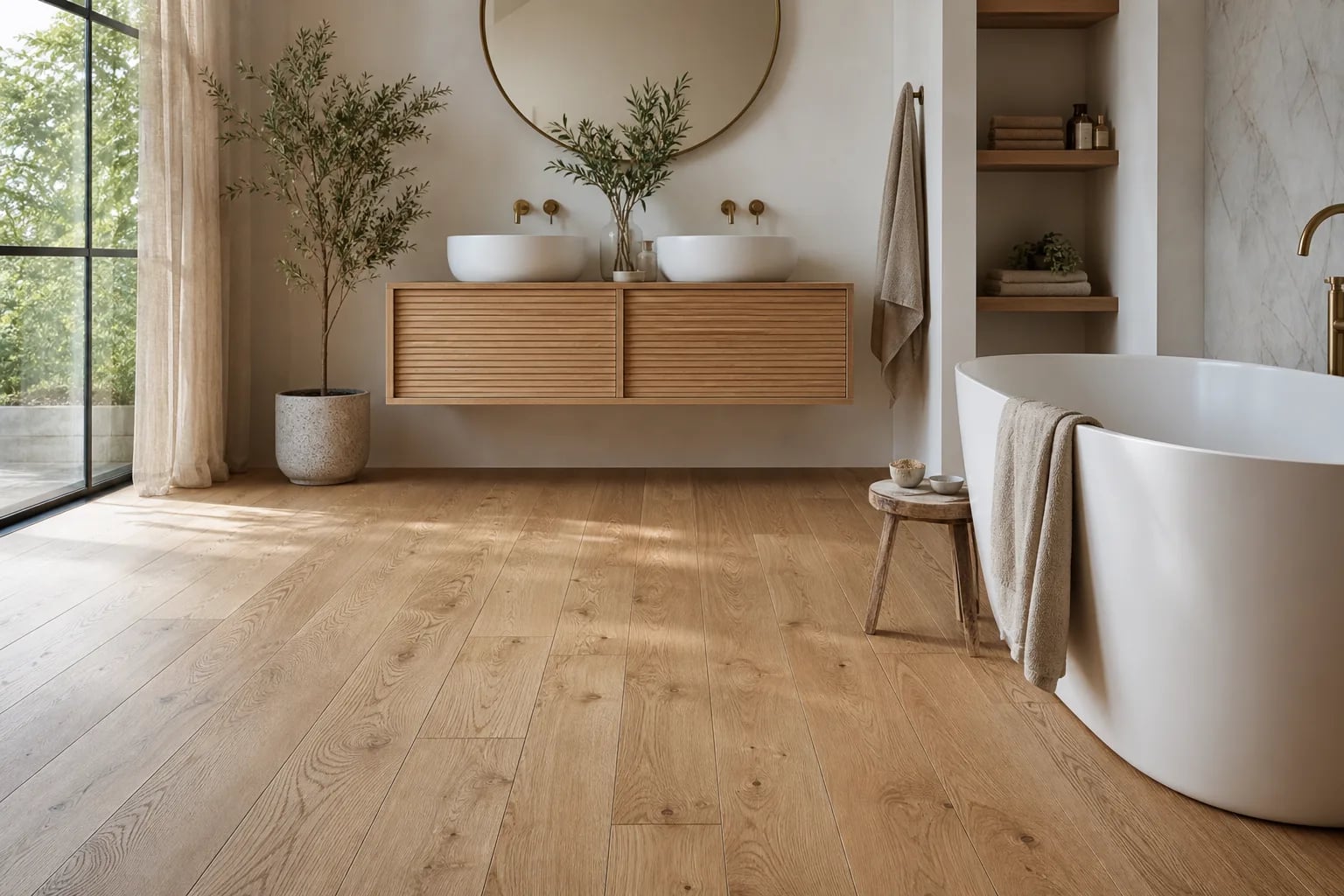
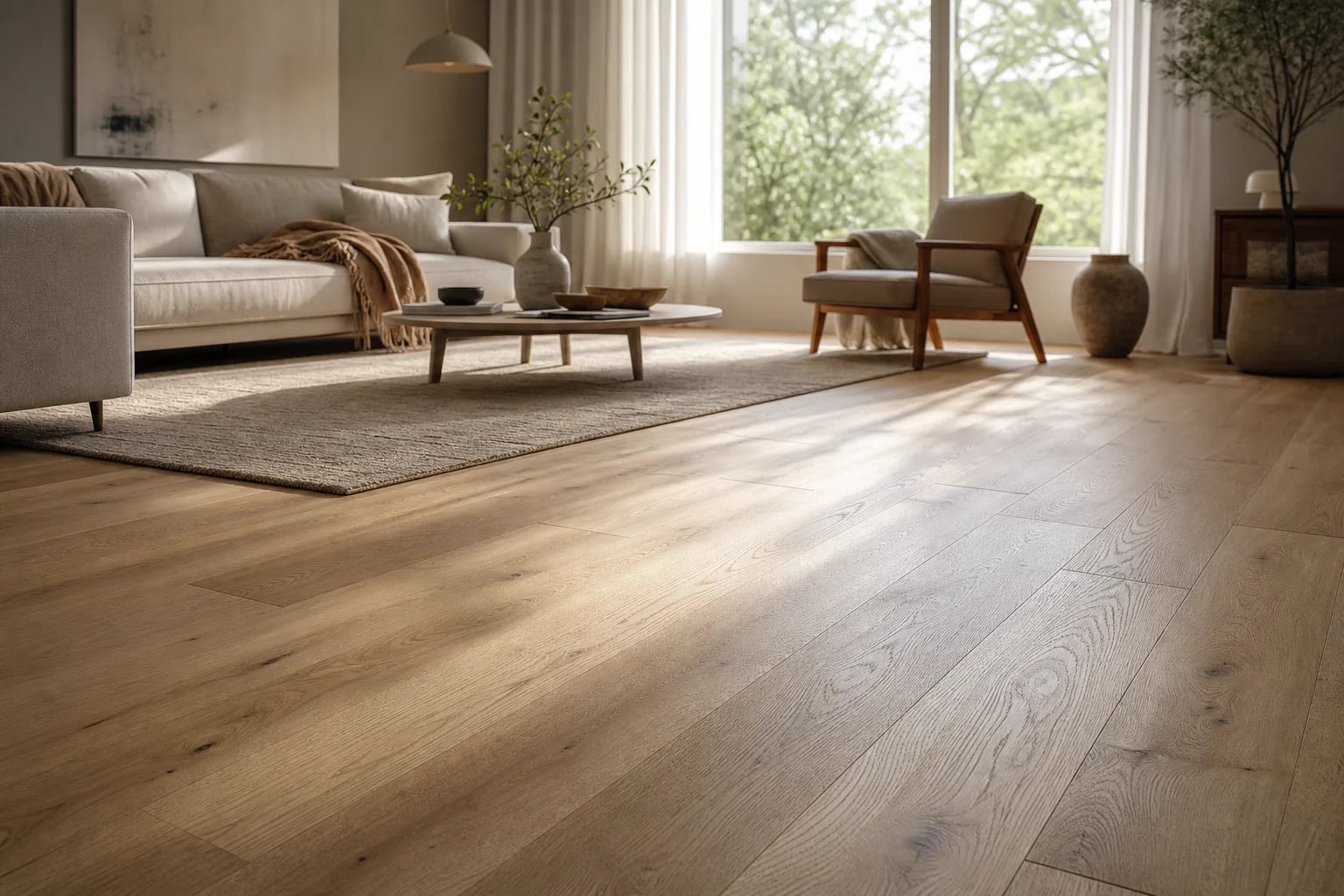
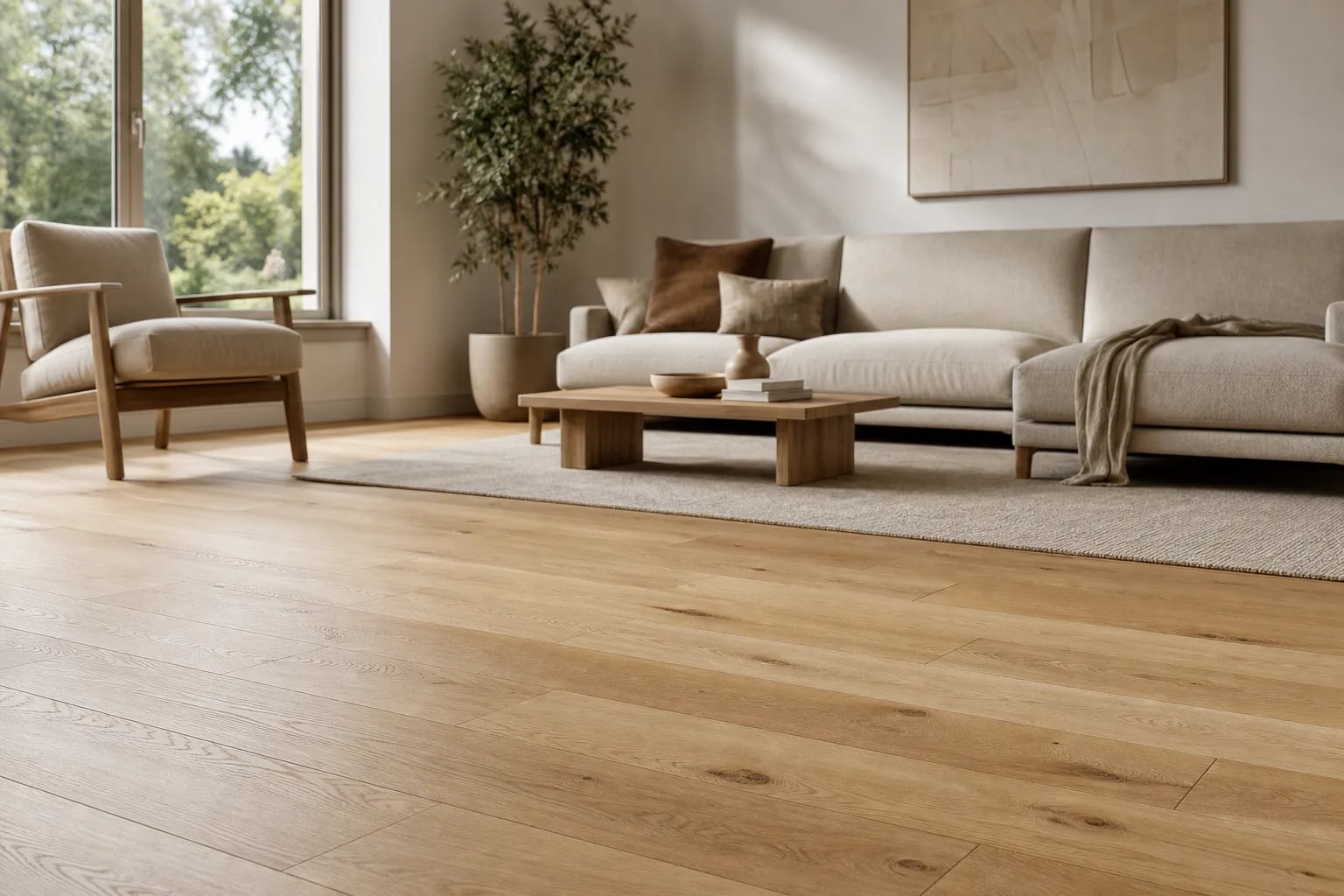
The range of species available in real wood is remarkable, from classic oak through to exotic timbers such as teak and jatoba. Every species has its own grain and colour, which turns the floor into a piece of nature and lets you shape the interior around your own taste.
The most popular species for parquet: oak, walnut, maple, cherry and beech. Oak parquet has an article of its own in our journal.
Grading, finish and laying pattern
Grading describes how the boards are selected — how much colour contrast and how much knot and grain character is allowed through. It is the single biggest lever on whether a floor reads as lively and full of movement or calm and even. There is more on this in our guide “Oak parquet: everything you need to know”.
The surface finish is the next decision, and there are two main routes: oil, which emphasises the natural grain, gives a warm low sheen and lets the wood breathe, or lacquer, a hard-wearing protective film against wear and moisture. A detailed comparison is in our article on oiled versus lacquered parquet.
The laying pattern completes the picture: classic straight planks, herringbone, chevron or squares. Herringbone is covered in a separate article.
Versatility and function — where tiles are strongest
Tiles are the obvious answer for bathrooms, kitchens and any other room where moisture is part of daily life. Their second strength is design range: colours, patterns and textures in almost any combination. Our EndlessLove collection covers 8 rectified Italian porcelain tiles, from the cream-toned Polar through to the deep Empire.
Design options and laying patterns
Tiles are as versatile aesthetically as they are practically, from quiet neutrals to intricate patterns. The laying pattern sets the tone of the room: a traditional straight layout gives a clean, classic result; a diagonal layout makes the room feel wider; a mosaic layout creates a feature — ideal for a bathroom wall or a kitchen splashback.
Durability and lifespan
A good floor has to still be a good floor after years of daily use.
Parquet and the option to start again
Parquet — engineered or solid — is exceptionally durable, and its great advantage is that the surface can be sanded and resealed. Scratches, wear marks and minor damage can be taken out and the floor comes back looking fresh. Engineered parquet like ours lasts 20–30 years as standard, and 40+ with good care. There is more in our article on parquet care.
Tiles — nothing marks them
Tiles are equally known for longevity. They are highly resistant to wear, scratching and moisture. Porcelain tiles, like our EndlessLove collection, are particularly tough and suit heavily used areas — kitchen, bathroom and hallway. Well looked after, a tiled floor lasts decades or longer.
Partial repair: if a tile is damaged — a heavy object dropped on it can crack or chip the surface — that single tile can be replaced without touching the rest of the floor. Parquet does not work this way: it can be sanded, but a single board cannot simply be swapped out.
Caring for parquet and tiles
Parquet care
- Dust removal: vacuum regularly with a soft brush head — never a hard plastic nozzle, which leaves micro-scratches.
- Damp cleaning: a cloth or mop wrung out properly — damp, never wet.
- Stains: deal with them straight away, using a mild cleaner made for parquet rather than a strongly alkaline or acidic product.
- Refreshing: oiled parquet takes a coat of WOCA maintenance oil about once a year; lacquered floors every 5–7 years.
Our accessories section carries WOCA soap and oil — the original products from the Danish manufacturer. More detail in the parquet care article.
Tile care
- Regular vacuuming or sweeping — removes the grit and sand walked in from outside.
- Damp cleaning: a mop with a mild cleaner suited to tiles.
- Grout lines: grout picks up dirt and staining more readily than the tile itself — a grout brush (an old toothbrush does the job) keeps it clean.
- Stains: standard tile cleaners handle most of them. Take care with natural stone, which reacts badly to acidic products.
- Scratch prevention: soft pads and felts under furniture legs, so moving a chair or table does not mark the surface.
Installation and cost
Fitting parquet
Laying parquet takes skill and time, and the method depends on the type of floor:
- Full glue-down: the most stable option, and the right one for busy rooms and underfloor heating. As an indication, independent fitters across Europe quote in the region of €25–45/m² including labour, and rates differ considerably from country to country. We recommend a professional.
- Floating (click) installation: straightforward enough to do yourself with a click system and an acoustic underlay. Indicative fitter's rate: in the region of €15–25/m² including labour, again country-dependent.
Fitting tiles
- Conventional adhesive: the tiles are bedded in tile adhesive on a prepared, level substrate and the joints are then grouted. Indicative fitter's rate: in the region of €20–50/m² including labour, depending on country, tile format and pattern.
- Click tiles: rarely used in homes, mostly in exhibitions and temporary spaces. Indicative rate: in the region of €50–60/m². All of these are third-party fitting rates for guidance only, not our prices.
Underfloor heating: both parquet and tiles work over underfloor heating. Tiles conduct heat best — porcelain spreads warmth very evenly. Parquet needs to be fully glued down rather than floated. Full detail in our guide to parquet over underfloor heating.
Parquet or tiles — how to decide
Parquet
Parquet is a natural material, and it carries the warmth of wood both visually and underfoot. It asks for more care and is more sensitive to moisture, but nothing else gives a room quite the same feeling of home.
- ✓ Warm underfoot
- ✓ Can be sanded and renewed
- ✓ Adds value to the property
- ✗ More sensitive to moisture without the right preparation
- ✗ Needs more regular care
Tiles
Tiles are unquestionably tougher and simpler to look after. The trade-off is comfort: on warmth and acoustics they fall behind.
- ✓ 100 % waterproof
- ✓ Extremely durable (50+ years)
- ✓ Easy to maintain
- ✗ Cold underfoot without underfloor heating
- ✗ Noisier — acoustically hard
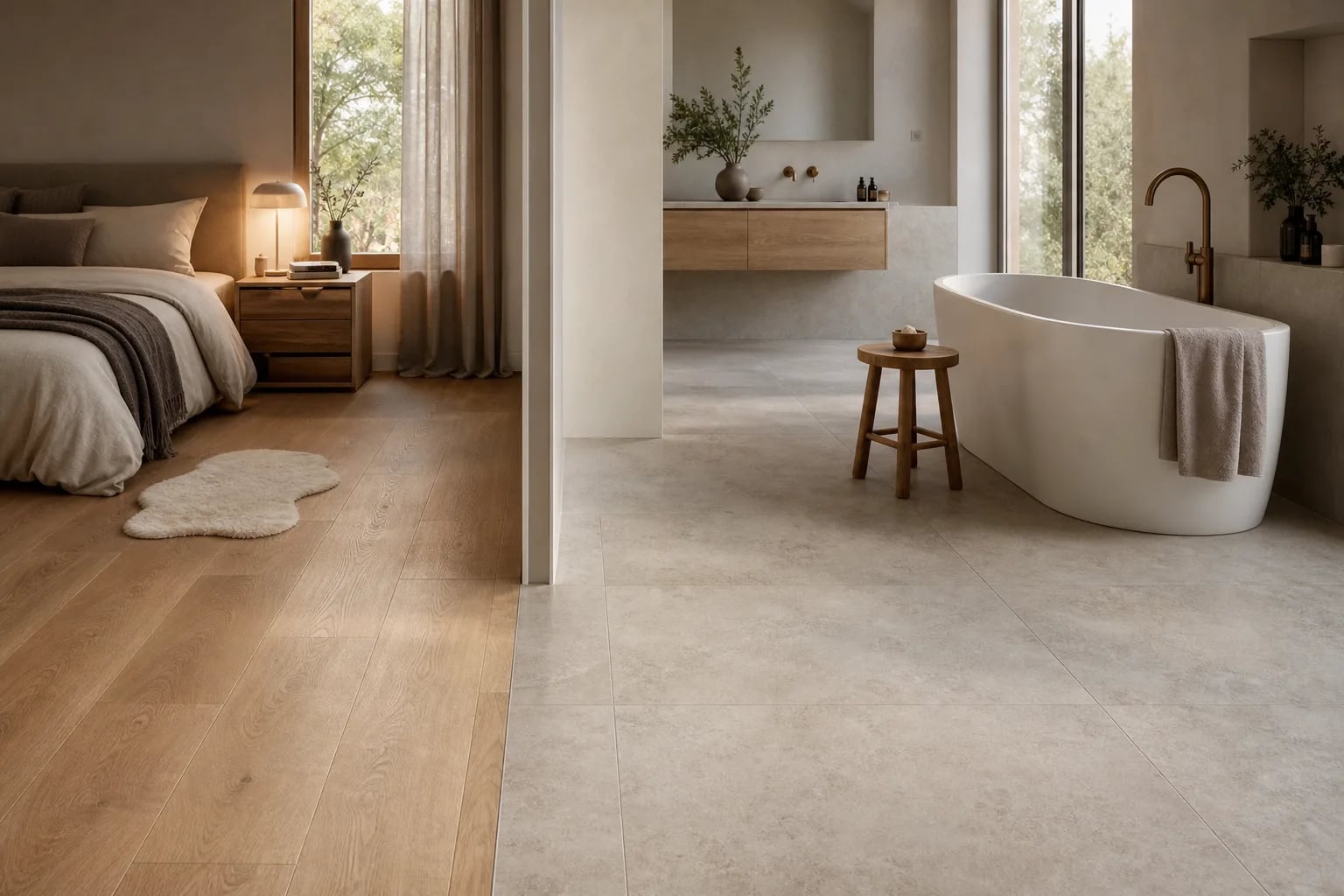
The best answer is usually both
Why choose one when a well-planned home can use each where it performs best? A typical European family home:
- Bathroom, kitchen, hallway: EndlessLove porcelain tiles
- Living room, bedroom, children's room, study: engineered oak parquet
- Transitions: a clean junction with the right profile
FAQ: parquet or tiles
Can parquet go in a kitchen?
Yes, it can — but use lacquered engineered parquet, fully glued to the substrate. Protect the areas around the sink, coffee machine and dishwasher with mats. More on this in our article on parquet in damp rooms.
Which is better over underfloor heating?
Tiles, on physics alone — they have the best thermal conductivity. Parquet also performs well over underfloor heating, provided it is fully glued down. Full guide: parquet for underfloor heating.
Which lasts longer?
Tiles, by a margin (50+ years against 25–40 for parquet). But parquet can be sanded and renewed, so a later owner can bring it back to life rather than replace it.
Which is warmer in winter?
Parquet, clearly. Wood is a natural insulator, while tiles are cold without underfloor heating. With underfloor heating, the two feel much the same.
Which costs less?
In the mid-range the two are level, at roughly €50–80/m² incl. VAT. Premium tiles can cost as much as premium parquet. The difference sits in the fitting, where tiling tends to be slightly more expensive because of the grouting.
Ready to start?
Order up to 3 free samples — free samples apply to parquet and vinyl flooring, as we do not send tile samples by post. You will see the true colour of the wood in your own light at home; sample delivery times vary by country and are confirmed with your order. Or book a free consultation — we will go through your floor plan together and suggest the best combination of the two floors for your home.