Comparisons
Best flooring for underfloor heating: the full comparison (2026)
1 September 2026
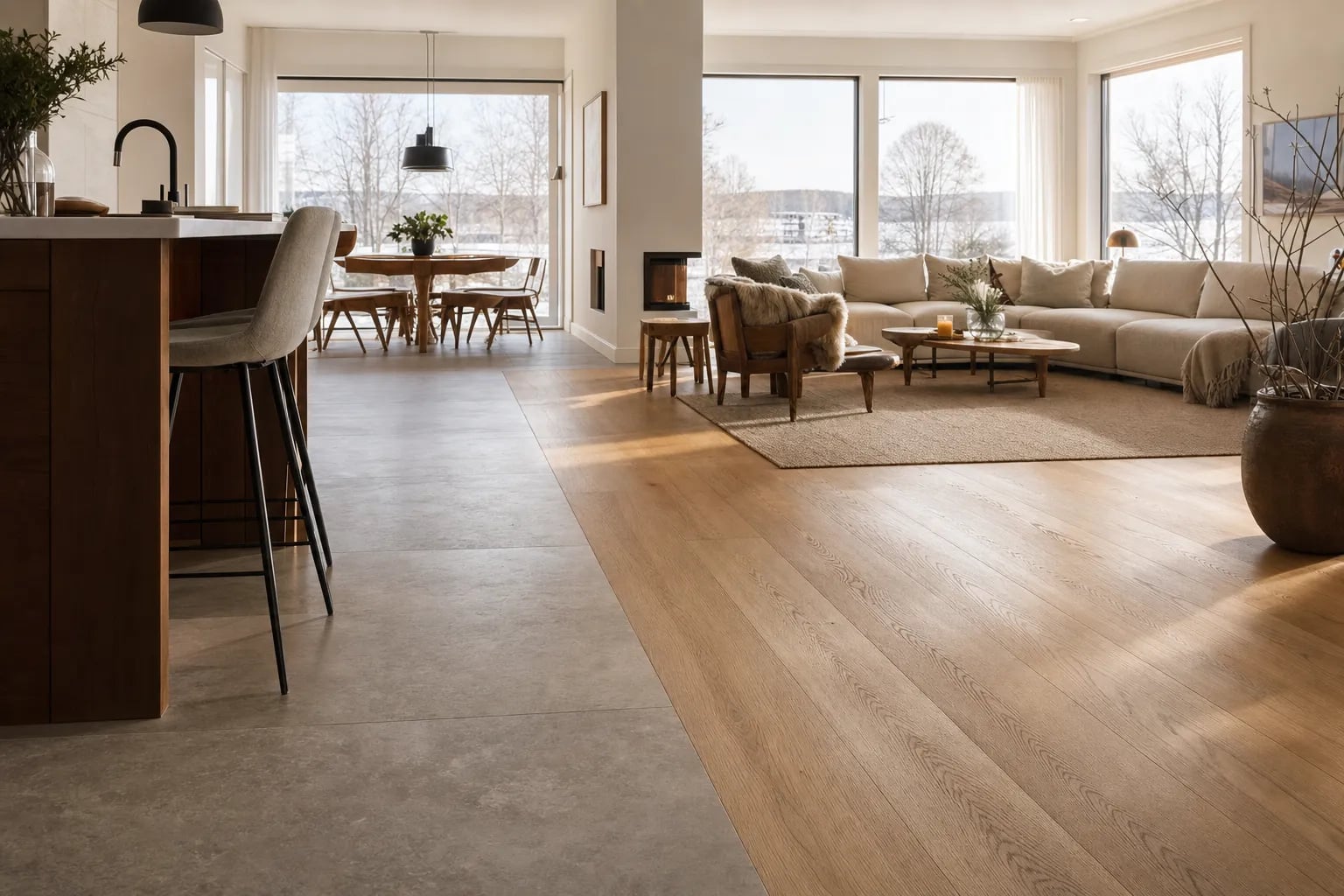
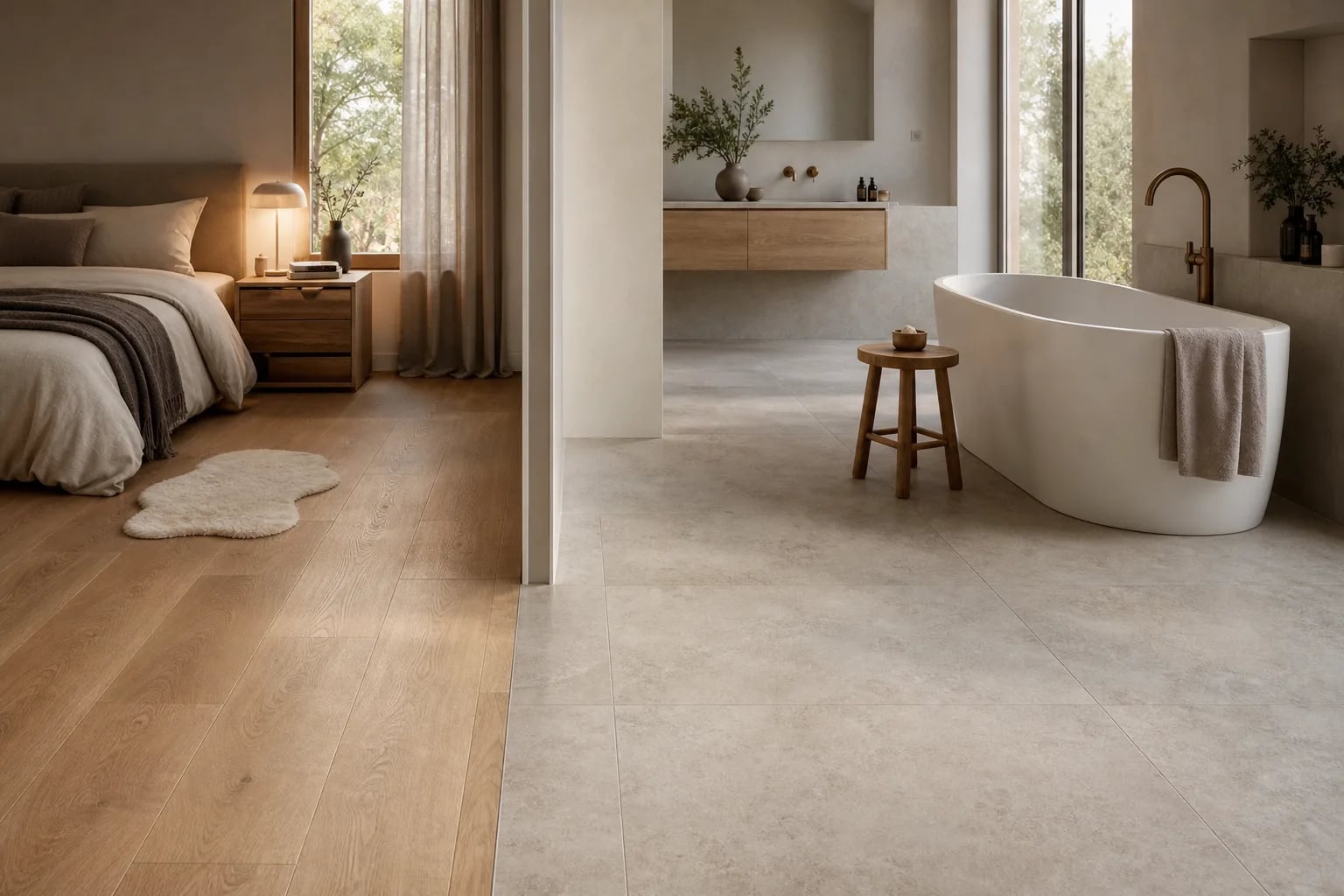
Underfloor heating has become the norm in new-build houses and deeply renovated flats across much of Europe: no radiators, even warmth and complete freedom when planning a room. The system itself, though, is only half the job. The floor covering is the layer the heat has to pass through to reach the room, so it decides both how comfortable the house feels and what the heating costs. This comparison sets the three main coverings — porcelain tiles, vinyl and engineered oak parquet — side by side on heat conduction, maximum surface temperature, installation method and price, so you can choose with confidence.
Why the covering over underfloor heating is a technical decision, not only a visual one
Underfloor heating gives its heat up across the whole floor area, so every layer above the pipes or cable acts as a filter. Two technical figures matter most when you choose a covering:
- Thermal resistance (m²K/W). The lower the figure, the more easily heat passes into the room. The usual European benchmark is that the covering and any underlay together should not exceed about 0.15 m²K/W. Tiles clear that with a wide margin, vinyl fits comfortably, and a thicker wood floor with an underlay comes close to the ceiling — which is exactly why the installation method matters as well.
- Maximum surface temperature. For wood and vinyl, manufacturers normally set a surface limit of around 27 °C: anything higher dries timber out and can cause splits or deformed joints. Tiles have effectively no limit of their own — the temperature is capped only by the system and by comfort norms, usually up to about 29 °C in living areas.
The practical conclusion is simple: the better the covering conducts, the lower the flow temperature needed for the same warmth in the room — and a lower temperature means lower bills, particularly with a heat pump.
Comparison table: tiles, vinyl and engineered parquet (2026)
| Covering | Heat conduction | Max. surface temperature | Installation | From (Terris) |
|---|---|---|---|---|
| Porcelain tiles | Excellent — the best of any floor covering | No practical limit from the covering (~29 °C set by the system) | Glued with a flexible adhesive | €35.95/m² |
| SPC vinyl (click) | Good — a rigid board with a thin integrated underlay | ~27 °C | Floating, no adhesive | €16.95/m² |
| Glue-down LVT vinyl (2–2.5 mm) | Very good — a thin covering straight onto the subfloor | ~27 °C | Glued down | €16.95/m² |
| Three-layer oak parquet | Moderate — suitable when the conditions are met | ~27 °C | Glue-down recommended | €37.95/m² |
Prices are Terris Timber “from” prices, incl. VAT. One rule applies to all three coverings: before laying, the heating system must be commissioned through a full heat-up cycle, and the moisture content of the subfloor must be measured and shown to be within the covering’s limits. Those steps take a few days and they prevent the most expensive mistakes.
Porcelain tiles — the best heat conduction
Porcelain tiles are unbeatable partners for underfloor heating: dense ceramic passes heat on faster than any other common covering and spreads it evenly across the surface. Without heating, tiles are the coolest floor in the house; with it, that weakness turns into their greatest strength — the surface becomes pleasantly warm while the system runs at its lowest and most economical temperature. Ceramic also stores heat, so the floor stays warm even when the system switches off for a while, and a matt surface keeps wet areas safe underfoot.
Our collection holds 52 porcelain models, most of them 60×120 rectified tiles in marble, onyx, stone and concrete looks. The large format and narrow joints create one continuous warm surface — ideal for bathrooms, kitchens, hallways and a whole ground floor. We go into this subject in detail in our guide to tiles over underfloor heating.
Vinyl flooring — the best balance of price and practicality
Vinyl is the cheapest route to a warm floor: prices start at €16.95/m², the surface is waterproof and it is easy to look after. Two types are worth keeping apart. SPC click is a rigid board with an integrated underlay, laid floating without adhesive: the stone-polymer core keeps it dimensionally stable, so it tolerates temperature swings well. Glue-down LVT (2–2.5 mm) conducts even better, because the thin covering is bonded straight onto the heated subfloor with no air gap at all.
Both carry the ~27 °C surface limit and the rule that the temperature is raised gradually. There is more practical detail in our articles on vinyl over underfloor heating and on whether SPC flooring is worth the money.
Engineered parquet — real wood with clear rules
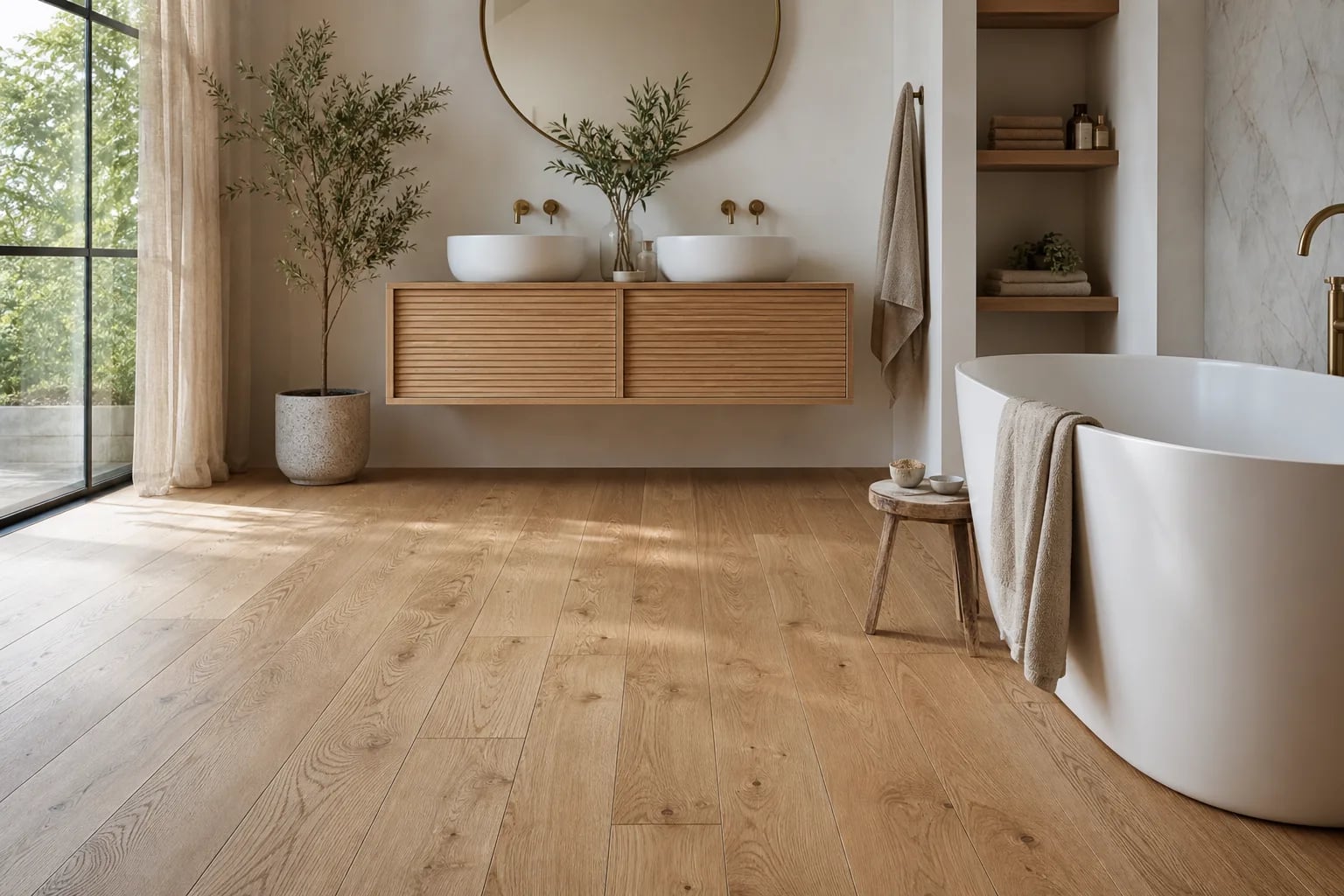
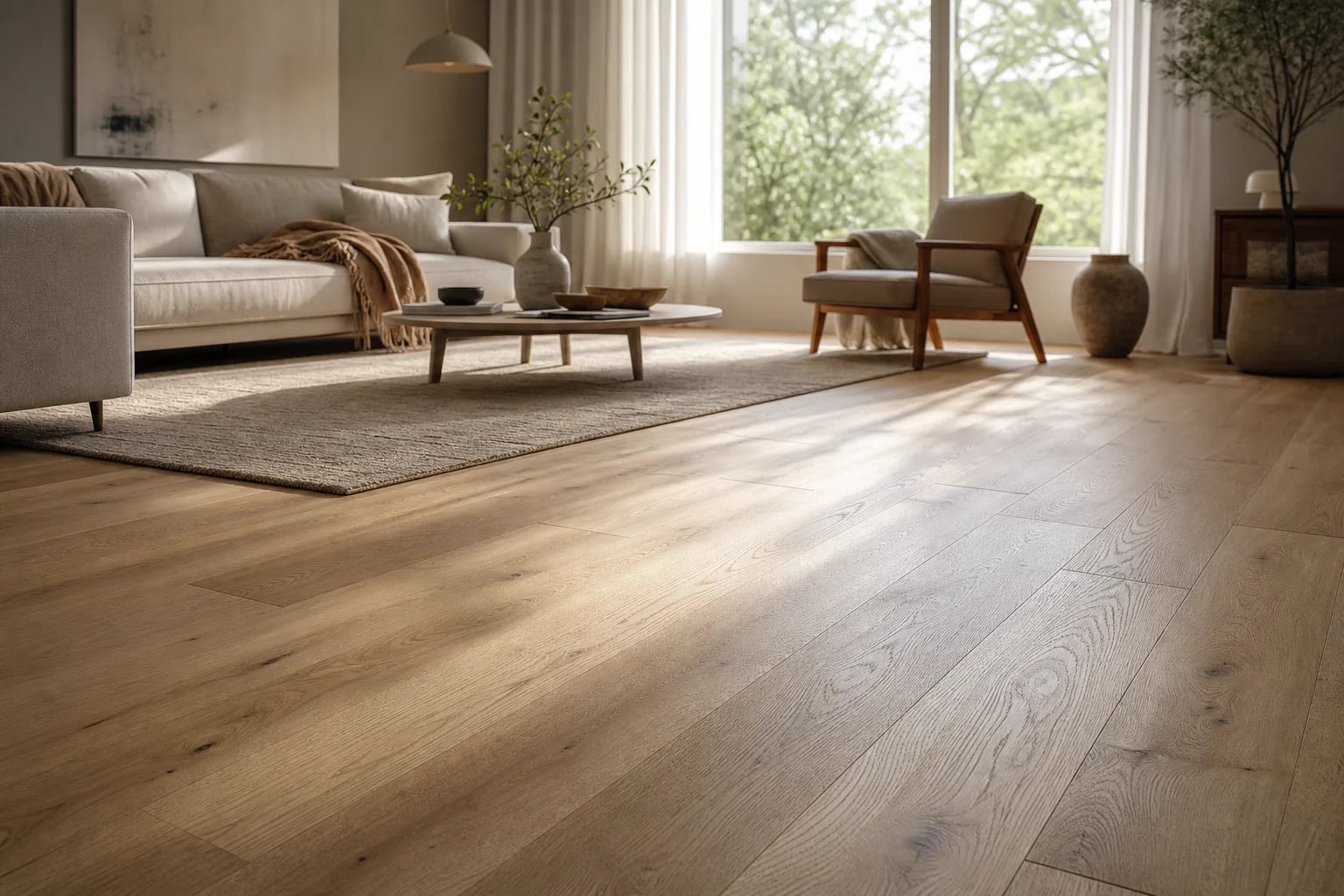
The warmth of natural oak underfoot and underfloor heating are entirely compatible, provided a few conditions are met. The three-layer construction exists for precisely this reason: cross-bonded layers absorb the movement of the timber, so the board stays stable as the temperature changes. Every three-layer European oak floor we sell is suitable for water-based underfloor heating — and we recommend gluing it to the subfloor.
The rules are straightforward: stay below a surface temperature of about 27 °C, keep relative humidity at 40–60% and change the temperature gradually rather than in jumps. Meet those conditions and real wood over a heated floor lasts for decades — our collection runs to 60 models, from pale Scandinavian tones to dark smoked oak, with manufacturer warranties of up to 15 years. The full list of conditions, including the preparation work, is in our guide to parquet over underfloor heating.
Glue down or float over underfloor heating?
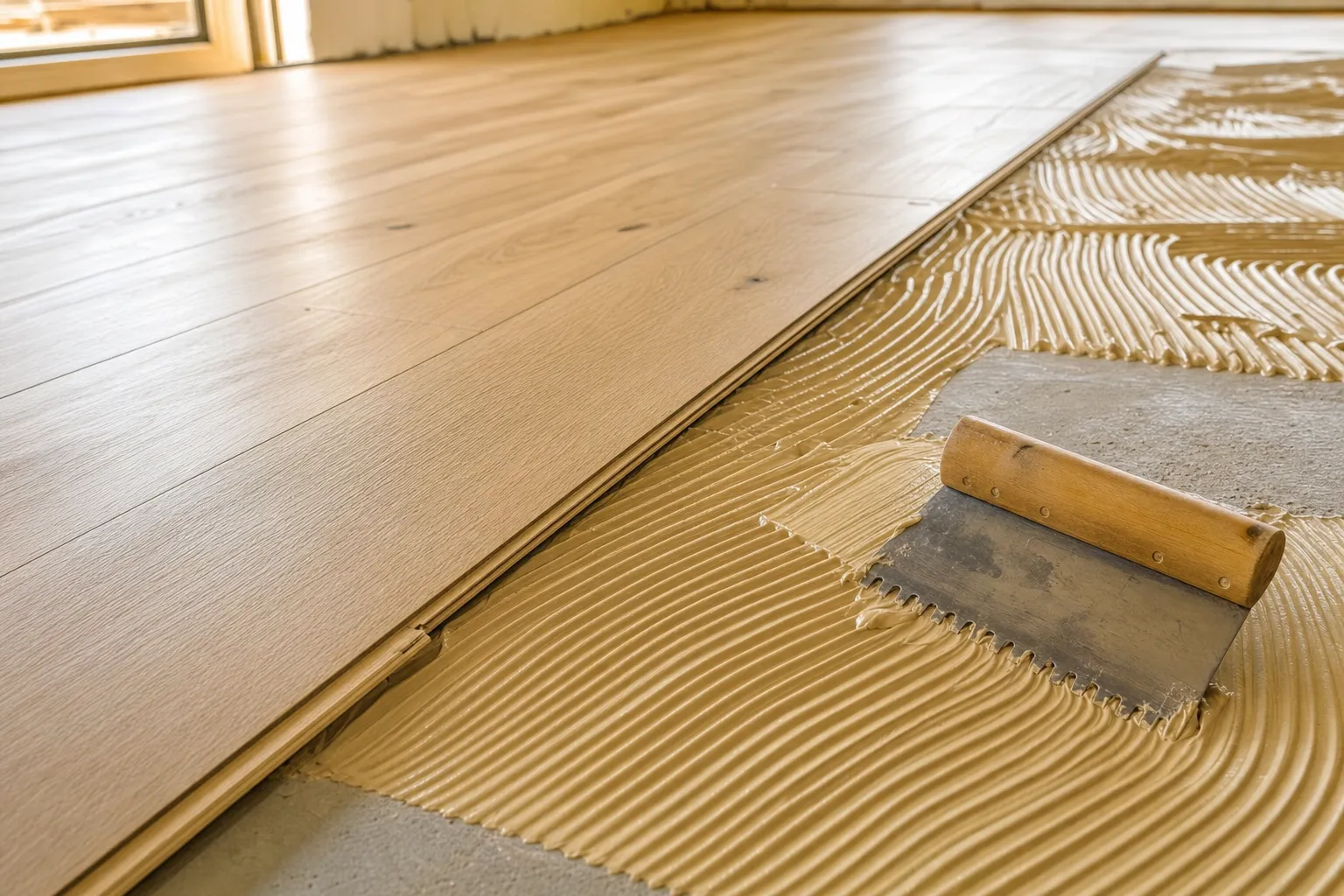
This is one of the questions we are asked most often — and one of the most important for efficiency. Air is an insulator: every air gap between the covering and the heated subfloor raises thermal resistance and forces the system to run hotter.
When to glue
For parquet over underfloor heating, gluing is our recommendation without reservation: the adhesive bed removes the air gap, improves heat transfer and stabilises the timber further. LVT vinyl and tiles are always glued — and tiles need a flexible adhesive rated for temperature movement.
When floating is fine
SPC click flooring is designed for floating installation: the integrated underlay is thin, so the heat loss is small, and the work is quick and clean. The one thing to avoid is adding a thick separate underlay, which would act as insulation.
Common mistakes worth avoiding
- A thick underlay beneath a floating floor. Every extra millimetre of soft underlay adds thermal resistance — use only a low-resistance underlay rated for underfloor heating.
- Large rugs over a heated floor. A rug works as an insulator: heat builds up beneath it, and on a wood floor that can mean the surface limit is exceeded locally.
- Switching the heating on straight after laying. The adhesive and the covering need time to settle — bring the system up gradually, following the manufacturer’s protocol.
- Skipping the subfloor moisture reading. Concrete that is still too damp is the commonest cause of swollen or cracked floors, especially under wood.
Fitting costs vary widely from country to country, and within a country by region, floor area and the state of the subfloor, so treat the following as indicative market ranges rather than our prices: tile laying commonly runs at roughly €20–35/m² (large formats cost more), glue-down parquet at roughly €15–25/m² and SPC click at roughly €5–10/m². Ask two or three local fitters for a quote before you set a budget. There is more on how the work runs and how estimates are put together in our articles on tile laying, parquet fitting costs and vinyl floor installation.
Water-based or electric heating — what does it change for the floor?
Water-based heating is the standard in new build: pipes in a concrete screed, high thermal mass, the most even temperature and the best partner for a heat pump. Concrete warms slowly and cools slowly, so the temperature spikes that damage timber barely occur. All three coverings suit a water-based system — including every parquet floor we sell.
Electric mats are thin and fast-reacting, and usually installed locally, in a bathroom for instance. That quick response is convenient, but it can create local hot spots, which is why electric heating pairs best with tiles. Under wood or vinyl, fit it only with a floor temperature sensor that automatically prevents the ~27 °C limit being exceeded.
Response speed depends on the covering too: tiles pass a temperature change on fastest, vinyl a little more slowly, and wood smooths the heating cycles out. In a high-mass water-based system these differences are barely noticeable day to day — they matter most where the heating is only switched on for short spells.
Which covering should you choose? The verdict by situation
- Bathroom, kitchen, hallway, a whole ground floor — porcelain tiles: maximum conduction, practically no temperature limit from the covering, 100% waterproof.
- A whole flat on a sensible budget — SPC vinyl: from €16.95/m², fast to lay, waterproof and stable over heating.
- Living room and bedrooms, where natural wood matters — glue-down three-layer oak parquet: real timber that can be renewed later, and dependable performance with water-based heating.
- Still undecided? Read our guide to choosing a floor, or tell us about your project and we will suggest a covering to suit your rooms and your heating system.
Frequently asked questions
Which flooring is best for underfloor heating?
On heat conduction, porcelain tiles come first — they transfer heat fastest and in practice carry no surface-temperature limit of their own. Vinyl offers the best balance of price and practicality, and three-layer oak parquet suits water-based heating provided the ~27 °C limit is respected and the boards are glued to the subfloor.
What is the maximum surface temperature allowed for wood and vinyl floors?
Manufacturers normally set a surface limit of around 27 °C for wood and vinyl. Above it, timber can dry out and split, and vinyl joints can deform. Tiles have effectively no limit from the covering — the temperature is capped only by the system itself and by comfort norms.
Does parquet have to be glued down over underfloor heating?
We recommend it. The adhesive bed removes the air gap between the board and the heated subfloor, so heat transfers more efficiently and the floor is more stable. Every three-layer oak floor we sell is suitable for water-based underfloor heating when it is glued to the subfloor.
Is electric underfloor heating suitable under parquet or vinyl?
Electric heating reacts quickly and can create local hot spots, so it pairs best with tiles. Under wood or vinyl, install it only with a floor temperature sensor that prevents the ~27 °C surface limit being exceeded.
How much does flooring for underfloor heating cost?
In our collection, vinyl flooring starts at €16.95/m², porcelain tiles at €35.95/m² and three-layer European oak parquet at €37.95/m² (incl. VAT). Fitting costs depend on the type of covering and the state of the subfloor, and vary from country to country.