Comparisons
What is the best flooring for a bathroom? Tiles or vinyl (2026)
1 September 2026
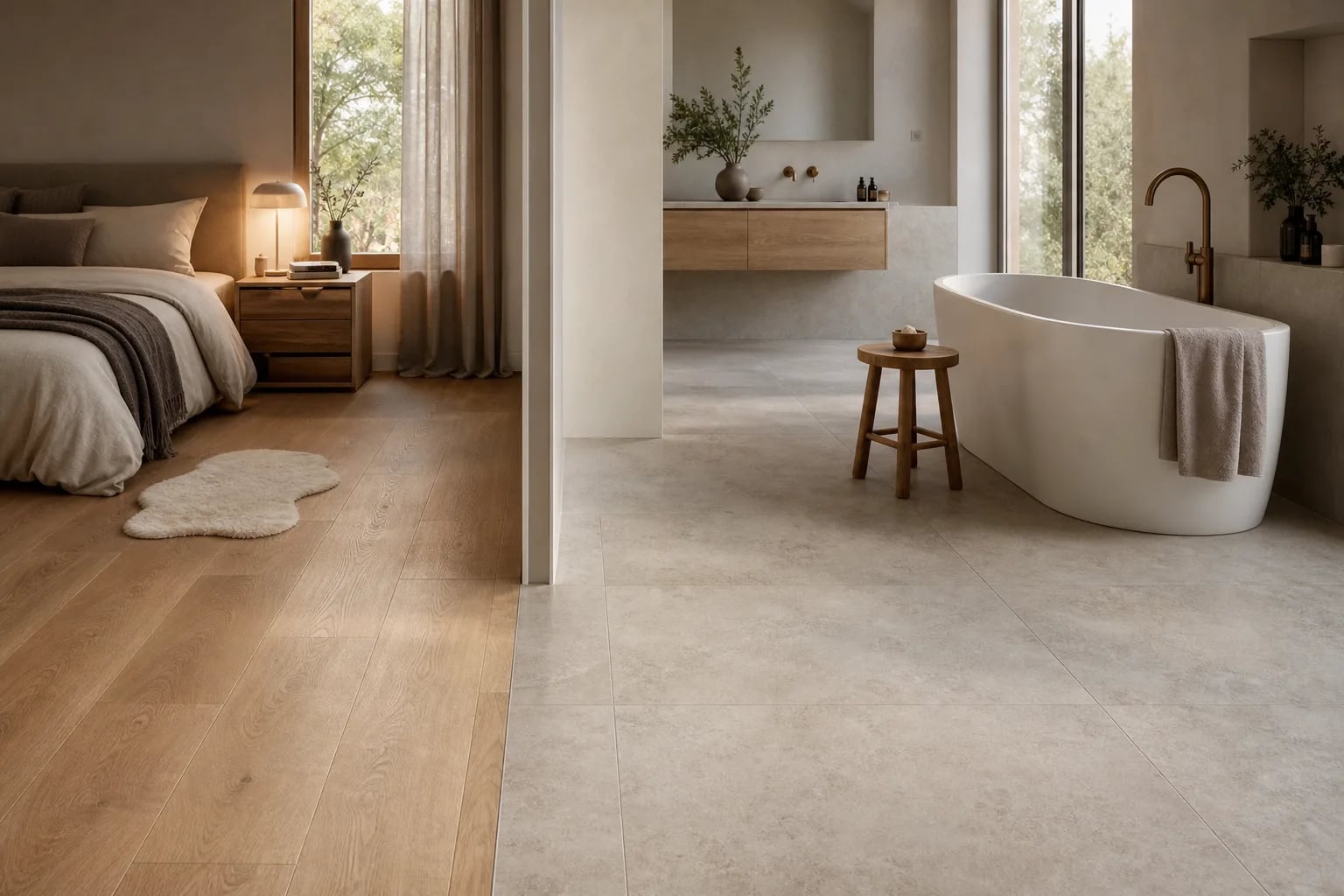
The bathroom is the most demanding room in the house for a floor: constant humidity, steam and the risk of slipping quickly separate the coverings that work from the ones that do not. We compare porcelain tiles and SPC or LVT vinyl honestly, explain why wood parquet in a bathroom is a risky route, and give a verdict for three common situations.
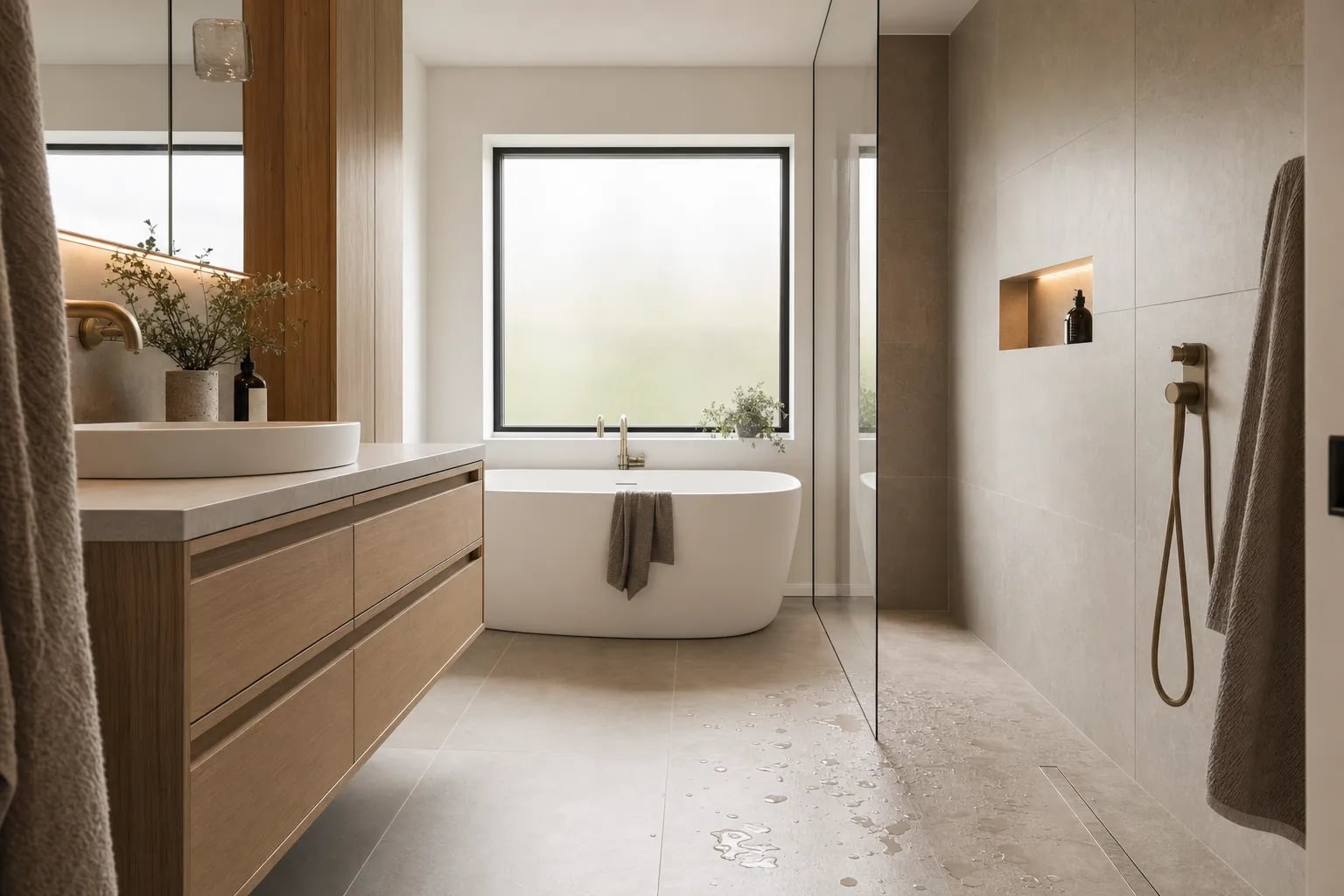
No other room asks as much of a floor as the bathroom: standing humidity, splashes, temperature swings and bare feet on a wet surface. That narrows the field to two genuinely sound answers — porcelain tiles and water-resistant SPC or LVT vinyl. This guide compares both on water resistance, slip safety, underfloor heating, installation and cost, sets out honestly why we do not recommend wood parquet in a bathroom, and closes with a verdict for the three situations we are asked about most.
Why bathroom floors face the strictest requirements
A bathroom floor deals daily with conditions the rest of the home barely knows. After a shower the air is full of steam, splashes and puddles sit on the surface, and the temperature swings from a cool morning to a hot evening shower. Add the hygiene side — the covering has to survive frequent cleaning and cleaning products — and the safety side: a significant share of household accidents happen on a wet bathroom floor.
It helps to think in zones. Around the shower and bath the covering has to handle direct water; across the rest of the room it deals with steam and condensation. The smaller the room and the weaker the ventilation, the more is asked of both the material and its joints.
So aesthetics come second here. Judge water resistance, slip rating and underfloor heating compatibility first, and colour and pattern after that. The general decision logic for every room is set out in our guide to choosing a floor, and a full review of moisture-proof options in our article on water-resistant flooring.
Porcelain tiles: the bathroom classic, and not without reason
Porcelain stoneware is technically the strongest covering for wet rooms. Water absorption is below 0.5 %, so neither puddles nor steam make any difference to it. The surface stands up to cleaning products, limescale and scratching, and service life is measured in decades. We covered the material itself in detail in our article on porcelain tiles.
The Terris range holds 52 porcelain tile models from €35.95/m² incl. VAT: mostly 60×120 cm, rectified, in marble, onyx, stone and concrete looks. Rectified edges allow very narrow joints — in a bathroom that means less grout for moisture and dirt to collect in. The full range sits in the tiles category, and there is a broader wet-zone guide in our article on floor tiles for kitchens and bathrooms.
Honestly about the drawbacks: without underfloor heating tiles are cold, the surface is unforgiving (a dropped perfume bottle usually breaks), and fitting is the slowest and most expensive of any covering. Indicative fitting rates across Europe run to roughly €30–50/m², often more for large formats, and these figures vary considerably from country to country; tanking and substrate preparation are charged on top.
Slip resistance: the safety criterion that matters most
Polished porcelain becomes slippery when wet, so choose a matt surface for a bathroom floor. Slip resistance is rated two ways: the R rating under DIN 51130 (at least R10 is recommended for bathroom floors) and the barefoot classes A/B/C under DIN 51097, where B or C is best for the shower zone. For bathrooms we would start with the matt collections, and we set out every safety detail in our article on non-slip tiles.
SPC and LVT vinyl in the bathroom: warmer and faster
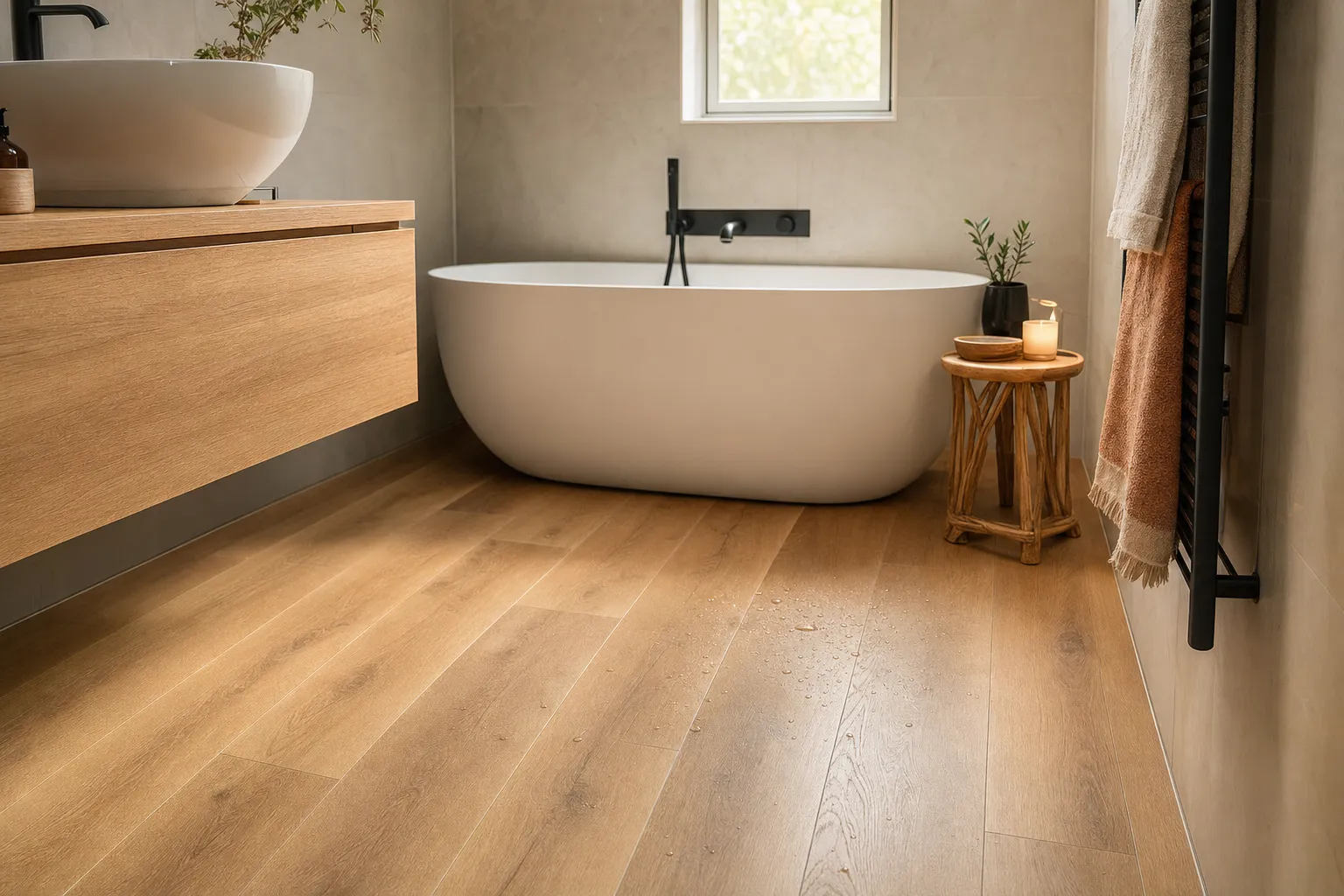
Modern vinyl flooring with a water-resistant core is a serious competitor to tiles. The SPC core, made of stone powder and polymers, is 100 % waterproof: it does not swell, does not distort and is unbothered by steam. Glue-down LVT (2–3 mm) is bonded across its whole surface to the substrate, which makes it even harder for water to get underneath. Bathrooms usually come down to one of two routes: SPC click for a quick floating installation with no adhesive, or glue-down LVT where you want the lowest possible build-up and maximum stability in a warm room. The difference between the two is covered in our article on SPC vs LVT vinyl.
Vinyl's biggest advantages in a bathroom are comfort and speed of renovation. The surface is noticeably warmer to the touch than tile, so it is pleasant under bare feet even without underfloor heating. SPC click is laid floating, without adhesive — a day's work for an experienced fitter, with indicative rates in the region of €7–15/m² depending on the country and the fitter. The Terris range holds 44 vinyl models from €16.95/m² in wood and stone decors: see the vinyl range.
The drawbacks are real too. The joints of a floating SPC floor are not hermetically sealed, so the perimeter at the bath, shower and walls has to be siliconed, and large puddles should not be left standing. On longevity vinyl gives way to tile — good SPC lasts 20–30 years, with manufacturer warranties of up to 15 years. We describe every detail, from substrate preparation to sealing, in our guide to vinyl flooring in bathrooms.
Underfloor heating in a bathroom: which covering wins
Underfloor heating is arguably the best comfort investment a bathroom can take, and this is where the two coverings differ most sharply. Porcelain tiles have the best thermal conductivity of any floor covering: heat passes through quickly and without loss, so the system runs efficiently. There is more on this in our article on tiles over underfloor heating.
SPC vinyl is also suitable for underfloor heating, but the surface temperature must not exceed roughly 27 °C and the system has to be brought up gradually. The practical rule is simple: if heating is there or planned, tiles will make the most of it; if there will be no heating, vinyl compensates for the cold-floor problem. More detail sits in our article on vinyl over underfloor heating.
And what about parquet in a bathroom? Possible, but…
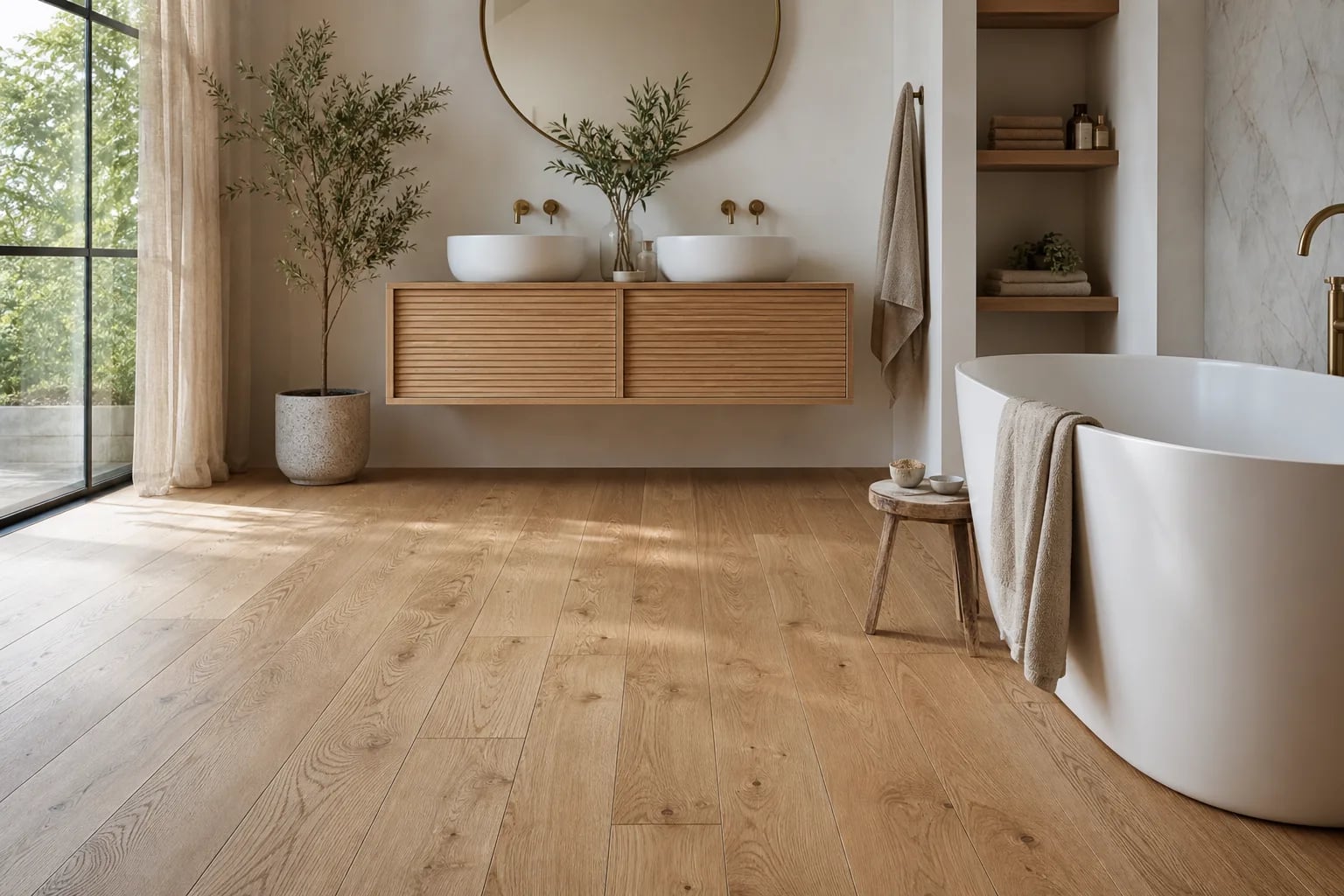
A wood floor looks luxurious in a bathroom — the spa-hotel aesthetic tempts plenty of people. Even so, wood and constant humidity are a poor match: even good oiled parquet in a bathroom demands strict discipline — no puddles left standing, good ventilation, regular re-oiling and acceptance that the floor will age faster. When it is nevertheless feasible, and on what conditions, is set out honestly in our article on parquet in a bathroom. For most homes the more practical route is vinyl with a wood decor: visually close to oak, but completely indifferent to moisture.
Tiles or vinyl in a bathroom: comparison table
| Criterion | Porcelain tiles | SPC / LVT vinyl |
|---|---|---|
| Water resistance | Absolute — absorption below 0.5 % | 100 % waterproof core; perimeter must be sealed |
| Warmth underfoot | Cold without underfloor heating | Warmer surface even without heating |
| Underfloor heating | Best thermal conductivity of any covering | Suitable, up to ~27 °C surface temperature |
| Slip resistance | Choose matt: at least R10, class B/C for the shower zone | Textured surface, less slippery when wet |
| Fitting labour (indicative, varies by country) | Around €30–50/m² plus tanking | Around €7–15/m²; can be laid over old tiles |
| Service life | Decades | 20–30 years; manufacturer warranty up to 15 years |
| Price in the Terris range (material) | From €35.95/m² | From €16.95/m² |
Both coverings perform reliably in wet zones, so the final decision usually comes down to comfort, budget and the scope of the renovation. A full comparison of these two coverings across every room in the home sits in our article on tiles vs vinyl.
Neither is demanding to look after — regular cleaning with a neutral cleaner is enough. With tiles it is the joints that need attention: grout is worth refreshing or sealing periodically so it does not hold moisture and staining. With vinyl the priorities are keeping the perimeter seal intact and avoiding aggressive solvents and scouring powders.
The verdict: what to choose for your situation
There is no universal answer — the best covering depends on the type of room, on whether there is underfloor heating, and on the scope of the work. Here is what we would choose in the three most common situations.
Main bathroom with a shower and a bath
This is where moisture levels are highest, so we recommend porcelain tiles with underfloor heating: a matt non-slip surface, a marble or stone look and the narrow joints of rectified edges give you a long-lived, easy-to-maintain base. It is the most expensive option, but also the one that lasts longest.
Guest cloakroom or WC without a shower
Where there is little direct contact with water you have more freedom: tiles and vinyl both work. Vinyl lets you refresh the room quickly and for less; tiles let you create a striking accent in a small area. One practical note: the minimum floor covering order is 20 m², so for small rooms it is easiest to order alongside the rest of the house.
Refit over existing tiles
If the old tiles are firmly bonded and the surface is flat, SPC click vinyl can go straight over them — no noisy demolition, no dust and no construction waste. The only thing to check is that the floor level at the door will rise by a few millimetres. It is the fastest and cleanest way to bring a bathroom up to date.
Frequently asked questions
What is the best flooring for a bathroom?
The most versatile choice is porcelain tiles: they take up virtually no water and make the most of underfloor heating. SPC or LVT vinyl is the better answer when you want a warmer surface without heating, or a quick refit laid over old tiles.
Is vinyl flooring really suitable for a bathroom?
Yes. The SPC and LVT core is 100 % waterproof, so the floor does not swell or distort. What matters is sealing the perimeter at the bath, shower and walls so water cannot get underneath, and not leaving large puddles standing.
Which bathroom tiles are non-slip?
Choose a matt surface and at least slip class R10 under DIN 51130, with barefoot class B or C under DIN 51097 for the shower zone. Polished tiles become slippery when wet, so we do not recommend them for bathroom floors.
Which covering suits underfloor heating in a bathroom better?
Porcelain tiles — their thermal conductivity is the best of any floor covering, so the heating responds quickly and runs efficiently. SPC vinyl is also suitable, but the surface temperature must not exceed roughly 27 °C and the system has to be brought up gradually.
Can I order tile samples to my home?
No — free samples (up to 3) are sent only for parquet and vinyl flooring. For tiles we invite you to a free consultation, where we go through formats, surfaces and slip classes for your bathroom project.