Guide · 9 min
Vinyl flooring in a bathroom: 100% waterproof
2 September 2026
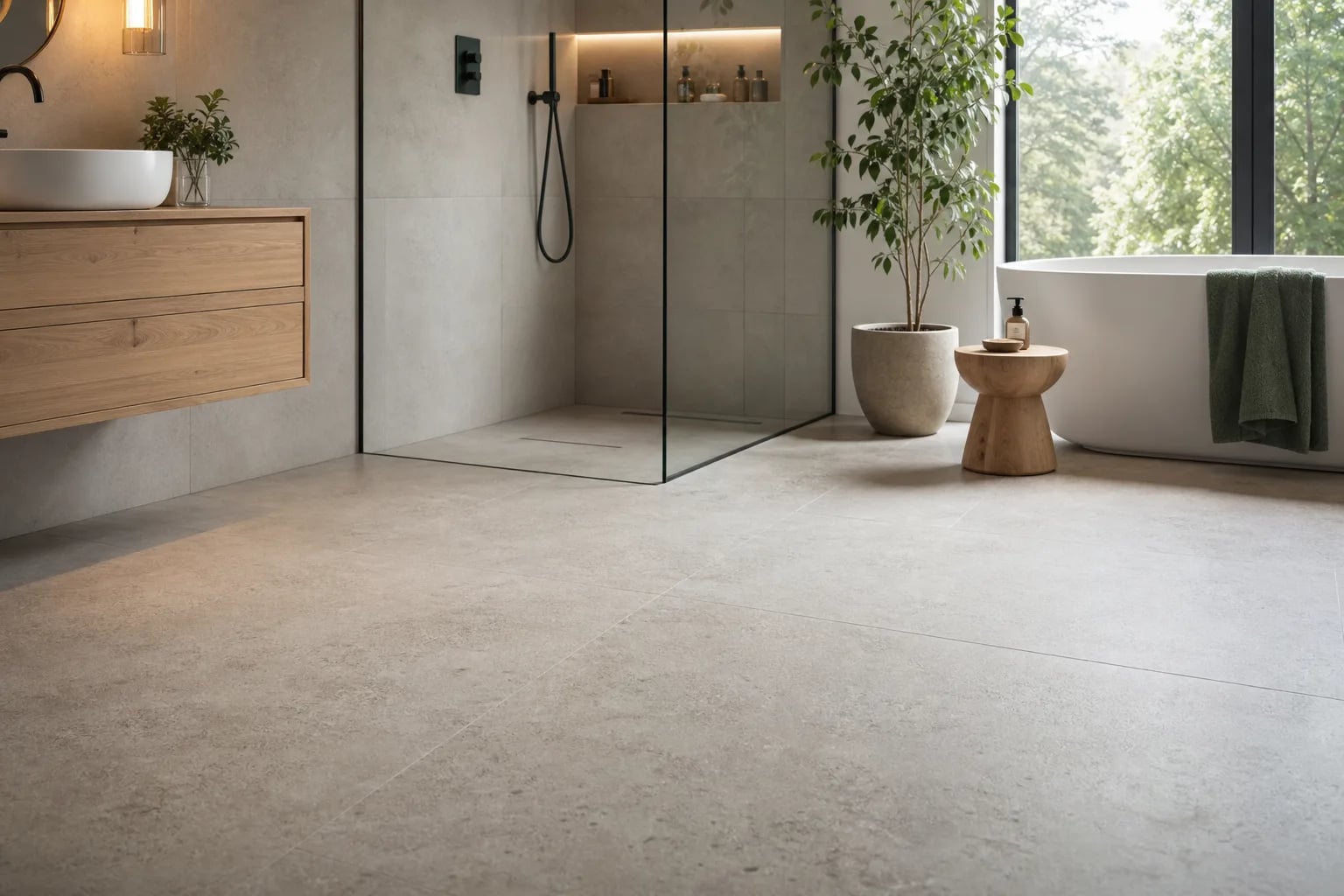
The bathroom was tiled territory for a long time, and not without reason: water lands on the floor, steam builds up, humidity swings several times a day. Modern SPC vinyl flooring has rewritten that rule. Its core is made from stone powder and stabilisers (Stone Plastic Composite), so it absorbs no water and cannot swell — unlike coverings built on a timber or HDF core. This article explains why vinyl suits damp rooms, how to lay it correctly in a bathroom, and where it has the edge over traditional ceramic tiles.
Why SPC vinyl works in a bathroom
The first thing a bathroom floor has to do is keep water out of itself. SPC manages that in full. The core of the plank is a rigid mineral composite that physically cannot take up moisture, so water running off you after a shower, or a splash from the basin, does the floor no harm. That is the fundamental difference from ordinary parquet or laminate, which swell along the joints when they get wet.
- A genuinely waterproof bathroom floor — the mineral core absorbs not a drop, and the PVC wear layer with its UV lacquer sheds water.
- Warmer underfoot — vinyl is noticeably warmer to bare feet than cold ceramic; stepping onto it in the morning is pleasant even without underfloor heating.
- Quieter and softer — the multilayer build damps sound, and the surface is less slippery than glossy ceramic.
- Dimensionally stable — SPC barely moves with temperature swings, so it suits heated and unheated rooms alike.
If you are still weighing up covering types and want the wider picture, our complete guide to vinyl flooring works through usage classes, thicknesses and construction from first principles.
How to lay vinyl in a wet zone
The plank itself is untroubled by water. In a bathroom the weak points are always the joints and the edges: if water finds its way under the floor at the perimeter, that is where it stays. Which is why the fitting rules here are stricter than in a dry room.
- A flat, dry subfloor. The base should be level to within ±2 mm over 2 m and thoroughly dry. A damp concrete slab sealed in under the covering keeps that moisture trapped — the most common mistake of all.
- Floating (click) installation. SPC planks lock into one another and are not bonded to the subfloor. Leave an 8–10 mm expansion gap at every wall.
- Edges: flexible silicone, not skirting. Fill the expansion gap at the walls, the bath and the shower tray with a sanitary silicone (one carrying a mould inhibitor) rather than covering it with rigid timber skirting. Water then has no path beneath the floor.
- The shower zone: separate tanking. Directly beneath the shower tray and around it, fitters recommend standard bathroom tanking; the vinyl covers the remaining floor area.
- A threshold between rooms. Fit a transition profile in the doorway so that the expansion gap is maintained.
The general principles are much the same as for any click covering — we have set out the fundamentals in our guide to laying parquet. If you would rather hand the work to a professional, bear in mind that fitting rates and availability differ considerably from one European country to the next, so treat any figure you read as indicative and get a local quote; talk to us and we will help you settle the build-up, the underlay and the quantities.
Does vinyl suit underfloor heating in a bathroom
It does. SPC vinyl is one of the better coverings for a wet or electric underfloor heating system: the mineral core passes heat on well and barely expands. Two rules matter — the surface temperature should not exceed 27–28 °C, and the system should be brought up to temperature gradually. Our article on choosing flooring for underfloor heating goes into more depth, and most of what it says applies to vinyl as well.
Vinyl or tiles in a bathroom: a comparison
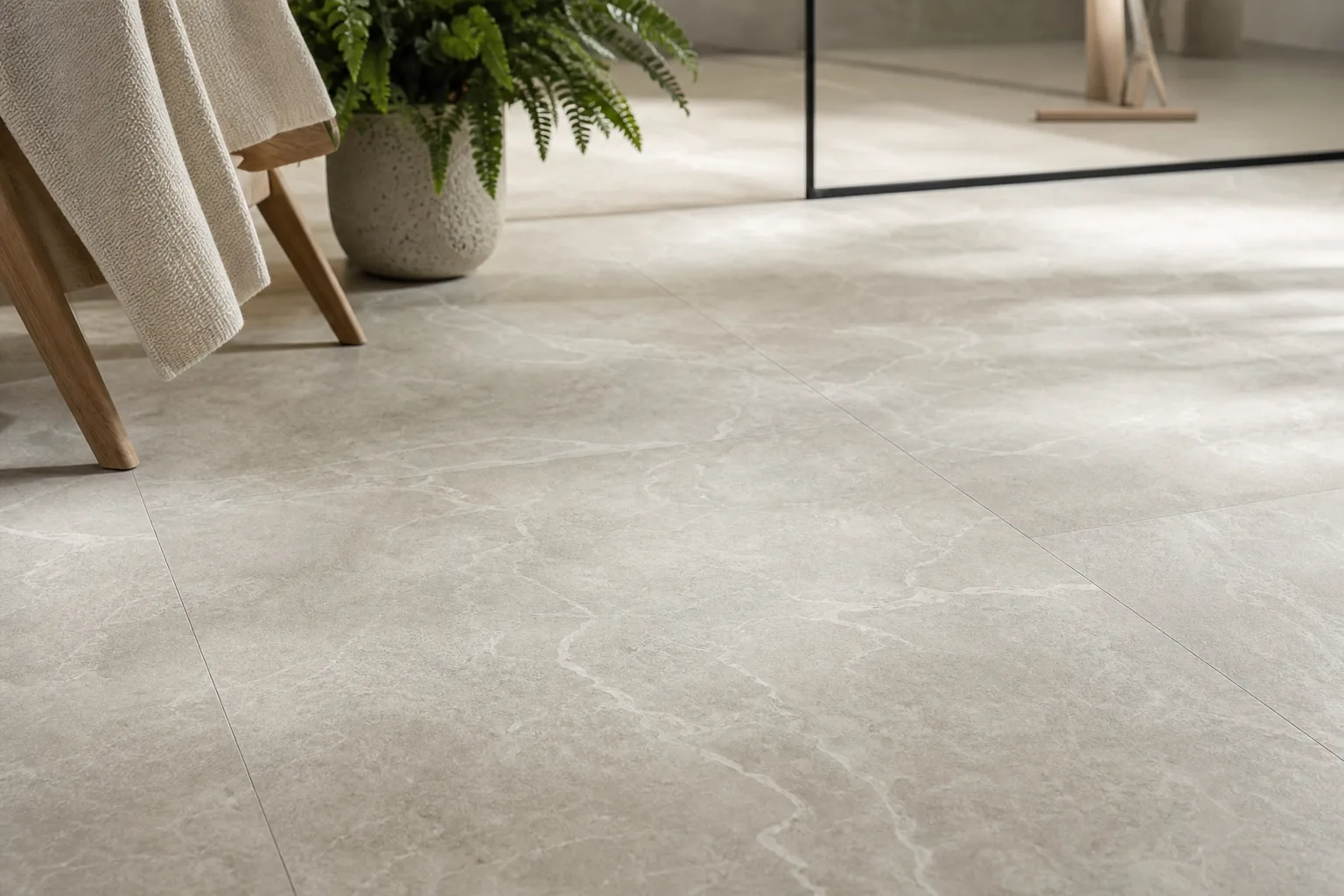
This is the question every bathroom refurbishment runs into. Both coverings are waterproof, but they differ in how they feel, what they cost and how much work goes into fitting them. Here is the direct comparison.
| Criterion | SPC vinyl | Ceramic tiles |
|---|---|---|
| Water resistance | 100% — the mineral core absorbs nothing | 100% — but the grout lines need upkeep |
| Warmth underfoot | Warm, comfortable barefoot | Cold without underfloor heating |
| Installation | Floating, fast, no adhesive or grout | Adhesive + grouting, slower |
| Sound damping | Quieter, softer | Louder, harder |
| Joints / mould | Continuous surface, fewer joints | Many joints where mould gathers |
| Scratch resistance | Very good (class 32–33) | Excellent, all but unscratchable |
| Repair / replacement | A plank can be lifted out and swapped | A tile has to be chiselled out, awkward |
| Price | From €25.95/m² | From €35.95/m² (plus fitting) |
| Warranty | 25 years residential + 10 years commercial | 10 years |
The short answer: if warm, comfortable flooring that goes down quickly and costs less is what you are after, choose vinyl. If you want one continuous surface in the shower zone that shrugs off heat and hard knocks, tiles still have the edge. We compare the two in more detail in “Tiles or vinyl: which is better”. And if you are considering wood rather than vinyl in a damp room, it is worth reading when parquet in a bathroom is feasible at all.
Care: looking after vinyl in a bathroom
Caring for vinyl in a bathroom is simple, which is one of its more appealing qualities. Because the covering absorbs no water and contains no timber, none of the usual anxieties about moisture apply.
- Day to day — a dry sweep or a pass with a microfibre cloth is enough.
- For cleaning — a damp (not wet) mop with a mild, pH-neutral cleaner; avoid abrasive powders and strong acids.
- Steam and splashes — these do the floor no harm, though standing water is best wiped away so it leaves no limescale marks.
- The silicone joints are worth inspecting once a year and renewing where needed.
Prices and samples
In our vinyl flooring collection, SPC starts at €25.95/m², incl. VAT. That already buys a thick mineral core, integrated acoustic backing and a 25-year residential warranty. A popular choice for bathrooms and hallways is the hard-wearing SPC Sao Paulo decor, which sits comfortably with warm and cool interior palettes alike.
Before ordering we always suggest seeing the colour in the flesh: order 3 free samples and hold the decor up in your own bathroom light. Our goods come straight from factories in Germany, Austria and Italy, with pallet delivery across the EU — cost and lead time are shown at checkout or confirmed on request. If you have questions about quantities or fitting, reach us through the contact page or book a free video consultation.
Frequently asked questions
Is vinyl flooring really suitable for a bathroom?+
Yes. The core of an SPC plank is a mineral composite that is 100% waterproof and does not swell in damp or steam. What matters is sealing the edges at the walls and the shower properly with a flexible sanitary silicone, so that water has no route underneath the floor.
Vinyl or tiles — which is better in a bathroom?+
Both coverings are waterproof. Vinyl is warmer underfoot, quieter, cheaper and quicker to fit, and a damaged plank can be replaced. Tiles cope better with heat and hard knocks in the shower zone, but they are colder and the grout lines need looking after. Where comfort comes first, vinyl is often the more practical bathroom floor.
Can vinyl be laid over underfloor heating in a bathroom?+
Yes, SPC vinyl suits wet and electric underfloor heating well, because the mineral core passes heat on efficiently and barely expands. The surface temperature should not exceed 27–28 °C, and the system should be brought up to temperature gradually.
How do you seal vinyl edges around the shower?+
Fill the expansion gap at the walls, the bath and the shower tray with a flexible sanitary silicone containing a mould inhibitor — not with rigid skirting. Directly under and around the shower tray, standard bathroom tanking is recommended, with the vinyl covering the rest of the floor.
How much does vinyl flooring for a bathroom cost?+
SPC vinyl starts at €25.95/m², incl. VAT. Pallet delivery across the EU is available and the cost and lead time are shown at checkout or confirmed on request. Before ordering you can request 3 free samples to your address and check the colour in your own light.