Guide · 9 min
Vinyl flooring over underfloor heating: what you need to know
2 September 2026
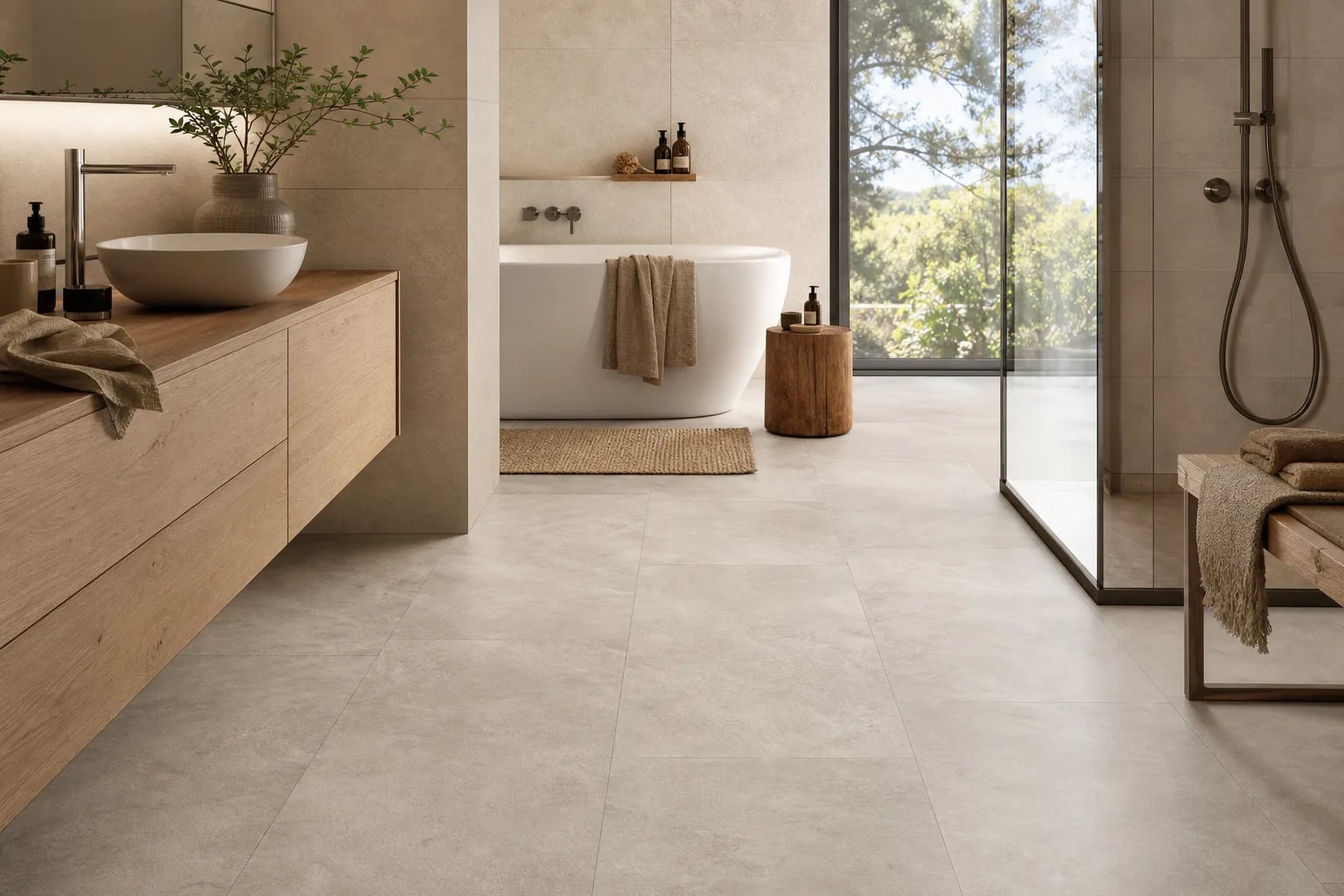
Vinyl has become one of the most popular coverings for homes with underfloor heating, and there is a sound technical reason for it: a thin, rigid SPC board passes heat through quickly, while the material itself shrugs off moisture and temperature swings. The advice online, though, contradicts itself — some sources insist vinyl "is not suitable for heating", others promise it "handles anything". The truth is simple and technical: it works, but only inside the temperature limit the manufacturer sets. This guide explains why 28 °C is the number that matters, how to commission the system correctly, and when tiles over underfloor heating are the better answer.
Does SPC vinyl really work with underfloor heating?
The short answer is yes. Rigid SPC (Stone Polymer Composite) vinyl is one of the best coverings you can put over underfloor heating, because its thermal resistance (R-value) is very low. In practice that means heat from the pipes or cables buried in the screed reaches the surface quickly, so you never have to run the system flat out to warm the room. That feeds straight through to a lower electricity or gas bill.
The one condition is that the surface temperature of a glue-down or click SPC floor must not exceed 28 °C. This is not a recommendation but a limit value, and virtually every serious manufacturer states it. Vinyl is a polymer: past that point it expands more than the construction allows, internal stresses build up, and in time you can end up with gaps between the boards, cupping, or click joints that have lost their geometry. Because we source our floors directly from German, Austrian and Italian mills, we can supply the exact manufacturer specification for every collection, with the maximum temperature stated.
Why 28 °C and not more?
The limit comes from the nature of the material. An SPC core is a blend of stone powder and polymers — extremely stable, but still responsive to heat. European comfort and hygiene guidance for underfloor heating puts the floor surface at roughly 27–29 °C in any case, since walking on a hotter floor is simply unpleasant, so the 28 °C ceiling sits neatly inside a healthy living range. Trouble starts when people try to compensate for a poorly insulated building by turning the floor up — that is when the limit gets crossed.
It is important not to confuse two figures: 28 °C is the temperature of the floor surface, not of the water in the pipe. In a water-based system the flow temperature is higher (40–45 °C), but it drops on the way through the screed and the covering. That is why a floor sensor, or a correctly configured thermostat, is essential — without one it is easy to overshoot without noticing.
Vinyl, tiles or parquet — which takes the most heat?
All three popular coverings work over underfloor heating, but they differ in temperature tolerance and in how readily they pass heat through. The comparison below should help you choose according to the temperature you actually need and the priority that matters most.
| Floor covering | Max. surface temp. | Heat transfer | From |
|---|---|---|---|
| SPC vinyl | 28 °C | Very good (thin board) | €25.95/m² |
| Porcelain tiles | 35 °C | Excellent (the best) | €35.95/m² |
| Engineered parquet | 27 °C | Good (depends on thickness) | €37.95/m² |
As the table shows, porcelain tiles take the highest temperature (up to 35 °C) and transfer heat best, which makes them the first choice where underfloor heating is the main heat source in a cold room. Vinyl and engineered parquet over underfloor heating are not far behind and are perfectly suited to living spaces in a normally insulated building. If you are weighing up the two more forgiving options, our parquet versus vinyl comparison covers both the heat question and day-to-day maintenance.
Water-based or electric heating — which suits vinyl better?
SPC works with both, but the differences are worth knowing.
Water-based underfloor heating
This is vinyl's natural partner. A water system heats evenly, changes temperature slowly and almost never leaves hot patches across the surface. Thin SPC responds quickly, and a thermostat with a floor sensor holds the safe 28 °C ceiling without difficulty. For long-term comfort it is the easiest combination to live with.
Electric underfloor heating
Electric heating under vinyl is also possible, but it calls for more care. Thin cables and heating mats warm up faster and can create local hot strips if they are laid unevenly or too close to the surface. One patch of floor can then pass 28 °C while the thermostat still reads less. Choose a system with evenly spaced cables, and always use a floor sensor rather than an air thermostat alone. If you are not sure whether your system is compatible, the simplest route is to book a video consultation — we can go through your floor build-up together.
How to bring the heating up after installation
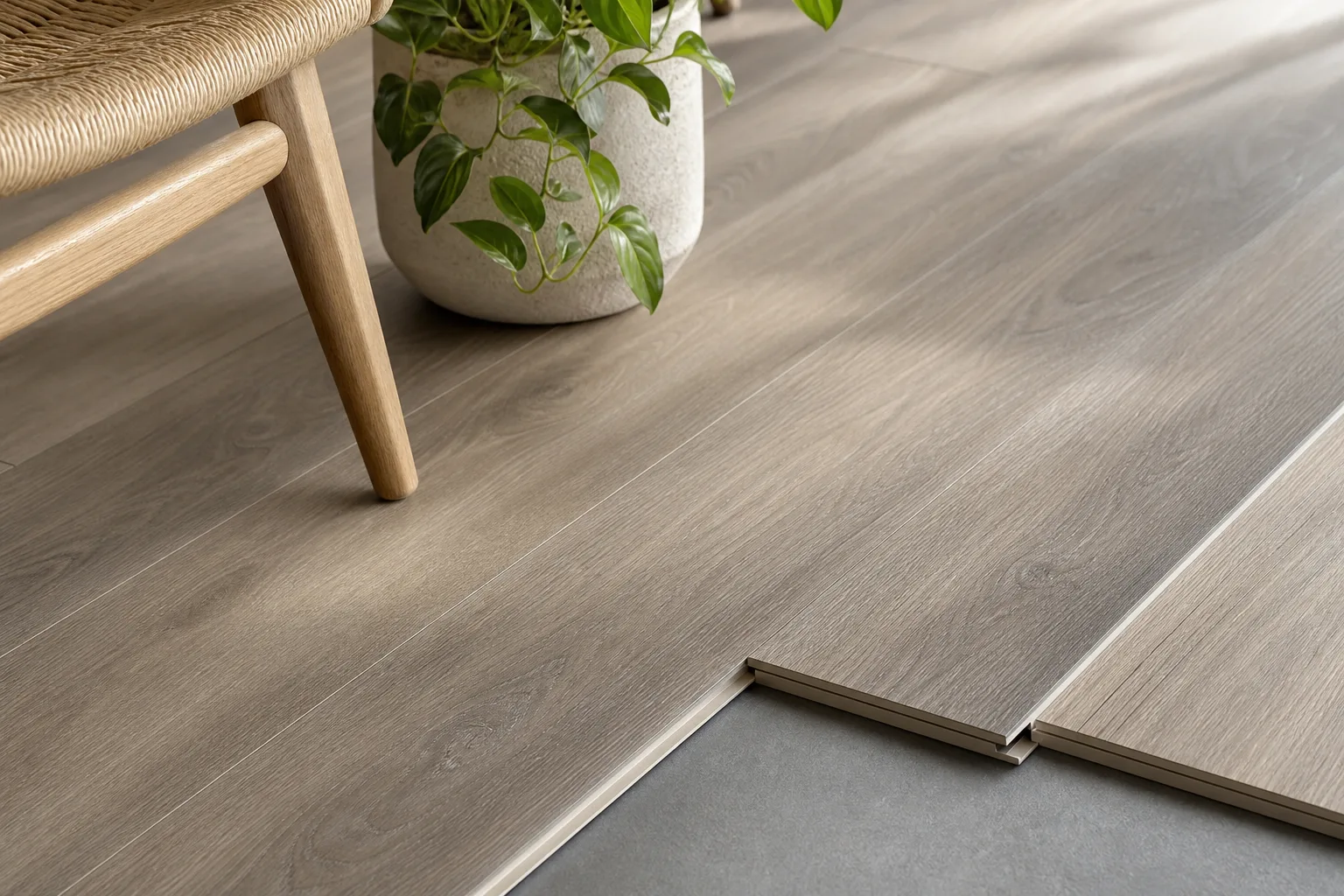
The most common mistake is to push the heating straight back to comfort level as soon as the floor is down. That gives the covering a thermal shock, and gaps can open up. The correct sequence is this:
- Acclimatisation. Before laying, leave the vinyl unopened in the room for 24–48 hours so it settles to the room's temperature and humidity.
- Heating off during installation. If the floor has already been heated, let the system cool to room temperature before laying starts.
- Wait after laying. Leave the heating off for the first 24 hours — better still, for up to 7 days if you are laying over new screed — so the adhesive and the click joints can stabilise.
- Gradual start-up. Raise the temperature by 2–3 °C a day until you reach the working level, and reduce it just as gradually in spring.
These rules apply whether you are laying the floor yourself or using a fitter. The general principles are set out in our guide to laying vinyl flooring, and a properly prepared subfloor matters even more over underfloor heating, because an uneven screed leaves air pockets and the heat then reaches the surface unevenly.
When vinyl beats tiles
Tiles may take a higher temperature, but vinyl has advantages of its own: it is warmer underfoot (tiles feel cool whenever the heating is off), quieter, softer to walk on and simpler to lay, thanks to the click system and no adhesive. In living areas — bedrooms, sitting rooms, hallways — where underfloor heating is there for comfort rather than as the main heat source, SPC vinyl is often the more sensible answer. The warm, water-resistant SPC Havana collection, for example, sits very happily over underfloor heating and costs considerably less than good porcelain tiles.
If you have not settled on a material at all yet, start with our general guide to choosing a floor, or read the complete guide to vinyl flooring, which sets out the properties of both SPC and LVT.
Delivery, samples and warranty
SPC vinyl carries a 25-year residential warranty plus a further 10 years for commercial use, making it one of the most durable options for underfloor heating. The full range is in the vinyl flooring category (from €25.95/m² incl. VAT). We ship on pallets across the EU; the cost and the delivery time are shown at checkout or quoted on request. Before committing to a large quantity, we recommend requesting 3 free samples to your door — you will see the true colour and texture in your own light. Questions about a particular heating system? Send us a message through the contact form; our team has been supplying floors since 2014 and will be glad to help.
Frequently asked questions
Is vinyl flooring suitable for underfloor heating?+
Yes. SPC vinyl is one of the best coverings for underfloor heating because its thermal resistance is low, so the heat reaches the surface quickly. The one condition is that the floor surface temperature must not exceed 28 °C.
What is the maximum temperature for vinyl over underfloor heating?+
The surface temperature of an SPC vinyl floor must not exceed 28 °C. This is the manufacturers' limit value: beyond it the covering can expand, distort or lose the tight fit of its click joints. Use a thermostat with a floor sensor.
Does vinyl work with electric underfloor heating?+
It does, but it needs more care than a water-based system. Electric cables heat up quickly and can create local hot spots where the surface goes above 28 °C. Choose a system with evenly spaced cables and always use a floor sensor.
How should I switch the heating on after laying vinyl?+
Leave the heating off for the first 24 hours after laying, and for up to 7 days over new screed. Then raise the temperature gradually, by 2–3 °C a day, until you reach the working level. Reduce it just as gradually in spring.
Vinyl or tiles for underfloor heating?+
Tiles take a higher temperature (up to 35 °C) and transfer heat best, so they suit rooms where underfloor heating is the main heat source. Vinyl is warmer underfoot, quieter and cheaper, which makes it the better choice for living spaces in a normally insulated building.