Engineered wood or vinyl: the full flooring comparison for 2026
1 September 2026
For most homes and offices the decision comes down to two floors: engineered oak parquet and SPC vinyl flooring. Both are good floors. Which one is right depends on what the room is used for, how much moisture it sees and what you want to spend. If laminate is also on your list, see our parquet versus laminate guide; and if you are weighing up the two vinyl constructions, see SPC versus LVT vinyl.
The comparison at a glance
These are the ten criteria worth checking before you commit to either floor.
| Criterion | Engineered oak parquet (three-layer) | SPC vinyl |
|---|---|---|
| Price (in our range) | €37.95–106.95/m² | €25.95–33.95/m² |
| Moisture resistance | Limited — not recommended for bathrooms | 100% waterproof |
| Underfloor heating | Suitable (glue-down, up to 27 °C) | Suitable (up to 28 °C) |
| Service life | 30–50 years | 15–25 years |
| Warranty | 15 years domestic | 25 yrs domestic + 10 yrs commercial |
| Can be renewed by sanding | Yes — 1–2 times | No — the affected plank is swapped out |
| Acoustics (footfall noise) | Warmer sound, absorbs well | Needs an acoustic underlay |
| Feel underfoot | Warm, natural | Moderate, slightly cooler |
| Effect on property value | Adds value | Neutral |
| Installation | Click 5G or glue-down | Click 5G — the simplest option |
What each floor actually costs
In our range, engineered oak parquet runs from €37.95/m² to €106.95/m², depending on the plank format and the finish. Two popular choices: Oak Bergen (hand-brushed) and Oak Oxford (dark oiled). SPC vinyl runs from €25.95/m² to €33.95/m² — for example SPC Valencia Fish (herringbone pattern) or SPC Vigo (classic plank).
Fitting is priced locally and varies a great deal from one EU country to the next, so treat these as indicative market rates rather than our prices: parquet is commonly laid for the equivalent of €15–45/m² (herringbone sits at the top of that range) and click vinyl for €8–15/m². Ask two or three fitters in your own region for a firm quote. To work out the full material cost, including waste allowance and skirting, use our flooring calculator.
Wear and scratch resistance
SPC vinyl has the clear advantage here — a 0.3–0.7 mm wear layer, abrasion class AC5/33, and good tolerance of furniture feet and pet claws. Parquet, oiled parquet in particular, marks more easily. What parquet has instead is the ability to be renewed: sanded and re-oiled, the floor looks new again. Scratches in vinyl are permanent — the only remedy is to swap out the affected plank. Lighter marks in parquet can be dealt with in place; see our guide to removing scratches from parquet.
Moisture and water resistance
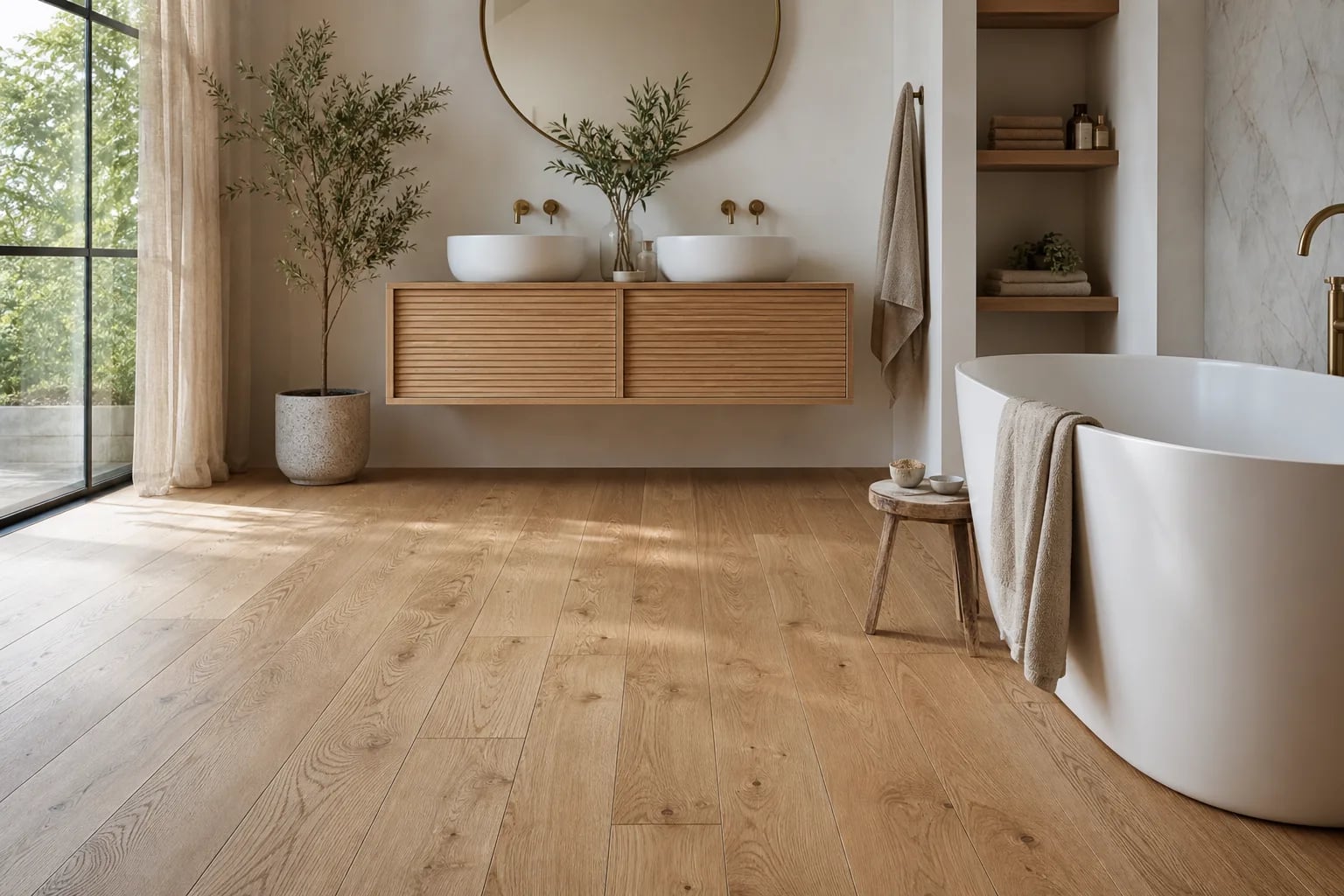
Vinyl wins this one outright. Good SPC vinyl is 100% waterproof, which makes it suitable for bathrooms, kitchens and even basements. Parquet is natural wood, so prolonged contact with water causes darkening, cupping and, at worst, moisture working its way under the boards. A spill wiped up promptly will not harm parquet — but in a genuinely wet room, vinyl is the only plank floor that belongs there.
Acoustics and comfort underfoot
Parquet is the heavier floor and absorbs impact and footfall better. It also feels warmer and more natural to walk on. Vinyl can sound slightly hollow, though modern SPC boards with a bonded IXPE underlay bring impact noise down to around 19 dB. Where acoustics matter — a bedroom, or a child's room above neighbours — parquet is the stronger choice. Where traffic is the main concern, in a hallway or kitchen, vinyl's acoustics are perfectly adequate.
Underfloor heating
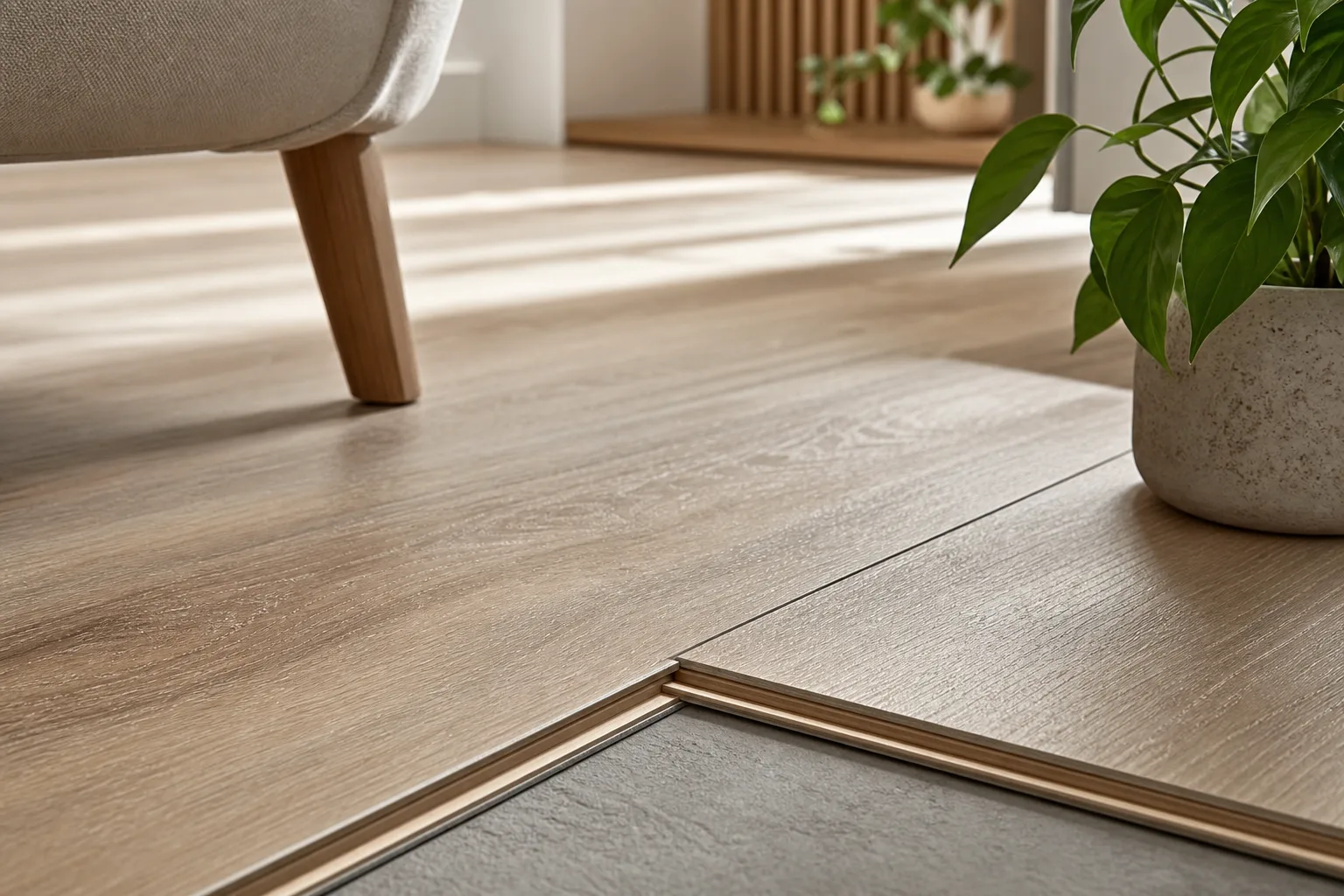
Both floors work over underfloor heating, but the conditions differ. Parquet: engineered (three-layer) only, never solid, fully bonded to the subfloor, surface temperature up to 27 °C. SPC vinyl: both click and glue-down are fine, surface temperature up to 28 °C. There is more detail in our guide to parquet over underfloor heating.
Which floor suits which room
The most useful way to decide is room by room. There is rarely one correct answer for a whole home.
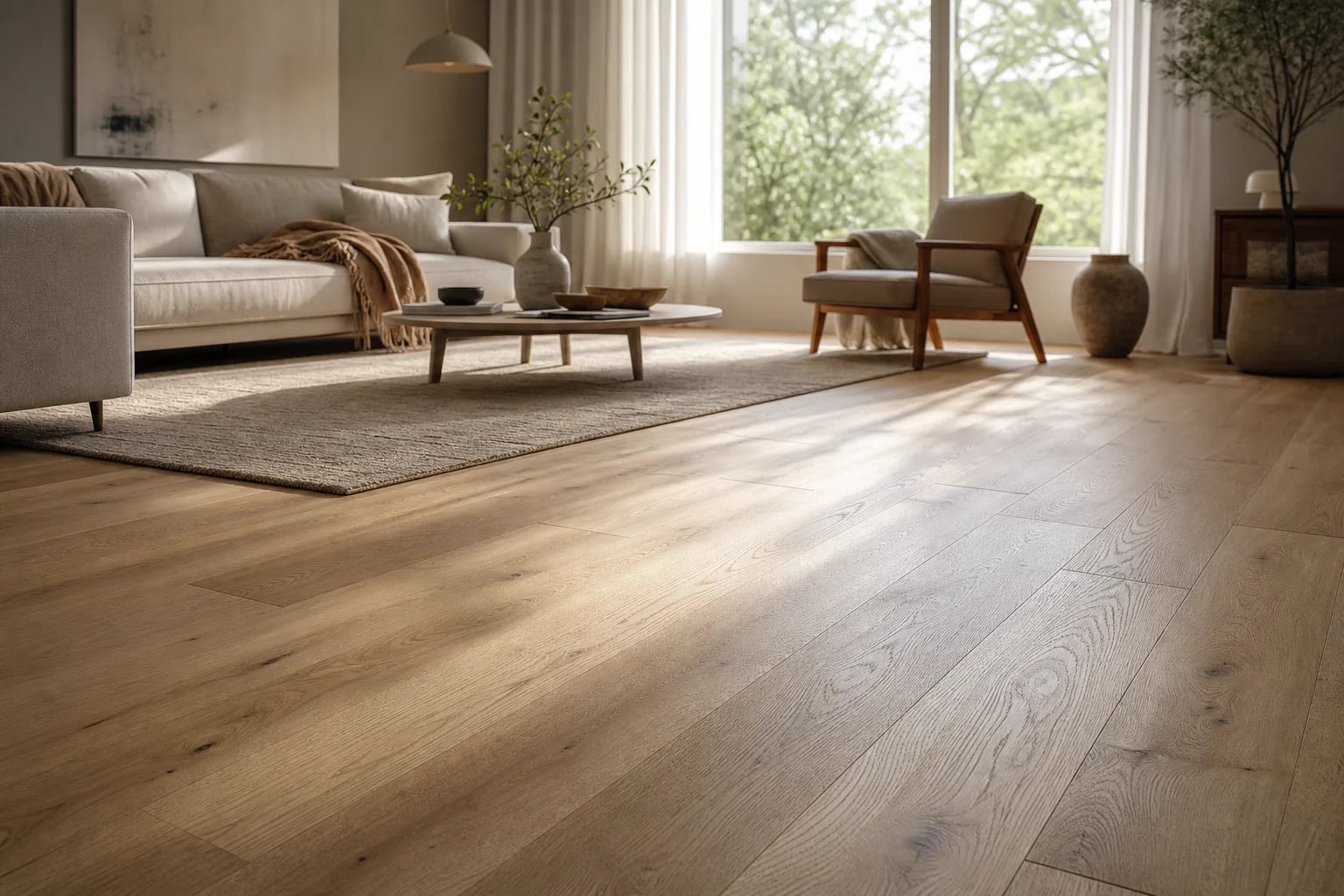
- Living room: parquet — the warmth of real wood, better acoustics, a floor that lasts.
- Bedroom: parquet — comfort underfoot and quieter footfall.
- Kitchen: SPC vinyl — moisture resistance beside the dishwasher and easy cleaning.
- Bathroom: SPC vinyl (or porcelain tiles) — parquet is not a realistic option here.
- Entrance hall and corridors: SPC vinyl — it handles wet shoes and constant traffic.
- Children's room: either works — parquet for the look, vinyl for resilience against toys, felt tips and pets.
- Study or office: parquet — a professional look and acoustic comfort.
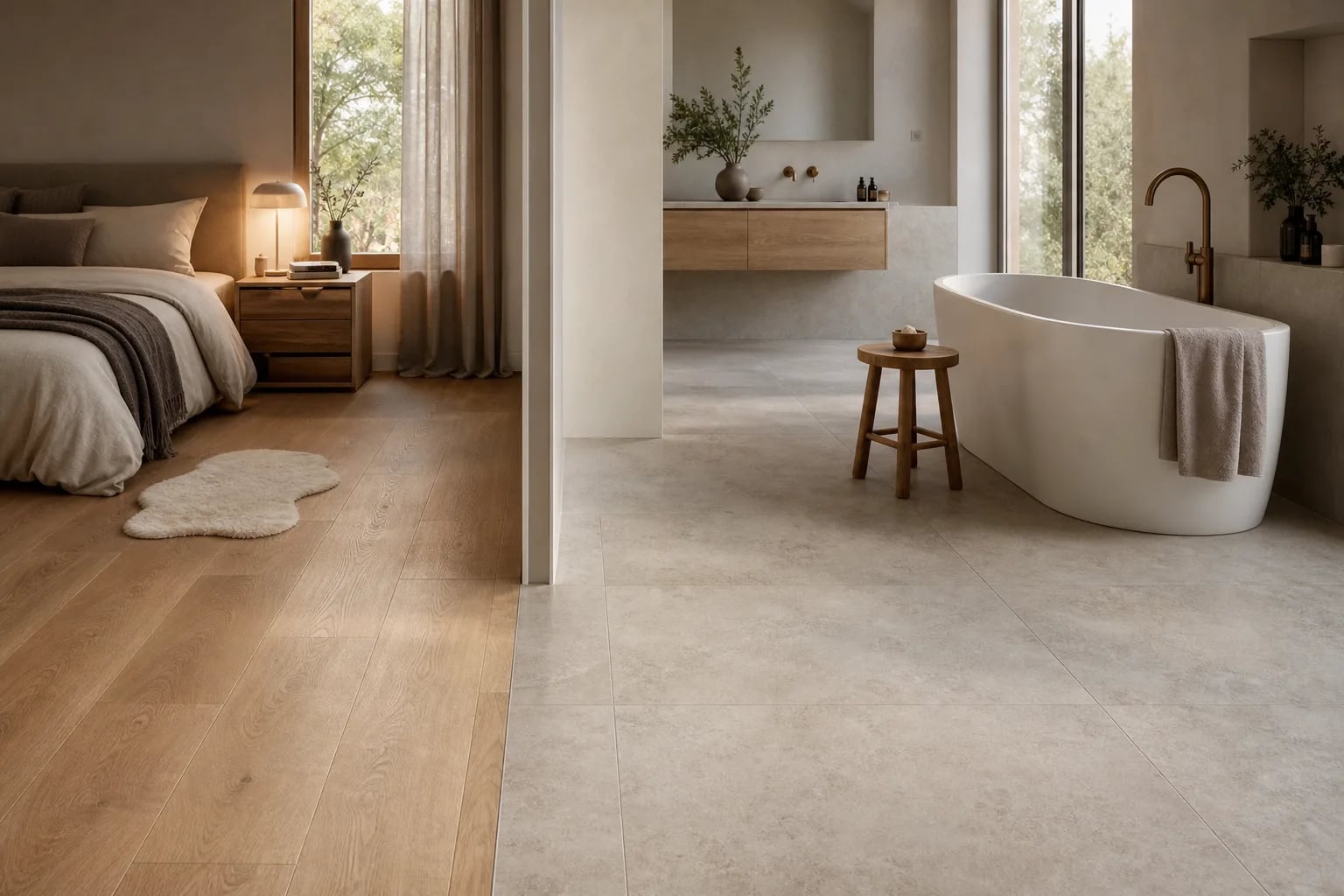
Plenty of households go for a combination: parquet in the living areas, vinyl in the wet rooms. In a video consultation we can look at your floor plan together and suggest the split that makes sense for your home.
Installation: how the two differ
Either floor can be laid by a competent DIYer or by a fitter. Parquet with the Click 5G system takes roughly 8 minutes per m² when you lay it yourself, and the boards need 48 hours to acclimatise in the room first. Over underfloor heating we recommend bonding the floor down for better heat transfer, which calls for an adhesive such as Berger Seidle M1X. SPC vinyl with a click system is the simpler job — around 5 minutes per m², no specialist tools, well within reach of a first-timer. Step-by-step instructions are in our parquet installation guide.
Longevity and what you get back
Good parquet, properly looked after, lasts 30–50 years and often longer — there are houses across Europe where the same oak floor has been down for 80–100 years through several sanding cycles. Vinyl typically holds its appearance for 15–25 years, after which the wear layer is spent and the floor has to be replaced. Real wood is also widely reported to add something in the order of 3–8% to a property's value against laminate or vinyl, though the premium differs markedly from one national market to the next — worth weighing if you may sell later.
Parquet is a long-term investment in the comfort and value of a home. Vinyl is the practical answer for wet rooms and floors that take a beating.
The verdict: which should you choose?
- If your priority is moisture resistance and easy upkeep — kitchen, bathroom, hallway — SPC vinyl is the more practical floor.
- If what matters most is the beauty of real wood, longevity and the value of the property — engineered oak parquet is the better buy.
- If the home is large and varied, do both: parquet in the living room and bedrooms, vinyl in the kitchen and bathroom.
Order 3 free samples and see both floors in your own light — it is by some way the surest way to decide. You can also book a free consultation, and one of our specialists will go through the rooms, the budget and the best combination with you.
Frequently asked questions
Is SPC vinyl suitable for underfloor heating?+
Yes — both click and glue-down SPC vinyl work over underfloor heating. The surface temperature must not exceed 28 °C. The glue-down version transfers heat better.
Which is more expensive — parquet or vinyl?+
On the initial purchase, parquet usually costs more (from €37.95/m² against €25.95/m²). Measured across the life of the floor (parquet 30–50 years, vinyl 15–25 years) and its effect on resale value, parquet often works out as the cheaper option in the long run.
Can parquet be laid in a bathroom?+
Not advisable. Parquet is natural wood and will cup and move under sustained high humidity. For bathrooms we recommend SPC vinyl or porcelain tiles.
Which one lasts longer?+
Parquet lasts 30–50 years and beyond with periodic sanding. SPC vinyl lasts 15–25 years, depending on wear-layer thickness and how much traffic the room takes. Parquet reaches that age because the surface can be renewed; vinyl is a one-life floor.