Comparison · 11 min
Parquet or laminate: which floor is better?
1 September 2026
Parquet and laminate look like close relatives, and in a showroom they can be hard to tell apart. They are not the same product. One is wood; the other is a printed decor pressed onto a board. That single difference decides how the floor looks, how it feels underfoot, how long it survives and what it really costs. This guide works through those differences one by one.
Looks and natural character
Parquet
A wood floor has a quiet, lasting elegance, and the range of species runs from classic oak to teak and walnut. Natural layers of timber and warm tones make a room feel settled and welcoming. Boards are graded by colour and structure before they are laid, so the pattern that ends up on your floor belongs to that floor alone.
The finish matters as much as the wood. Oil and lacquer both protect the surface against moisture and damage, and both come in matt or gloss, so the look is yours to set. We compare the two in detail in our guide to oiled and lacquered parquet.
Laminate
Laminate surprises people with how convincing its wood, stone and concrete imitations have become. Modern print technology reproduces natural surfaces in remarkable detail, and the design range runs from rustic oak structures to contemporary concrete. What laminate cannot do is vary. The decor simply repeats, so a whole batch looks identical, board after board.
Underfoot: how each one feels
Parquet
Wood has a texture you can read with a bare foot. Hand-planed, brushed and sanded surfaces each emphasise the grain differently and give the floor depth and character. Depending on the finish, the surface can be smooth and silky or strongly textured.
Laminate
Laminate only imitates that texture. Embossed surfaces are registered to the printed decor and copy the unevenness of natural materials closely, but underfoot the board still reads as what it is: cooler, harder and less alive than wood.
Inside the board: how each one is built
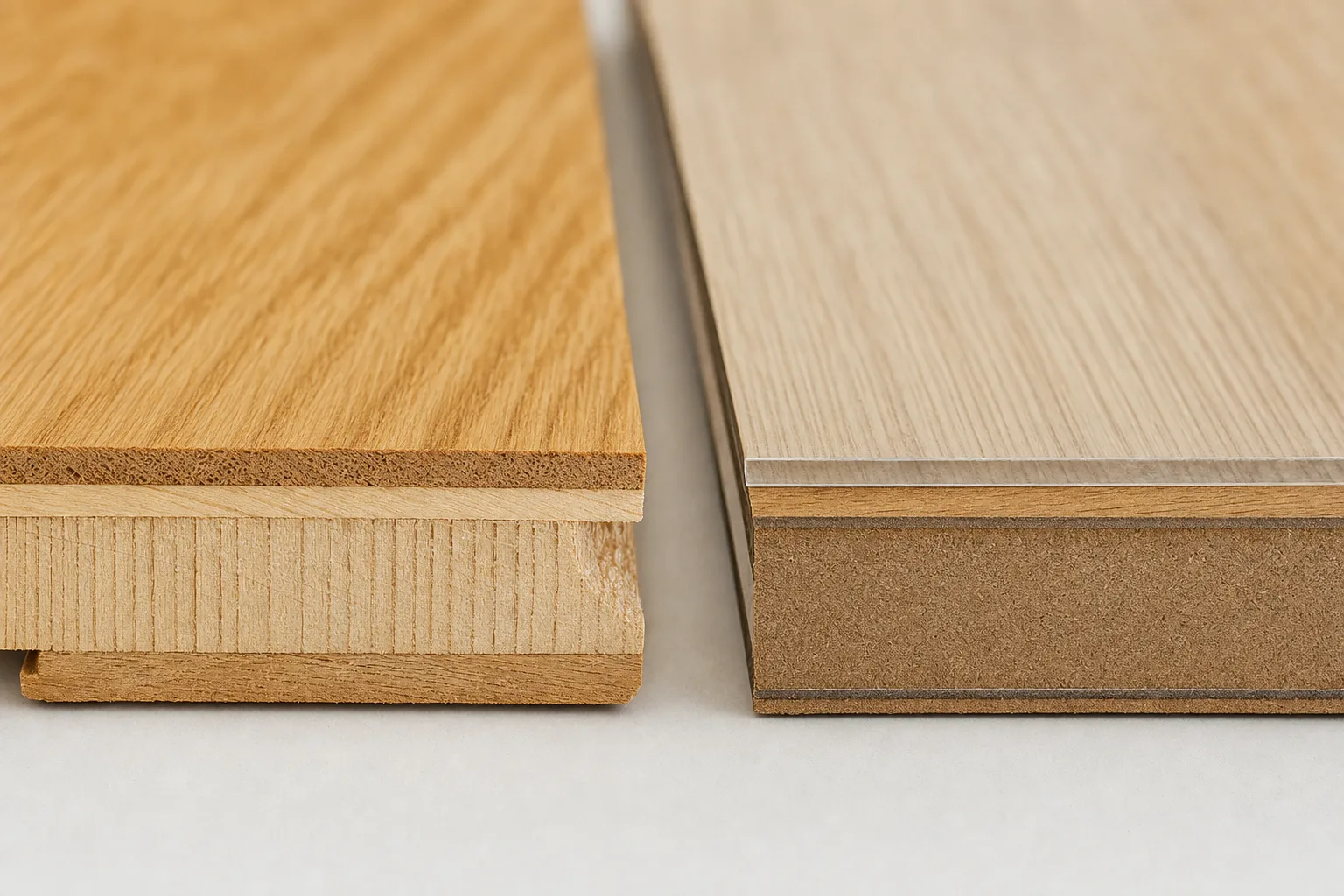
How parquet is built
Parquet is 100% wood. It comes in three constructions: solid, two-layer and three-layer.
Solid parquet
Solid parquet is one continuous piece of timber, wood all the way through. It has become a rare choice across much of Europe, because it moves noticeably when indoor humidity swings.
Two-layer parquet
Two layers: a 3–4 mm wear layer of hardwood (oak, walnut and similar) over a backing of cheaper timber or plywood. The lower layer provides stability and keeps the board from deforming as temperature and humidity change.
Three-layer parquet (our collection)
Three layers give this construction its name:
- Wear layer: 3–4 mm of high-grade oak — the surface you see and walk on.
- Middle layer: cross-oriented softwood (spruce, pine, poplar) — this is what holds the board dimensionally stable.
- Backing layer: a further softwood layer that balances the top and stops the board cupping.
The whole Terris Timber parquet collection is three-layer — 141 oak options from European mills.
How laminate is built
A laminate board is mostly layers of natural material pressed together under heat and pressure into a stable, hard-wearing panel:
- Overlay: cellulose impregnated with melamine resin — the layer that resists abrasion, scratching and moisture.
- Decor layer: printed paper carrying the wood, stone or concrete pattern.
- HDF core: high-density fibreboard — this gives the board its stability.
- Backing: impregnated paper or plastic on the underside, to stop the board deforming with moisture.
- Acoustic layer (optional): some laminates come with underlay already bonded to the board.
Everyday performance: which one works in practice
Installation
Solid parquet is a job for a trained fitter — it is usually nailed or screwed down. Three-layer parquet gives you two routes: glue-down installation or floating installation with a click system. Glue-down is the more dependable of the two, especially over underfloor heating; floating is the simpler option if you are laying the floor yourself.
Laminate's advantage is how forgiving it is. Every modern laminate uses a click system, so installation is quick and manageable even for a first-timer. A typical 30 m² room is a day's work on your own.
Durability and lifespan
Three-layer parquet with a 3–4 mm oak wear layer lasts 20–30 years. Within that time it can be sanded and re-oiled or re-lacquered once or twice, which adds another 10–15 years. Solid parquet, properly looked after, can last a century.
Laminate with a hard-wearing surface layer lasts 10–20 years. The decisive difference is that laminate cannot be sanded or refinished. Once the wear layer is gone, the board has to be replaced.
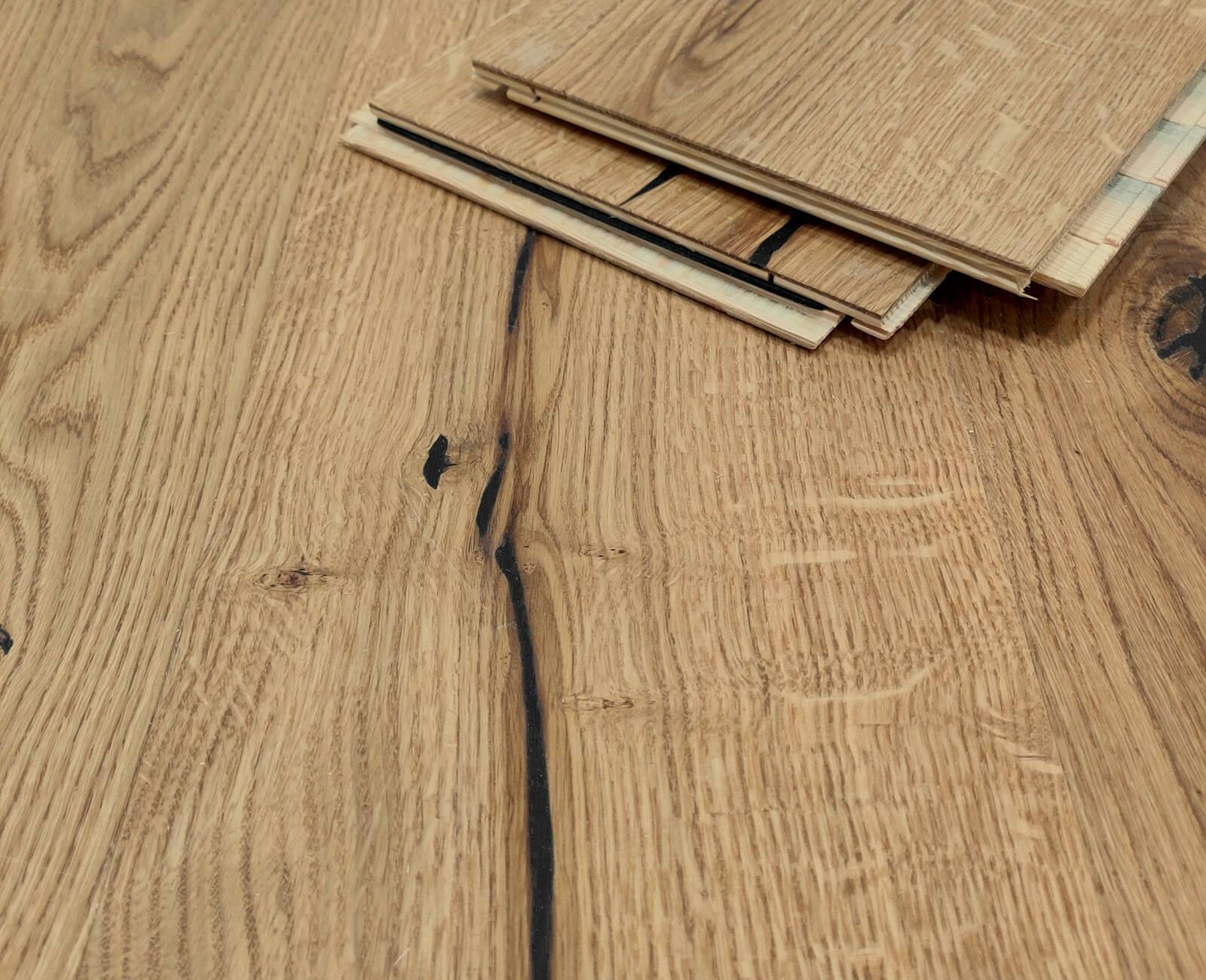
Moisture resistance
Laminate is inherently more moisture-tolerant than solid parquet: a melamine resin surface absorbs very little. That said, three-layer parquet also holds up well — its cross-bonded construction keeps movement to a minimum. For what parquet can and cannot handle in wet rooms, see our article on parquet in bathrooms.
Care and cleaning
Parquet asks for gentle, regular care: dry vacuuming with a soft brush head, and an occasional damp mop with a well-wrung cloth. Our parquet care guide goes through the routine. Oiled floors want a maintenance oil once a year; lacquered floors need re-lacquering every 5–7 years.
Laminate is simpler. Vacuum regularly, damp-mop occasionally with a mild cleaner, and that is the whole routine. But there is no renewal and no sanding — when the surface is worn, the board is finished.
Sustainability
Parquet made from FSC or PEFC certified timber is biodegradable, recyclable and easy to reuse in other projects. All of our parquet is certified.
Laminate is harder to recycle because of the mix of materials — wood, plastic and resin. Most of it ends its life in landfill, and specialist recycling facilities are still uncommon in much of Europe.
What each one costs
The gap between parquet and laminate is significant:
- Premium three-layer oak parquet: €37.95–106.95/m² incl. VAT (our collection)
- Mid-range laminate: €15–35/m² — indicative market range, varies by country
- High-grade laminate (AC5/AC6): €30–50/m² — indicative market range, varies by country
Laminate looks far cheaper on the invoice, and on the invoice it is. Divide the purchase price by the years of service, though, and the two move close together. A €100/m² parquet floor that runs 30 years works out at €3.33/m² per year. A €25/m² laminate replaced after 12 years is €2.08/m² per year. Add the longevity of wood and the value a real wood floor brings to a property, and parquet usually justifies the investment.
Which floor suits which room
- Living room, bedroom, children's room: either works. Parquet brings warmth underfoot and adds value to the property; laminate is the budget route to a convincing wood look.
- Kitchen: lacquered parquet, or a high-grade water-resistant laminate. SPC vinyl flooring is better still — we set the two against each other in parquet or vinyl.
- Bathroom: parquet only with the right preparation, meaning full glue-down and a sealed finish — see our article on parquet in bathrooms. Water-resistant laminates exist, but the result is still unreliable. The safe answer is porcelain tiles.
- Underfloor heating: three-layer parquet, yes; laminate, yes, but check the manufacturer's specification (most are rated to 27 °C). More in parquet for underfloor heating.
FAQ: parquet vs laminate
Is laminate a kind of parquet?
No. Laminate is a printed wood image on an HDF core. Parquet is real wood, either three-layer or solid. The quickest test is your hand: laminate feels cooler and more plastic, parquet feels warmer and more alive.
Which lasts longer?
Three-layer parquet, cared for properly and sanded once or twice, lasts 25–40 years. Laminate lasts 10–20 years and cannot be renewed.
Which is better in damp rooms?
A high-grade water-resistant laminate (AC5+, marked “aqua”) copes better with brief contact with water. For kitchens and bathrooms, though, the first choice is still SPC vinyl flooring or porcelain tiles — both 100% waterproof.
Is parquet really more expensive than laminate?
Up front, yes: two to four times more. Over a full life cycle, though (price divided by years of service), parquet often lands level with laminate or below it. And parquet adds value to the property on top.
Can I sand laminate the way I would sand parquet?
No. The decor layer of laminate is printed paper, and sanding removes it. It is a one-life surface with no route to renewal.
Which resists scratching better?
High-grade laminate (abrasion class AC5 or AC6) resists surface scratching better than an oiled parquet floor. Lacquered parquet sits in the middle. But parquet can be renewed and laminate cannot.
Where we stand
We sell three-layer engineered oak parquet and nothing else. Terris Timber has no laminate collection, because we do not believe in the product ourselves. For a premium home and a floor that should outlive the renovation, we recommend parquet; for a budget refit, we will tell you honestly to look for laminate elsewhere. Real wood is what we know. There is a wider overview of wood floor types in a separate article, and the short version of the argument in 5 reasons to choose parquet.
The most popular choices in our collection: Oak Bergen (matt lacquer, easy to look after), Oak Vienna (oiled, country character), Oak Oxford (dark, luxurious). Order up to 3 free samples and see the real wood in the light of your own home — delivery time and cost are shown at checkout or on request. Or book a video consultation, and we will go through your project together and find the right board for it.