Overview · 7 min
5 reasons to choose engineered oak parquet
2 September 2026
1. Longevity — a floor measured in decades
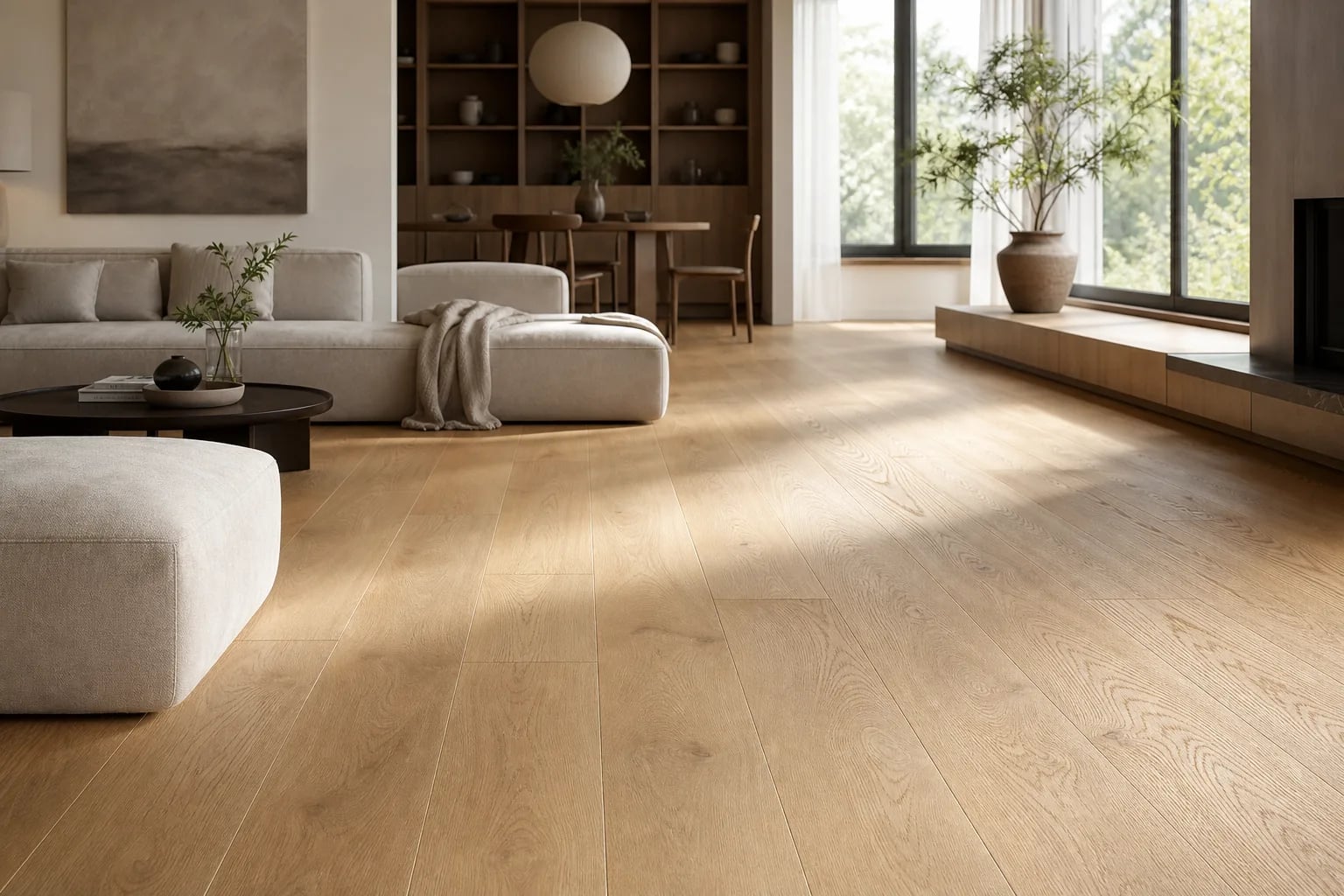
Laminate typically lasts 10–20 years and vinyl 15–25, while three-layer engineered oak runs to 25–40 years — solid parquet longer still, up to a century. The decisive advantage is that the surface can be sanded back and refinished, adding another 10–15 years each time it is done. Very few things inside a home are built to be handed on to the next generation, and a wood floor is one of them.
Every board in the Terris Timber collection is three-layer European oak with a 3–4 mm oak wear layer and, depending on the collection, a manufacturer warranty of up to 15 years. Sanding and refinishing are covered in more depth in our guides.
2. It adds to the value of the property
Surveys of the housing market consistently show homes with wood floors selling for 2–5% more than comparable properties fitted with laminate or vinyl. Buyers read a real wood floor as a sign that the rest of the house has been looked after in the same spirit.
It is also the kind of detail estate agents put into the listing rather than leave out. Across European markets, "oak parquet throughout" is a phrase that still does work for the seller.
3. Health and indoor air
Wood is a natural material, with no synthetic layer between you and the surface:
- Hypoallergenic surface — unlike carpet, a wood floor gives dust and allergens nothing to settle into
- Naturally antibacterial — the tannins in oak make it a poor host for bacteria
- No VOC emissions — natural timber does not off-gas the compounds found in some laminate and vinyl products
- Humidity buffering — wood takes up and releases moisture, helping to even out the indoor climate
Our entire parquet range is FSC and PEFC certified: responsibly managed forestry and strict emissions standards.
4. Looks and design freedom
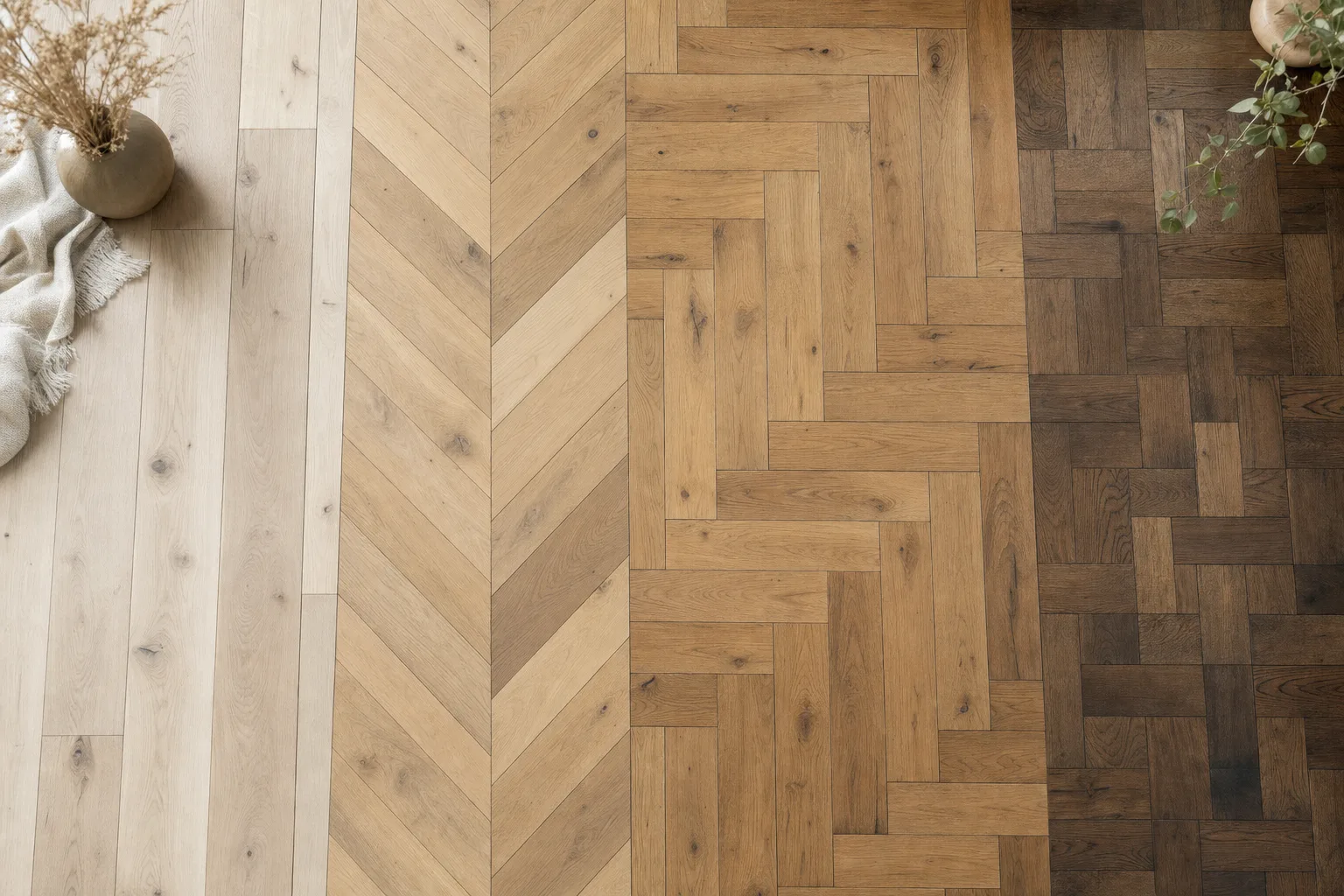
Nothing quite matches the visual presence of real timber:
- No two boards alike — grain, knots and colour vary from plank to plank
- Warm tone — wood makes almost any room feel more settled
- Works with any style — classic, contemporary, Scandinavian, industrial
- A choice of patterns — the classic plank layout, herringbone and chevron, or square panels
- A full range of tones — from pale Scandinavian shades through to deep browns
For more on narrowing down a shade and a format, see our oak parquet guides.
5. Sustainability
Wood is the only genuinely renewable floor covering:
- Renewable source — in FSC and PEFC certified forests, every tree felled is replaced
- Carbon storage — each m² of parquet locks up roughly 8–12 kg of CO₂ for the life of the floor
- Biodegradable — at the end of its life it can be recycled or composted
- Low-energy production — considerably less energy-intensive than synthetic coverings
Our oak comes from German, Austrian and Italian forests, produced to strict European sustainability standards. Set against laminate or vinyl, parquet carries the smaller carbon footprint.
A sixth reason: warmth underfoot
Wood is simply warmer to walk on than tile or concrete. Oak's dense structure insulates against heat loss and against sound, which counts for most in winter. Combined with underfloor heating, it is a hard pairing to beat.
Are there drawbacks?
Four points are worth weighing before you commit:
- Higher upfront price — 2–4× that of laminate. Costed across the whole life of the floor, though, parquet often turns out to be the cheaper option.
- Sensitive to moisture — unheated or damp rooms need thought. Bathrooms and kitchens are perfectly workable with the right preparation.
- It needs maintenance — an oiled floor once a year, a lacquered one every 5–7 years. More in our care guides.
- Scratches — hard heels, heavy furniture and pet claws all leave marks. See our guide to removing scratches.
FAQ
Is parquet worth the money?
Divide the price by the years of service and three-layer oak usually comes out level with laminate, or cheaper — before you count what it adds to the value of the property.
Which parquet is best?
Three-layer European oak with a 3–4 mm wear layer, FSC or PEFC certified. There are 60 designs in our collection.
How much does parquet cost?
Our collection starts at 37,95 €/m², incl. VAT. Fitting is charged separately by the installer, and rates differ considerably from one country to another — as a rough indication, laying engineered boards tends to fall somewhere between 15 and 45 €/m² across the EU, so ask local fitters for a firm quote.
Does parquet suit every room?
With the right preparation, yes. Bathrooms call for full glue-down installation and a lacquered finish; underfloor heating also works best with glue-down.
Ready to choose?
Order free samples, or get in touch through our contact page to book a video consultation.