Tips · 8 min
Removing scratches and stains from parquet flooring
12 August 2026
Assessing the depth of the damage
Before any repair, assess the damage. It determines the right method.
Surface (micro) scratches
Fine whitish lines, visible only at certain angles against the light. This is damage to the surface of the finish (lacquer or oil). Almost always removable with simple home methods.
Medium scratches
Clearly visible lines you can feel with a fingertip. The finish is damaged, but not the wood. These need repairing, not replacing.
Deep scratches and dents
The wood itself is damaged — bare timber is visible. This calls for local sanding or, if the area is large, replacing the board — something we cover in our article on board replacement.
Removing scratches — oiled parquet
Oiled parquet is wonderfully forgiving — local repairs are very straightforward, because the finish penetrates into the wood. You can read more about the differences between oiled and lacquered parquet in our comparison guide.
Surface scratches
- Clean the damaged area thoroughly — a damp cloth, then dry
- Apply a thin coat of WOCA maintenance oil with a brush or cloth
- Work it in with a soft brush, following the grain of the wood
- After 5–10 minutes, wipe off the excess oil with a dry cloth
- Leave to dry for 12–24 hours — keep off the area
The result: the scratch disappears or becomes barely visible.
Medium scratches
- Carefully sand the area with fine (P150–P220) sandpaper, following the grain
- Wipe away the dust
- Apply WOCA maintenance oil — you may need 2 coats (12 hours apart)
- After 24 hours, the surface is restored
Removing scratches — lacquered parquet
Lacquered parquet is harder to repair locally, because the finish sits on the surface as a film. Surface scratches can still be dealt with, though.
Surface scratches
- Wax repair sticks (sold at DIY stores): melted into the scratch, then smoothed with a special spatula. Match the colour to your floor's shade.
- Lacquer touch-up markers: pen-style colourants that disguise scratches.
Deep scratches
On lacquered parquet, damage deeper than the lacquer layer leaves two options: local re-lacquering (tricky, and often visible afterwards) or replacing the board — see our article on board replacement. Many owners simply choose to leave it — natural patina is a normal part of a wood floor's life.
Removing stains by type
Water marks (white)
On lacquered parquet — rub with ordinary mayonnaise (yes, really!) — the white mark will fade naturally within a few hours. Alternative: an iron over a cotton cloth (it creates steam that draws out the moisture).
Grease stains
Sprinkle with cornflour — it absorbs the grease within 12 hours. Then sweep it up. For any remaining traces — a damp cloth with a little mild washing-up liquid.
Coffee, tea and wine stains
Act quickly — a dry cloth first, then a damp one with a gentle cleaner. For old stains — a little WOCA wood floor soap or a pH-neutral cleaner. NEVER vinegar, NEVER harsh chemicals — you will damage the finish.
Pet stains
Urine or vomit: act immediately! Blot with a dry cloth, wipe with a damp one, then use a specialist enzymatic cleaner (available from pet shops). We look at how wood floors and pets get along in our dedicated guide.
Ink and marker stains
Cotton wool with isopropyl alcohol (70%) — carefully, on the stain only. Rub gently and dry straight away. Afterwards, refresh the oil or lacquer protection.
Sticky residues (glue, wax, chewing gum)
Chill with ice in a plastic bag — once hardened, the sticky material lifts off easily. Remove the rest with a wooden spatula, never a metal one.
Prevention — how to avoid damage
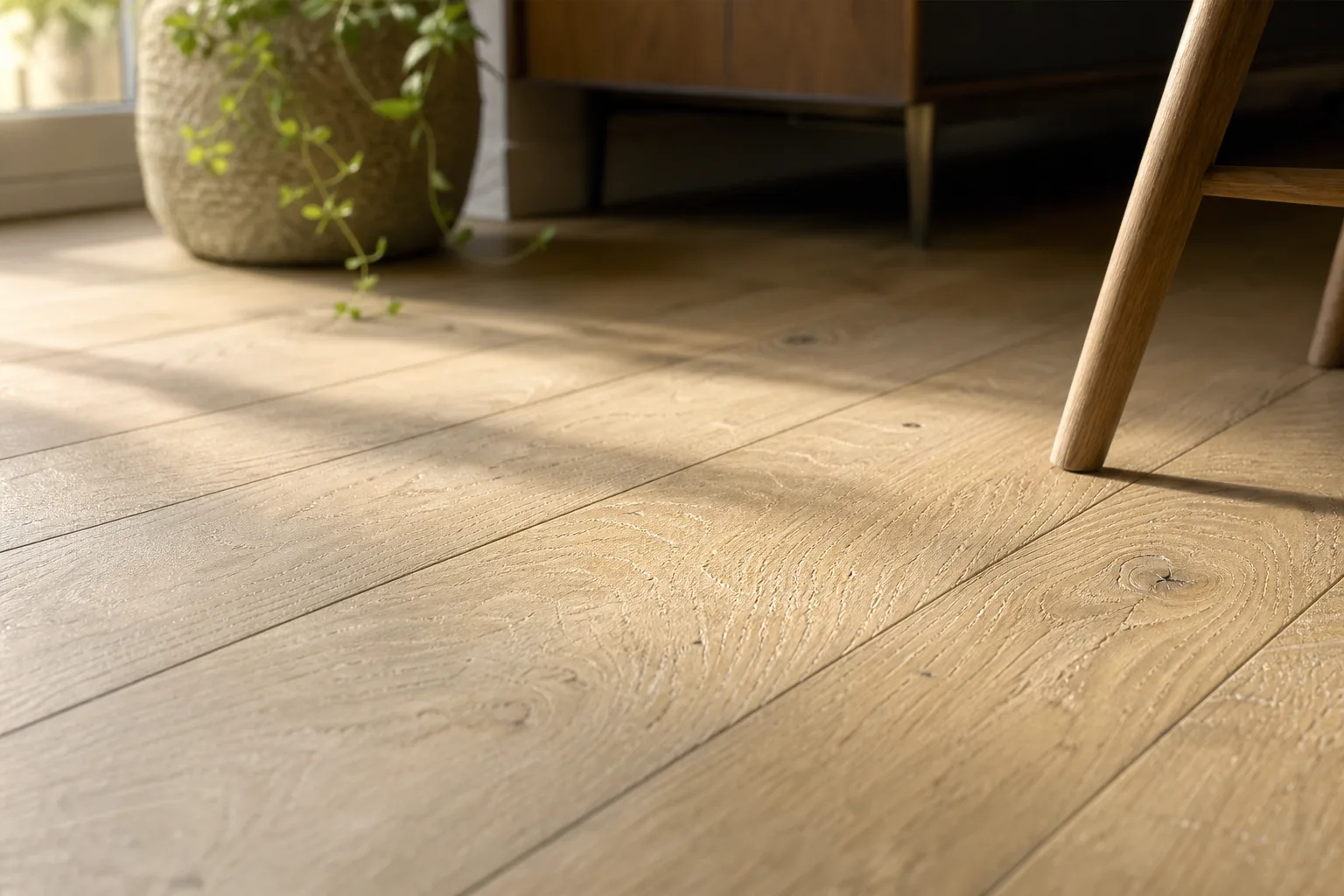
- Felt pads under furniture — always. Replace them as they wear out.
- Doormats at entrances — they stop 80% of the sand coming in from outside. Sand = an abrasive.
- Shoes off indoors — never wear outdoor shoes around the house. High heels = an extreme hazard.
- Pets' claws — trimmed regularly.
- Bags and boxes — never drag them. Lift.
- Humidity control — 40–60% indoors. Too dry = cracking, too humid = swelling.
When to call a professional?
- The damaged area is larger than 1 m²
- Deep scratches on lacquered parquet
- Water damage with swelling
- A full floor renovation — see our article on parquet sanding
FAQ
Can I disguise scratches on oiled parquet with touch-up markers?
Better not — for oiled parquet, WOCA oil or soap is the more suitable choice. Markers create incompatible surfaces.
How often should the oil be refreshed?
As a rule — every year or two for living rooms; every 6 months for heavy use. Our full care guide covers the complete maintenance routine.
Will deep scratches disappear if I oil the floor several times?
Deep scratches (into the wood) — no. They need sanding. Surface scratches — yes, they become invisible after a few rounds of oiling.
Ready to get started?
You'll find genuine WOCA care products in our accessories section. Not sure which one suits your floor? Book a video consultation and we'll show you the right method for your case.