Guide · 9 min
Vinyl flooring in the kitchen: a practical, warm choice
1 September 2026
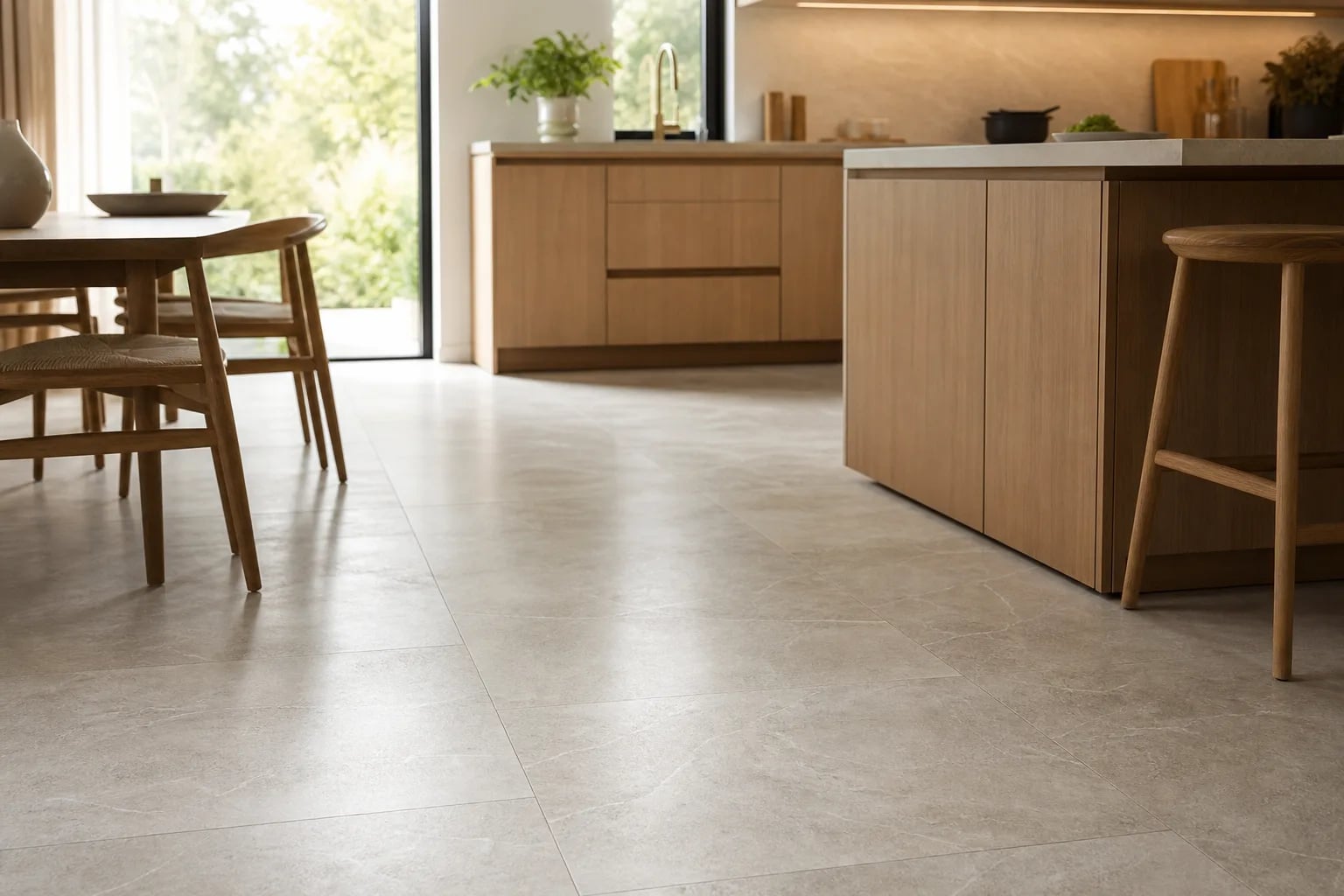
When you plan a kitchen floor, the shortlist usually comes down to three materials: tiles, parquet and vinyl. Tiles are tough but cold and unforgiving; parquet is warm and handsome but more sensitive to moisture. SPC vinyl sits somewhere between the two — it borrows the strengths of both and removes the main drawbacks. This guide explains why vinyl flooring in the kitchen has become one of the most popular choices across Europe, how to specify it properly, and what is worth knowing before you order.
Why vinyl suits a kitchen
SPC vinyl (Stone Polymer Composite) is a rigid vinyl floor built around a mineral core of stone powder. That core is what gives the plank the dimensional stability and toughness a room as demanding as a kitchen asks for. Here is what it means in practice.
Waterproof, not merely water-resistant
This is the first criterion in a kitchen. Good SPC vinyl is 100% waterproof — a spilt pan of water, a leaking dishwasher or a damp mop will not damage it. Unlike wood-based floors, vinyl does not swell or distort when it gets wet. Even so, seal the perimeter carefully, along with the joints around the sink and the dishwasher; we go into more detail in our guide to vinyl flooring in bathrooms, where the moisture load is higher still.
Resistant to grease and stains
Oil, sauce and drops of coffee reach a kitchen floor sooner or later. Vinyl carries a protective wear layer on the surface that does not absorb stains — grease simply wipes away with a damp cloth. There are no special oils or waxes to reapply, as there are with an oiled parquet floor.
Warmer underfoot than tiles
Temperature is probably vinyl’s single biggest advantage over ceramic tiles. It is noticeably warmer and kinder to bare feet, which counts for a great deal in a room where you stand for long stretches while cooking. It also pairs well with underfloor heating — more on that below.
Kinder to dropped crockery
A plate or a glass dropped onto tiles is almost certain to break. Vinyl has a small amount of give, so crockery stands a slightly better chance of surviving, and your feet and back take less punishment during a long session at the hob. It is a practical, everyday difference you will not see in a catalogue but will notice living with the floor.
Easy to clean, and a click system
Vinyl is cleaned in the simplest way there is — a damp cloth, no aggressive products. Modern SPC comes with a click system, so the planks lock together without adhesive and the floor can be laid over an existing level subfloor. That means a cleaner, quicker installation than tiling with mortar and grouting the joints.
Vinyl vs tiles in the kitchen
Tiles are the kitchen classic, but they are not without drawbacks. Here is an honest comparison on the points that matter most in this room:
| Criterion | SPC vinyl | Ceramic tiles |
|---|---|---|
| Water resistance | 100% waterproof | 100% waterproof |
| Temperature underfoot | Warm, comfortable | Cold (without heating) |
| Dropped crockery | Better (slight give) | Breaks easily |
| Installation | Click, no adhesive, fast | Adhesive + grouting |
| Noise underfoot | Quieter | Louder, echoes |
| Price | from €25.95/m² | from €35.95/m² |
Put briefly: tiles are harder and better able to take heat (a hot pan set down on the floor, say), while vinyl beats them on comfort, quiet and ease of installation. If you want the full side-by-side, read our separate article “Tiles or vinyl: which is better”.
Vinyl vs parquet in the kitchen
Parquet in a kitchen looks refined and creates one continuous surface with an adjoining living room. Natural wood, though, is more sensitive to moisture and asks for closer care — a puddle left standing can leave a mark or distort a board. Parquet in a kitchen is perfectly possible, but with conditions: the right surface finish, spills wiped up quickly and regular maintenance. We cover every nuance in “Parquet in the kitchen — can it be done”.
Vinyl is the more practical option here for anyone who wants the look of wood without wood’s sensitivity. Modern SPC planks reproduce oak, ash and other species convincingly, with realistic texture, so the kitchen reads warm and natural while you stop worrying about spilt water. If you have set your heart on real timber after all, look through our oak parquet options.
Which usage class does a kitchen need
The usage class tells you what level of traffic a floor is built for. A kitchen counts as a heavily used room, so we recommend usage class 33 vinyl (commercial-grade durability in a domestic setting). Class 31–32 would be fine for a bedroom, but a kitchen is worth some headroom — the floor keeps its looks far longer under daily wear.
| Usage class | Suits | For a kitchen? |
|---|---|---|
| 31 | Bedrooms, lightly used rooms | Not recommended |
| 32 | Living room, hallway | Possible, but the minimum |
| 33 | Heavy-traffic rooms, kitchens | Recommended |
One example from our range is the SPC São Paulo collection, made for heavy-traffic spaces and kitchens. You will find more models in the vinyl flooring category, and a full introduction to the material in “Vinyl flooring: the complete guide”.
Vinyl and underfloor heating
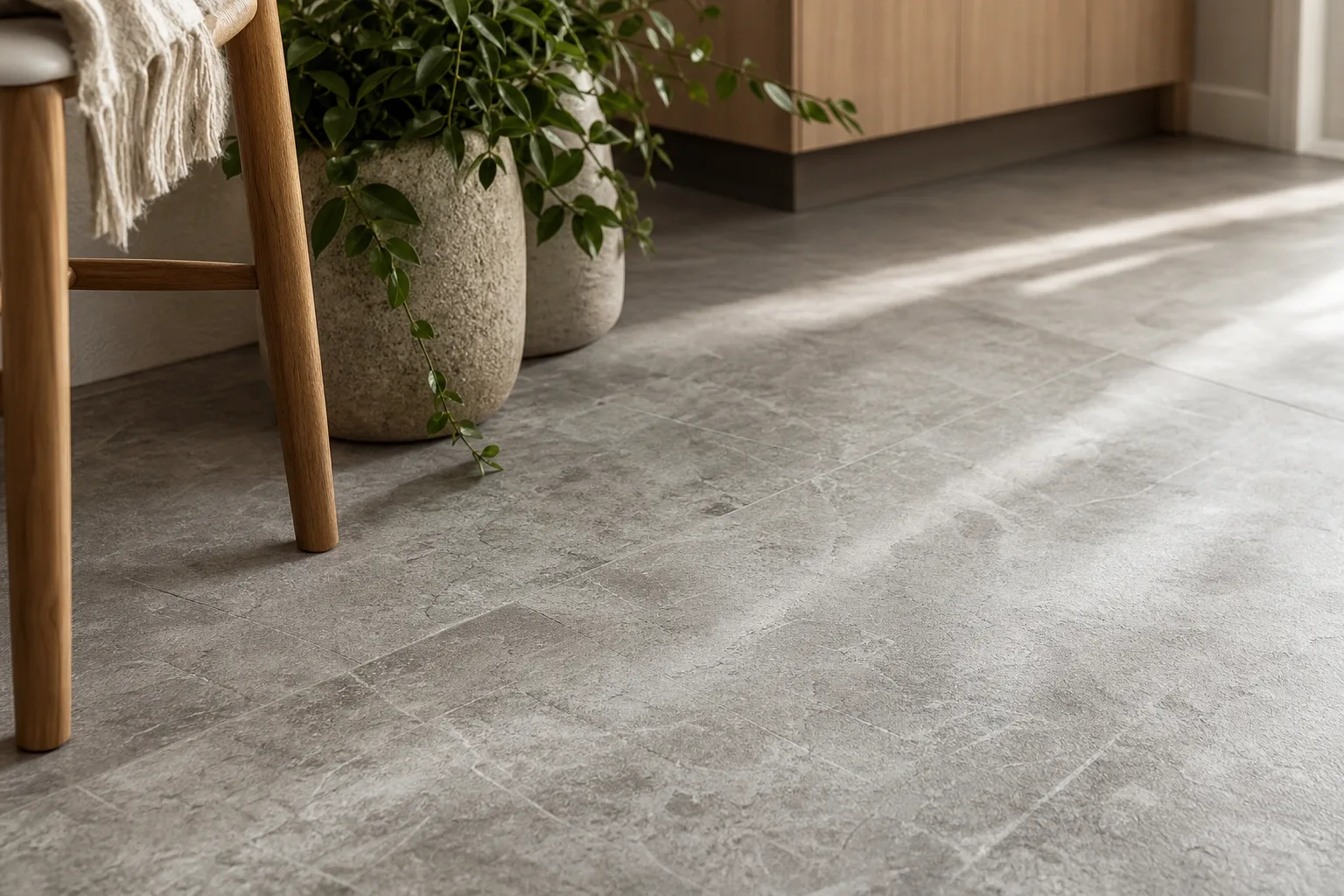
SPC vinyl works well over underfloor heating — one more reason to choose it in a kitchen, where a warm floor is especially welcome. Keep to the maximum surface temperature (usually up to 27–28 °C) and change the setting gradually rather than in jumps. Whichever model you pick, check the manufacturer’s underfloor-heating marking; we state it in every product description.
Care: everyday and occasional
Vinyl is among the simplest of all floor coverings to look after:
- Every day: lift dust and crumbs with a soft broom or a vacuum with a soft-brush head.
- Wet cleaning: a well-wrung mop with a neutral, non-abrasive product. Avoid standing water at the joints.
- Stains: wipe grease and sauces up straight away with a damp cloth — the surface does not absorb them.
- Protection: fit felt pads under furniture legs so that moving chairs cannot scratch the surface.
Unlike parquet, vinyl never needs sanding or re-lacquering — a gift that lasts the whole life of the floor. If you are weighing up which surface is simplest to maintain, glance at our parquet care guide and the difference is obvious.
Price, and what your kitchen will cost
Vinyl flooring for a kitchen starts at €25.95/m² incl. VAT — one of the most affordable quality floors on the market, particularly given its lifespan and the 25-year residential warranty. To work out quickly how much material your kitchen needs and what the budget looks like, use our flooring calculator; the room area is all you need to enter.
Every floor we sell comes straight from German, Austrian and Italian mills, and we ship on pallets across the EU — cost and delivery time are shown at checkout or on request. Before you commit, order 3 free samples to your home: you will see the true colour and texture in your own kitchen light rather than on a screen.
Frequently asked questions
Is vinyl flooring suitable for a kitchen?+
Yes, vinyl flooring works very well in a kitchen. Choose usage class 33 SPC vinyl — it is 100% waterproof, resists grease and scratches, feels warm underfoot and wipes clean. It is one of the most practical choices for a demanding kitchen environment.
Which is better in a kitchen — vinyl or tiles?+
Both are waterproof, but vinyl is warmer underfoot, quieter to walk on and more forgiving of dropped crockery, and it goes down faster without adhesive. Tiles are harder and more heat-resistant. For comfort and a quicker installation, vinyl usually wins in a kitchen.
Can vinyl be laid over underfloor heating in a kitchen?+
Yes, SPC vinyl is compatible with underfloor heating. Keep to the maximum surface temperature (usually up to 27–28 °C) and change the setting gradually. Always check the manufacturer's underfloor-heating marking for the specific model.
How much does vinyl flooring for a kitchen cost?+
Vinyl flooring starts at €25.95/m² incl. VAT. Our flooring calculator works out the quantity and the budget for your kitchen in a moment. We ship on pallets across the EU, with cost and delivery time shown at checkout or on request, and vinyl carries a 25-year residential warranty.
How do you look after vinyl flooring in a kitchen?+
Vinyl is simple to maintain: lift dust daily and wet-clean with a well-wrung mop and a neutral product. Wipe grease up straight away. Vinyl never needs sanding or re-lacquering, so it stays practical for its whole service life.