Technical · 8 min
Parquet click systems: how they differ and which is best
2 September 2026
What is a click system?
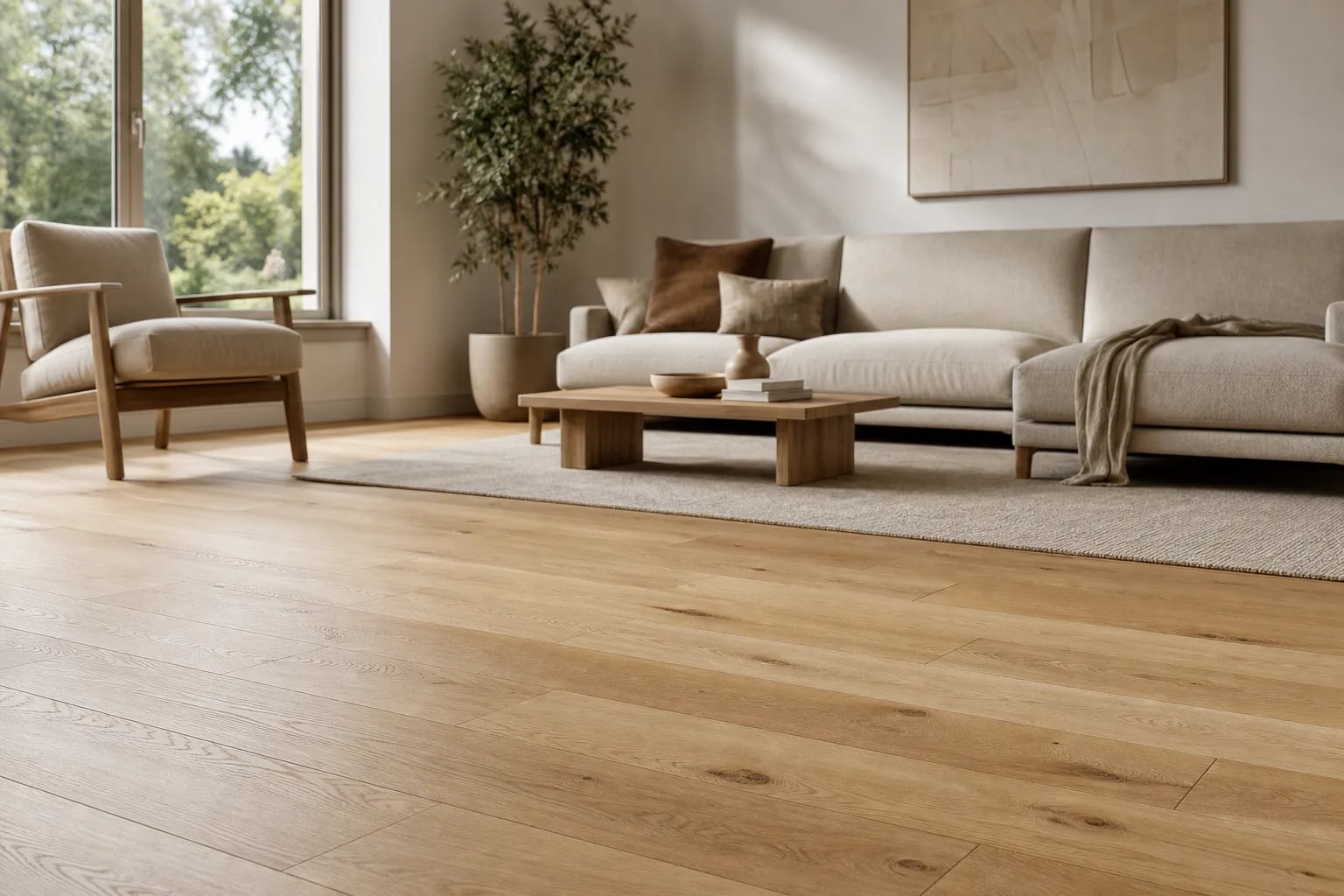
A click system is a mechanical joint between planks, developed in Sweden in the 1990s and patented by Välinge. Instead of adhesive, every plank carries a hidden lock — profiles milled into the edges that snap the neighbouring plank into place with a single click.
The upsides: fast installation, clean work, a floor you can lay yourself, and planks that can be lifted and relaid. The downsides: the joint depends on accurate geometry, and rooms with a lot of cuts generate noticeable waste.
The main click systems
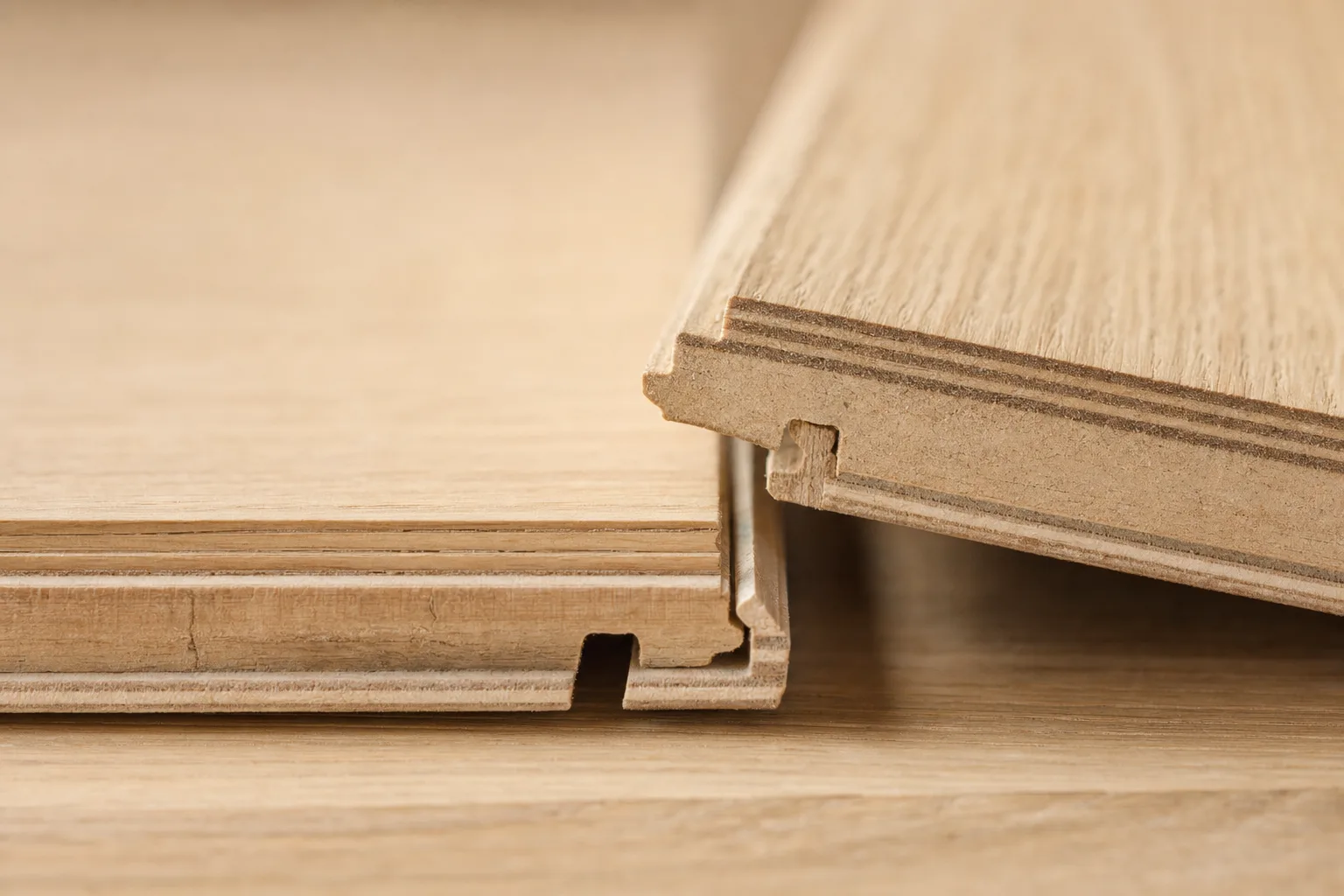
Drop Down Click (DD-Click) — the system in our collection
The most modern profile, and the easiest to work with. The plank is pressed vertically down from above — set it in position and tap it home with a rubber mallet. The joint is stronger than a traditional angle-in click and copes better with heavy traffic.
Advantages:
- The easiest system for a non-professional to fit
- Can be laid single-handed — one hand holds the plank
- Releases cleanly (the floor can be taken up and relaid)
- Suitable for underfloor heating
Every floor in the Terris Timber collection uses the Drop Down Click system, so beginners have little to worry about.
2G Lock
The traditional angle-in click, the same principle as Tarkett's T-Lock. Planks are engaged at an angle of roughly 30° and then lowered flat. It is a two-handed job — one hand holds, the other presses.
5G Lock (5G Drop Lock)
A more advanced version, with an extra plastic tongue in the end joint that springs back and locks. Stronger than 2G, and better at stopping joints from opening up.
Uniclic
Quick-Step's own system. The angle-in principle is close to 2G, but with an additional locking profile. Used across Quick-Step laminate and parquet.
Click versus tongue and groove
Traditional tongue and groove needs adhesive — it is the older technology. Its strengths: an exceptionally rigid joint, suitability for glue-down parquet (particularly over underfloor heating) and larger formats (XL parquet).
The XL formats in our range (Vienna 400, Zurich 400, Innsbruck 400) use tongue and groove and are bonded to the subfloor by a professional fitter. The standard collection is Drop Down Click.
Which system suits which job?
- DIY fitter, floating installation: Drop Down Click → our standard collection
- Underfloor heating with full glue-down: tongue and groove → XL parquet
- Commercial space, heavy traffic: 5G Lock, or tongue and groove bonded down
- Quick, temporary floor (rented home): Drop Down Click — it can be lifted and relaid
Fitting details specific to click floors
- The subfloor has to be flat — 2 mm over 2 m. Full detail in the subfloor preparation guide.
- Acoustic underlay — essential under a floating floor. Our natural rubber underlay cuts impact noise by up to 28 dB.
- 10–15 mm expansion gaps at the walls — the floor needs room to move
- Stagger the end joints — the offcut from the first row starts the second, the offcut from the second starts the third. That spreads the joints and gives a stronger floor.
- Acclimatisation — 48 hours in the room before laying
The complete method is in the parquet installation guide.
Advantages and drawbacks of click systems
Advantages
- Fast — around 30 m² a day for a competent DIY fitter
- Clean — no adhesive, no odour
- Reversible — the floor can be lifted and relaid
- Cheaper to fit — no adhesive cost
- Works over underfloor heating
Drawbacks
- Not as rigid as fully bonded parquet
- More footfall noise
- Possible movement underfoot over an uneven subfloor
- Not suited to very large runs (over 100 m² without expansion joints)
- Less suitable for damp rooms (see parquet in the bathroom)
FAQ
Does a click floor work over underfloor heating?
Yes — although a full glue-down installation is the better choice. More on this.
How do you take up a click floor?
Drop Down Click releases when you lift the plank at the end joint. 2G and 5G come apart in reverse laying order.
Is a separate acoustic underlay needed under click parquet?
It is essential. Without one you get footfall echo and accelerated wear on the underside of the planks.
Ready to start?
Order free samples or book a video consultation.