Comparison
Two-layer or three-layer engineered oak: which should you choose?
1 September 2026
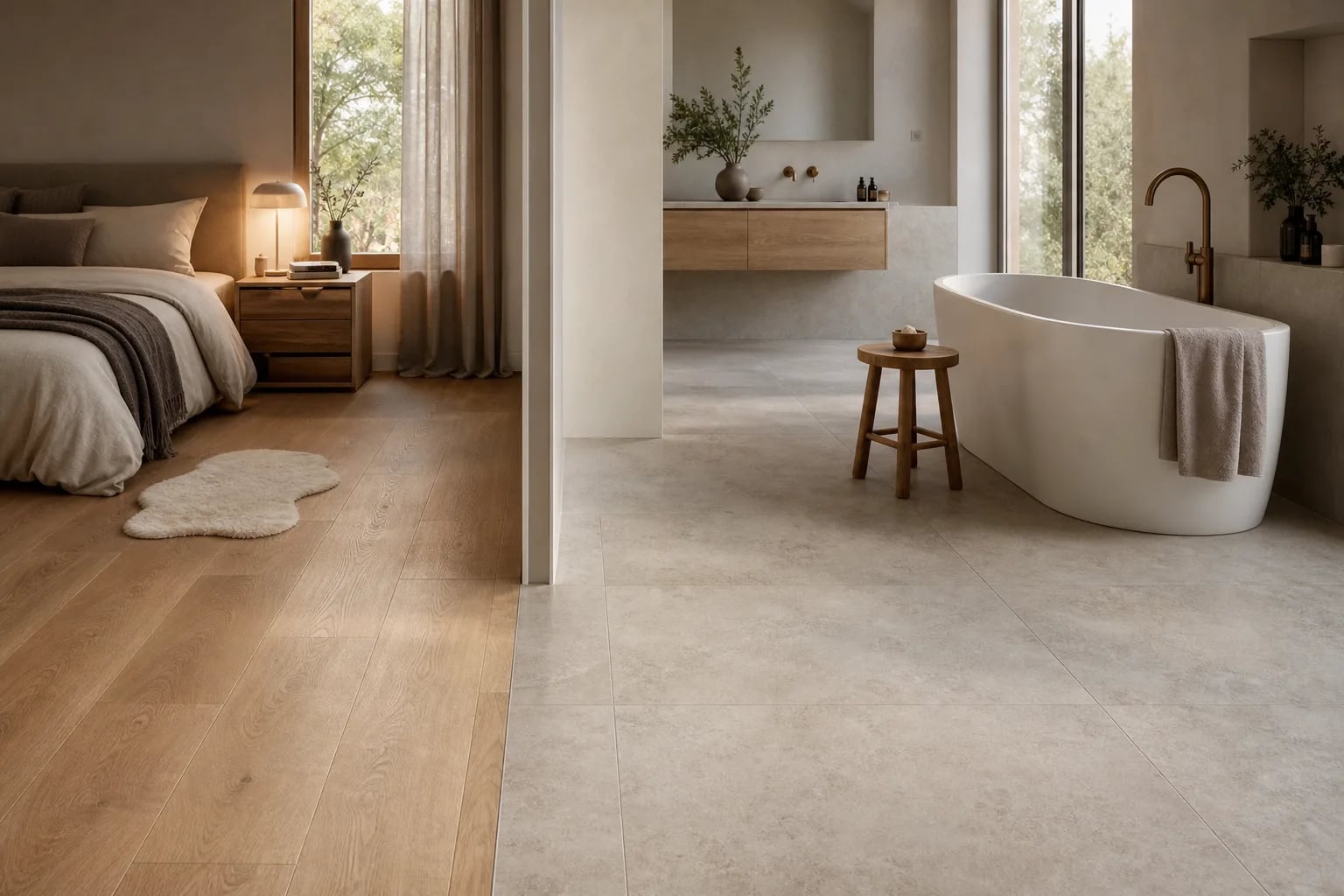
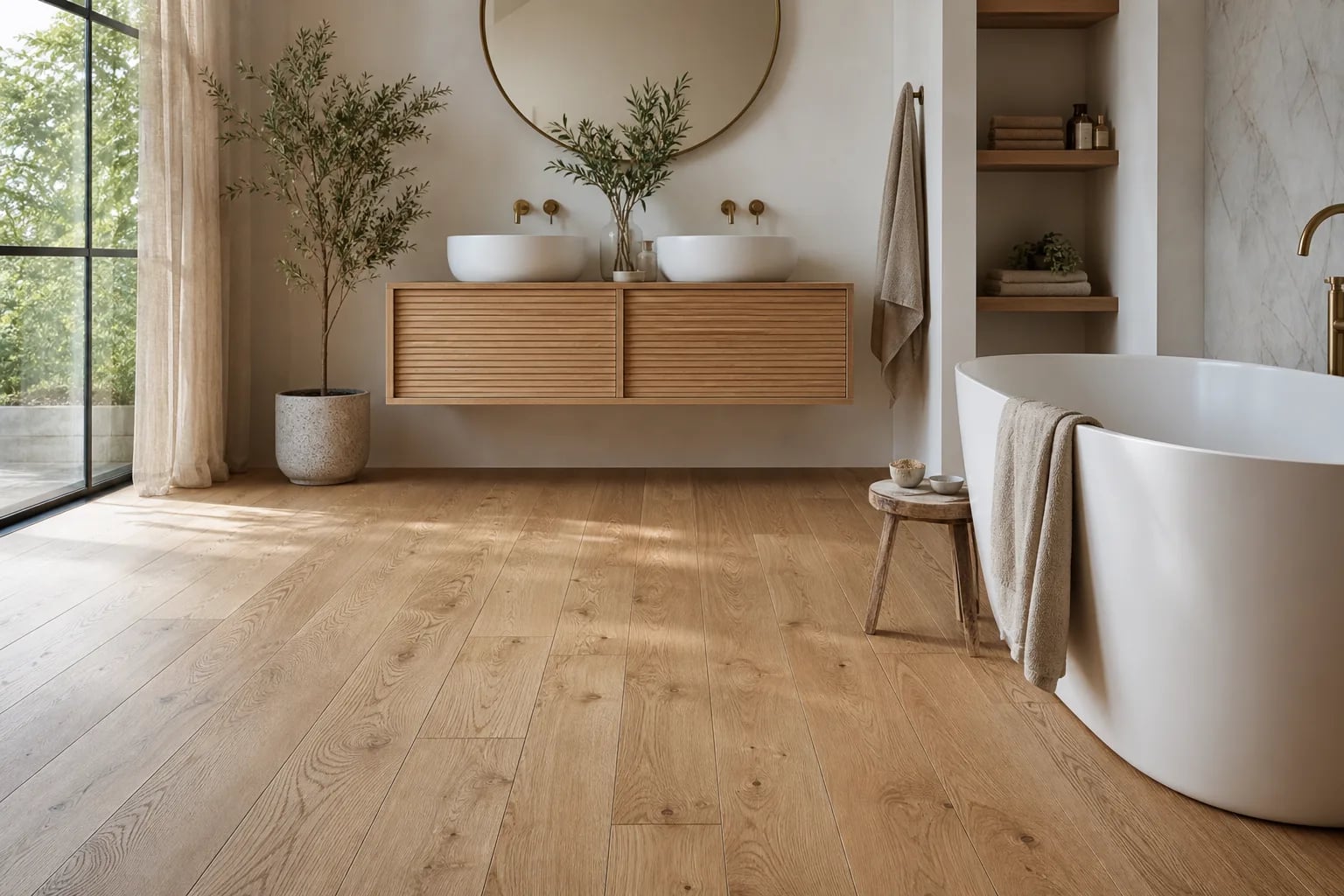
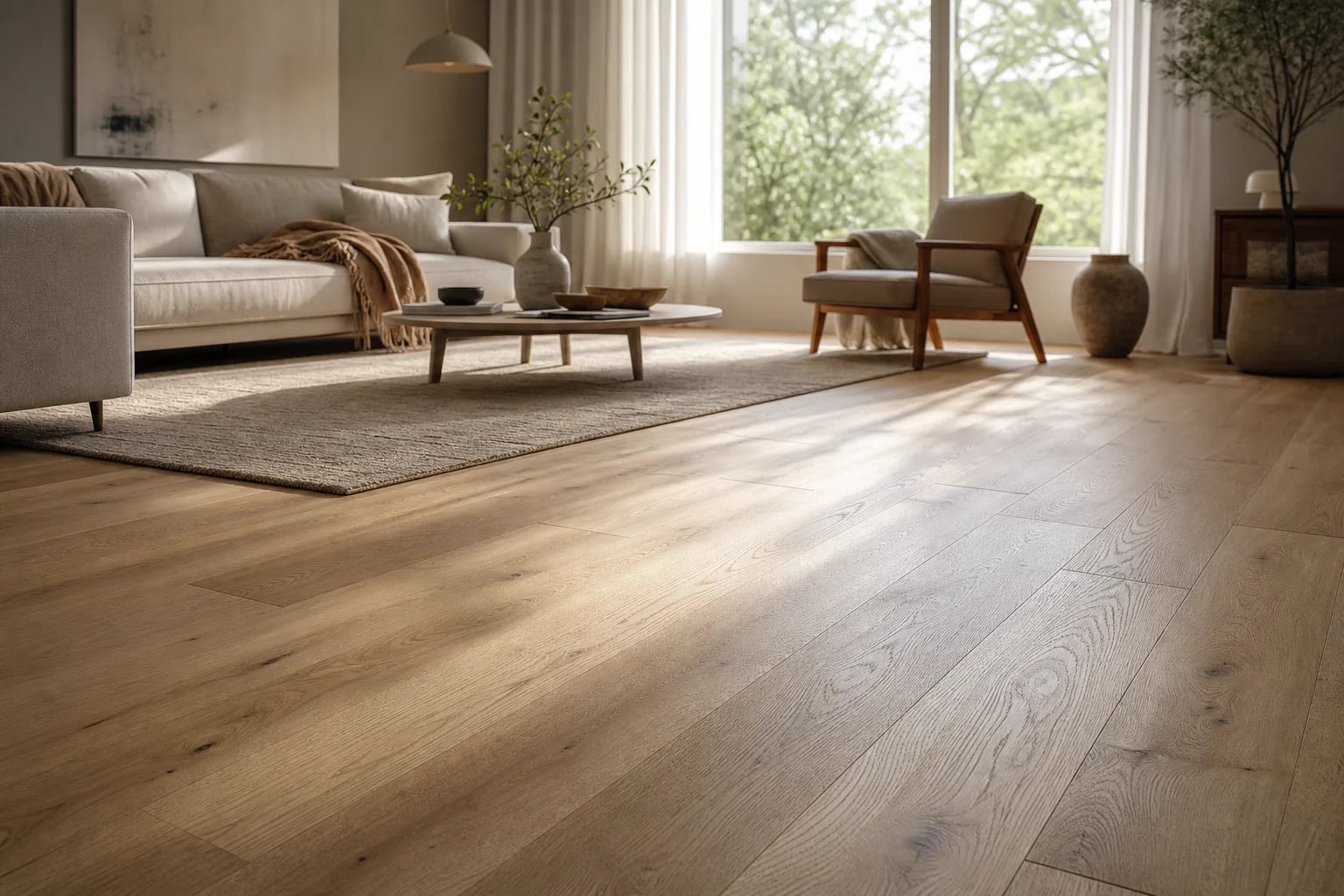
From above, the two look identical — real oak, natural grain, the same warm surface underfoot. Beneath the wear layer, though, they are two different pieces of engineering: a two-layer plank built on a plywood core, and a three-layer plank built from cross-bonded timber. That difference decides whether the floor can be fitted floating, how it behaves over underfloor heating, and what the finished job costs. This guide compares both constructions and explains why our own range is three-layer.
Why engineered planks are built in layers
Wood never stops responding to its surroundings. As humidity and temperature shift through the year, it expands and contracts. A solid board does this through its entire thickness, which is why it shrinks in dry, heated winter air and swells again in a humid summer. A layered build answers the problem neatly: timber layers running in different directions restrain one another and keep the board flat. That is precisely why engineered construction has replaced solid boards in almost all modern building work — a shift we look at in more detail in our comparison of engineered and solid parquet.
Engineered planks are made in two main ways: two-layer and three-layer. From above they are indistinguishable — you are looking at real timber in both cases, a genuine wood floor that can be sanded and refinished. What differs is everything beneath the wear layer, and that determines how the floor is fitted, how stable it is, and what the whole job costs. If you are still getting to grips with the terminology, start with our explanations of how an engineered plank is built and the difference between parquet and engineered planks.
Two-layer planks: oak on a plywood core
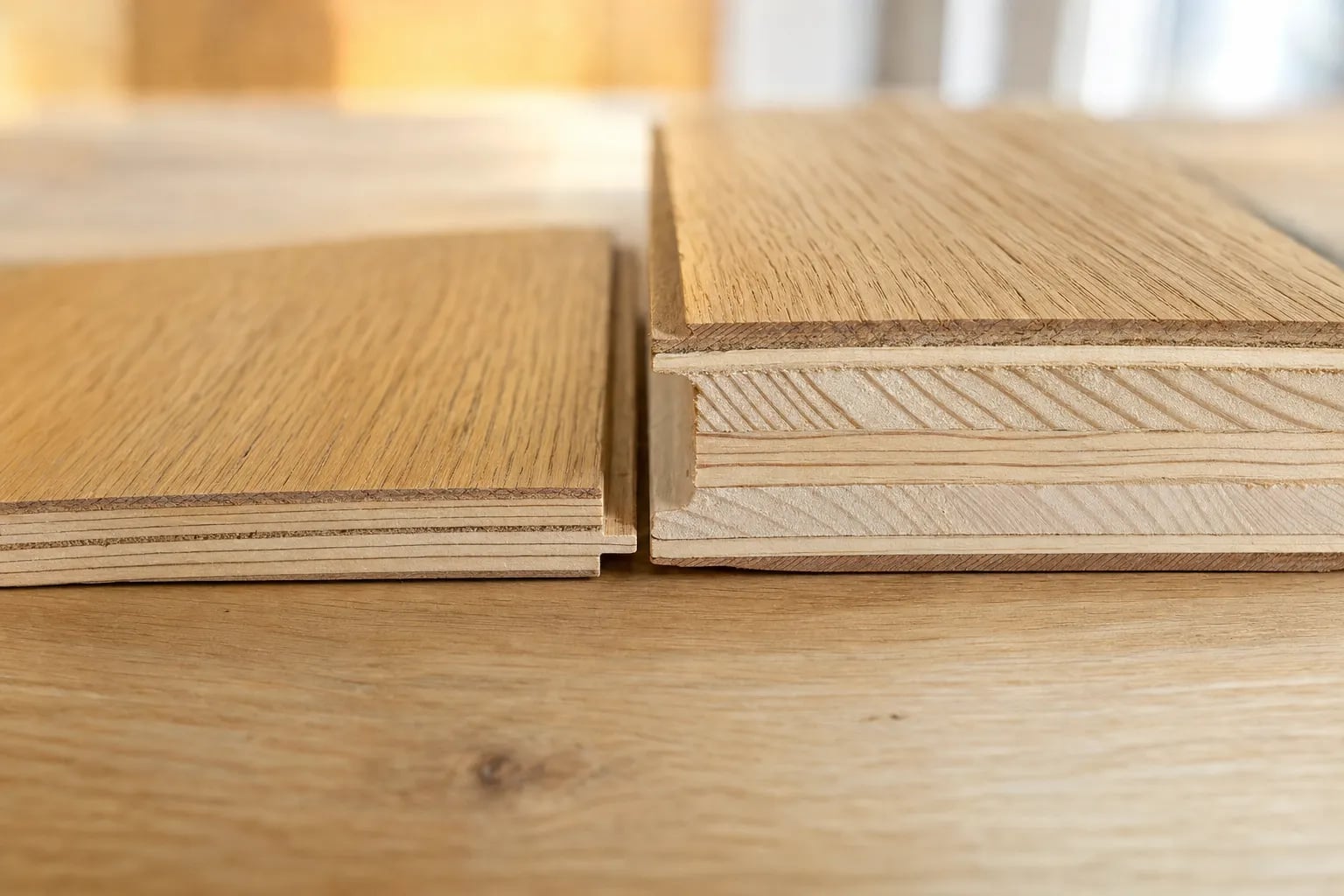
A two-layer plank has exactly two elements: a wear layer of fine hardwood, almost always oak, bonded to a plywood core. Plywood is itself a multilayer material — thin veneers glued crosswise — so the core comes out dense, rigid and resistant to swings in moisture.
What that means in practice:
- A slimmer profile. A two-layer plank is thinner than a three-layer one, which helps in renovations where every millimetre of build-up counts — matching an existing door height, for instance, or levelling with the floor covering in the next room.
- Glue-down only. Two-layer planks have no click system and are not designed for floating installation. The whole board is bonded to a carefully levelled subfloor.
- Better heat transfer. A thinner board bonded directly to the screed passes heat through more efficiently, which is a genuine argument in its favour over underfloor heating.
- A solid, monolithic feel. A glued floor has none of the hollow resonance of a floating one, and footsteps are quieter.
The weak point is the fitting itself. You need a perfectly prepared, level subfloor, a good adhesive and an experienced fitter, so the labour side of the budget usually rises. We cover how glue-down installation works and what it involves in our guide to laying parquet.
Three-layer planks: the cross-bonded build that became the standard
A three-layer plank is made of three layers set at right angles to each other: a 3–4 mm oak wear layer on top, a middle layer of timber strips running crosswise, and a balancing veneer underneath. Because the grain in each layer runs in a different direction, the movement of one layer is held in check by the rigidity of the next. The result is the most stable wood floor construction on the market — one that stays flat even as the climate in the room changes.
Standard thickness is 14–15 mm. A board of that thickness is rigid enough to be fitted floating with a click joint, and equally happy glued down when you want maximum stability or you are preparing a floor for underfloor heating. That versatility — being able to pick the fitting method to suit the situation and the budget — is exactly what made the three-layer build the market standard.
There is one further practical advantage. A floor laid with click joints can be lifted again if it needs to be — to reach services beneath it, or to swap out a damaged board. With a glued floor that is far more involved. In a rented property, or anywhere you expect changes later on, that alone can settle the decision.
On top you have real oak with everything that brings: hardness, longevity and a grain pattern that is different on every board. Why that particular species dominates the flooring market is a subject we cover in our piece on oak parquet.
Two-layer vs three-layer: the comparison at a glance
The differences that matter, side by side:
| Criterion | Two-layer plank | Three-layer plank |
|---|---|---|
| Construction | Oak wear layer + plywood core | Three cross-bonded timber layers |
| Overall thickness | Thinner | 14–15 mm |
| Wear layer | 3–4 mm | 3–4 mm |
| Installation | Full glue-down only | Click (floating) or glue-down |
| Stability | Very good | Best — cross-bonded core |
| Underfloor heating | Suitable (glued down), better heat transfer | Suitable (glued down) |
| Sanding | 2–3 times | 2–3 times |
| Best suited to | Renovations with tight height limits where glue-down is planned anyway | Everything: new build, renovation, click or glue-down |
As the table shows, the real practical difference is freedom of installation. A two-layer plank commits you to gluing; a three-layer plank lets you choose the method according to the subfloor, the budget and the job in front of you.
Underfloor heating: which construction copes better?
The short answer is that both do, provided one rule is respected: over underfloor heating, engineered planks should be glued down. A bonded floor is in direct contact with the screed, so heat transfers efficiently, whereas a floating floor leaves an air gap that behaves as an insulator.
The two-layer plank, being thinner, does pass heat through slightly better — that is its strength. But a glued 14–15 mm three-layer plank performs very well over underfloor heating too: every engineered plank in our range is suitable for underfloor heating when it is glued down. The full temperature, humidity and installation recommendations are set out in our article on wood flooring over underfloor heating.
In practice the gap between the two constructions over heating is smaller than the specifications suggest. What matters far more is getting the installation right: a dry, level subfloor, the correct adhesive, a system brought up to temperature gradually, and a stable indoor climate. Meet those conditions and either build will serve you without complaint — which means the choice is better made on other grounds: installation freedom, thickness and budget.
The wear layer is the number that matters
Whichever construction you choose, longevity is not decided by the number of layers but by the thickness of the oak wear layer on top. That is the part that wears with daily traffic, and the part you sand back when, years later, you want the floor to look new again. Quality planks of both types are made with a 3–4 mm wear layer, which allows 2–3 sandings — enough for the floor to last decades.
One thing to watch when you compare offers: the market is full of boards with a very thin wear layer that can never realistically be refinished. Our range contains only planks with a 3 mm or 4 mm oak wear layer. For how refinishing works and when it becomes necessary, see our guide to sanding parquet; for choosing the surface finish, read oiled or lacquered planks.
Price and long-term value: what are you actually buying?
When you compare prices, compare the whole project rather than the square-metre rate on the board. A two-layer plank often looks attractive per square metre, but the mandatory glue-down installation always comes with it: adhesive, primer, meticulous subfloor levelling and more hours of skilled labour. A three-layer plank with a click joint lets you cut those costs substantially — floating installation is quicker and needs no adhesive — while still leaving gluing on the table when the job calls for it.
Long-term value, in both cases, comes down to the same single parameter: the oak wear layer. Two boards with the same 3–4 mm layer will last a similar length of time regardless of what sits beneath them. The sensible strategy, then, is to choose the construction to suit how you intend to fit the floor, and to put the money into a thicker wear layer and a careful installation — because those are what decide how many times the floor can be brought back to life.
When to choose two-layer, and when three-layer
A two-layer plank is worth considering when:
- you are renovating and every millimetre of floor height is critical;
- you are planning a glue-down installation with a professional fitter in any case;
- you want the best possible heat transfer over underfloor heating and are prepared to get the subfloor perfectly level.
A three-layer plank is the more rational choice when:
- you want freedom over the fitting method — a click joint lays faster and more cheaply, and you can still glue where gluing is needed;
- stability comes first: the cross-bonded core handles seasonal humidity swings best;
- you are after one versatile answer for a new build or a renovation with no specific height restrictions.
It is also worth costing the whole job rather than the material alone. Glue-down installation calls for adhesive, more thorough subfloor preparation and more of the fitter's time, so as a rough indication, fitting rates quoted across Europe tend to fall somewhere around €8–15/m² depending on the method and the pattern. Those are indicative market rates that vary widely from one country to the next, not our prices. We break the figures down in our article on what it costs to lay parquet, and the easiest way to check how much material you need is the flooring calculator.
Why our range is three-layer
Terris Timber stocks three-layer engineered planks by deliberate choice. The reasoning is simple: the cross-bonded core is the most stable there is, 14–15 mm gives the board real substance, and the option of fitting it either with a click joint or with adhesive means the same plank suits a quick renovation and an underfloor-heating project equally well. Every plank we sell has a 3 mm or 4 mm oak wear layer, so it can be sanded back 2–3 times.
Browse our three-layer engineered oak from €37.95/m², or, for something more classical, herringbone planks from €52.95/m² — 12 designs in the range. Before you order, you can request up to three free samples and judge the shade in your own light. We ship on pallets across the EU; delivery cost and lead time are shown at checkout or on request, and the minimum flooring order is 20 m². If you are still weighing up the options, get in touch and we will narrow the shortlist down with you.
Frequently asked questions
Can a two-layer plank be fitted as a floating floor?
No. Two-layer planks have no click system and are made for glue-down installation only — the whole board is bonded to a levelled subfloor. If you want a floating installation, choose a three-layer plank with a click system.
How many times can a three-layer plank be sanded?
Three-layer planks with a 3–4 mm oak wear layer can be sanded 2–3 times. Looked after properly, the floor lasts for decades and comes back looking new after each sanding.
Which construction is better over underfloor heating?
Both are suitable, as long as they are glued down. A two-layer plank is thinner, so it passes heat through slightly better, but a glued 14–15 mm three-layer plank performs very well over underfloor heating too.
Why is the three-layer build considered the most stable?
Its three layers are bonded crosswise — the grain in each layer runs in a different direction, so the layers cancel out one another's movement as humidity changes and the board stays flat.
How much does three-layer engineered oak cost?
In our range, three-layer engineered oak starts at €37.95/m² and herringbone planks at €52.95/m². The minimum flooring order is 20 m², and we ship on pallets across the EU — delivery cost and lead time are shown at checkout or on request.