Tips
How to clean tile floors and grout: the complete guide
1 September 2026
Porcelain tiles are among the lowest-maintenance floors you can buy: the fired body absorbs almost no water, so spills stay on the surface and lift off with very little effort. Even so, the wrong products will ruin a hard-wearing floor — acids eat into cement grout, and oil-based cleaners leave a film that attracts dirt. This guide covers the everyday and deep-cleaning routine, how to bring tired grout back, a stain-removal table, and where matt and polished tiles need different treatment.
Why porcelain tiles are the easiest floor of all to clean
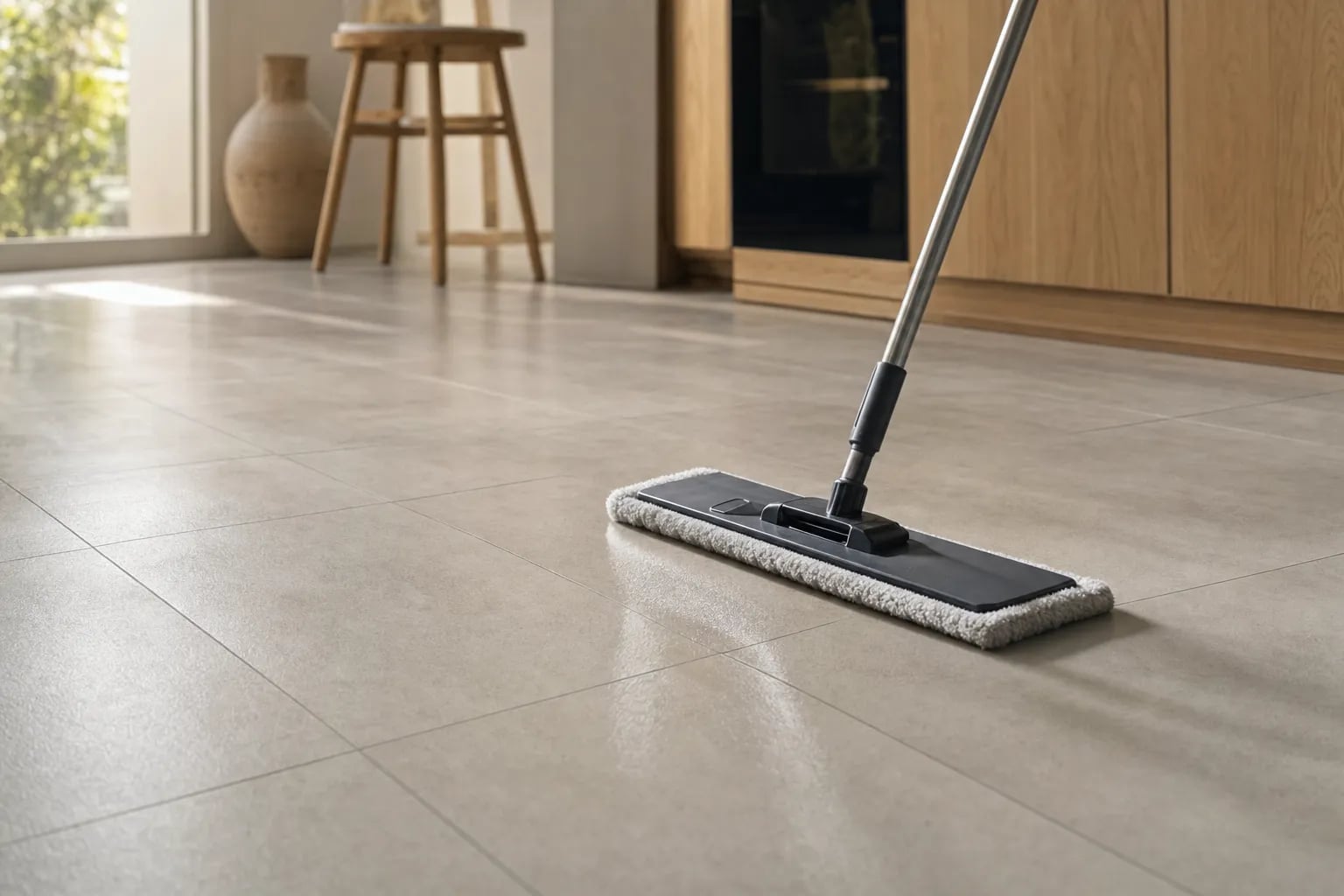
Porcelain tiles are fired at very high temperatures, which gives them an extremely dense body — water and other liquids barely penetrate the surface at all. The practical benefit is obvious: spilt coffee, wine or oil sits on top rather than soaking in the way it does with natural stone or wood. Most of what people call a stain is simply dried-on dirt that a plain damp mop removes, with no special chemistry involved.
The second reason is edge quality. Rectified tiles are cut to precise dimensions, so they can be laid with narrow joints: less room for dirt to collect and less surface to scrub. We have written about rectified edges and about choosing tiles in general in our tile guides, which are worth reading if you are specifying a floor from scratch.
The weak point of the whole floor is not the tile but the cement grout. Grout is porous, so it draws in grease, dirt and moisture. How you look after the joints is usually what decides whether the floor still looks new after five years or simply looks tired.
Everyday cleaning: a simple routine, no special products
Step one is dry cleaning. Sand and hard grit act like sandpaper: they scratch the glaze, and on polished tiles they gradually leave dull traffic paths through the busiest areas. Sweeping or vacuuming with a soft head a few times a week is the cheapest investment you can make in the life of the floor.
Step two is damp mopping with a pH-neutral cleaner. Neutral products attack neither the glaze nor the grout, and they leave no film. The important rule is to dose according to the manufacturer's instructions: twice the detergent does not mean twice as clean. The excess dries into a sticky layer that traps dirt, so the floor gets dirty faster than before.
Step three is knowing what to leave on the shelf. Oil- and wax-based cleaners — the "nourishing" and "polishing" products — are pointless on porcelain: they build a film that collects dirt and makes the floor slippery. Acidic cleaners such as vinegar, citric acid and limescale removers do no harm to the tile itself, but they break down cement grout.
Clean more often in the kitchen, where cooking grease settles on the floor as a thin, initially invisible layer. In the bathroom, squeegee the water away after showering and you will avoid most limescale marks. And if your tiles have a textured surface, the relief holds more dirt, so a soft brush is worth using now and then — our flooring guides cover kitchen, bathroom and slip-resistant surfaces in more detail.
The best cleaning is the cleaning you never have to do. A mat at the front door stops most of the grit before it ever reaches the floor, and felt pads under chair and table legs protect the surface when furniture is dragged. For polished tiles, those two small things matter more than any cleaning product.
Matt and polished tiles: two different tactics
A polished surface behaves like a mirror. It reflects light beautifully, but it also shows every streak, every hard-water droplet and every bare footprint. The tactic is straightforward: less detergent, clean rinse water — dirty water is the single biggest cause of streaking — and a dry microfibre cloth to finish. It takes a couple of extra minutes and leaves a surface with no marks on it at all.
Matt tiles are much more forgiving day to day. Streaks, dust and prints barely show, so ordinary damp mopping is enough. The trade-off is that a deeper texture holds dirt more firmly, which is where a soft-bristled brush earns its place during a deep clean.
Our range currently holds 16 matt and 36 polished models — all of them 9 mm thick, rectified and made in Italy. You can browse them side by side in matt tiles and polished tiles if you are still deciding on a surface.
Deep cleaning: every few months
Even a well-maintained floor slowly accumulates a layer of grease and detergent residue. You see it as a dull cast over the whole floor, or as greyish paths through the busiest routes. An alkaline cleaner is the answer: spread it over the floor, leave it to work for a few minutes, go over it with microfibre or a soft brush, then rinse thoroughly with clean water. The rinse matters — alkaline residue left behind simply becomes the next film.
Post-renovation cleaning is a separate job. Cement and filler haze calls for a dedicated construction-residue cleaner, and those products are acidic. Wet the joints with clean water first so the acid cannot soak into them, work in small sections, and rinse generously when you are finished.
If the tiles are laid over underfloor heating, that makes no difference to which products you use — it is simply easier to clean the floor once it has cooled, so the cleaner does not dry too quickly. Our guide to tiles over underfloor heating covers that combination in full.
Cleaning and restoring grout
Cement grout is porous, so it draws in dirt and grease and darkens over time. For routine cleaning, use an alkaline grout cleaner or a simple paste of bicarbonate of soda and water: apply it, leave it to sit, work along the joint with a soft brush — an old toothbrush is the ideal tool — and rinse off.
What not to do? Acids dissolve the cement binder: the joint begins to crumble, it deepens, and it then collects even more dirt, which puts vinegar and limescale removers permanently off the list. A steam mop is excellent on the tile surface, but use it sparingly on grout and silicone joints — constant hot steam weakens the grout and can lift silicone away from the substrate. Steam occasionally, and never hold the jet in one place.
If the joints no longer come clean, you can restore them without major work: a grout pen brings back the colour and leaves a protective layer, while the more thorough route is raking out and regrouting the top layer. New or freshly cleaned joints are worth sealing with a grout sealer, which reduces absorbency and makes everyday cleaning considerably easier. Grout durability actually starts at installation, and both the method and the budget for it are covered in our tile laying and tiling cost guides.
Stain removal: which product for which stain
Porcelain is chemically resistant, so the tile itself tolerates almost every household product — the caution is needed for the grout and for the gloss of a polished surface. Before reaching for anything stronger, always test it on a small, inconspicuous area.
| Stain | What works | What to avoid |
|---|---|---|
| Limescale, water marks | Acidic limescale remover or vinegar — on the tile face only, followed by a generous rinse | Acid on cement grout |
| Grease, kitchen soil | Alkaline (degreasing) cleaner, warm water | Oil-based "nourishing" products — they only thicken the film |
| Rust | Dedicated rust remover for ceramics, applied to the spot | Bleach — it does not shift rust |
| Coffee, tea, wine | pH-neutral cleaner; alkaline cleaner for older marks | Scouring powder on a polished surface |
| Wax, chewing gum | Chill with ice and lift off with a plastic scraper | Metal scrapers and abrasive pads |
| Marker pen, paint spots | Solvent-based cleaner (acetone, for example) on the spot, then wash off | Solvents on grout and silicone joints |
The golden rule is to start with the gentlest product and step up only if the stain resists. Because nothing penetrates porcelain, the overwhelming majority of marks come away without the heavy artillery.
Common mistakes that damage tiles and grout
- Oil- and wax-based cleaners. They build a film that traps dirt, patches unevenly and makes the floor slippery. Porcelain needs no feeding of any kind.
- Acids on cement grout. Vinegar and limescale removers break down the binder — the joints crumble and then soil even faster.
- Too much detergent. The residue dries into a sticky layer: the floor gets dirty sooner, and polished tiles start to streak.
- Abrasives on polished surfaces. Scouring powders and metal pads leave micro-scratches that dull the gloss over time.
- Daily steam mopping over the joints. Heat and pressure gradually weaken grout and silicone seals — keep steam for occasional use.
- Dirty rinse water. You are spreading soiled water in a thin layer across the whole floor, which is exactly where grey streaks and a dull surface come from.
When cleaning is no longer the answer: replacing the floor
If the joints have crumbled through their full depth and the glaze is visibly worn in the busiest areas, re-laying makes more sense than more scrubbing. Porcelain tiles start at €35.95/m² incl. VAT — the full range is in the tile category — and if you are after the look of marble, our marble-effect tiles start at €39.95/m² incl. VAT. For fitting, plan on an indicative €15–25/m²: rates vary considerably by country and contractor, so treat that as a planning figure and get local quotes. Our tile pricing overview breaks the budget down further. And if you are unsure which floor suits your home, answer a few questions in the flooring finder and it will suggest options for your situation.
Frequently asked questions
Can I clean tiles with vinegar?
Vinegar does no harm to the porcelain tile itself, but acid attacks cement grout, which then starts to crumble and break away. If you use vinegar on limescale, apply it to the tile face only, spot by spot, and rinse well afterwards. The safest everyday choice is a pH-neutral cleaner.
Why do polished tiles end up streaky?
Streaks usually come from too much detergent, hard limescale-rich water and dirty rinse water. Use less cleaner, rinse with clean water and finish with a dry microfibre cloth — a polished surface will then be left completely mark-free.
How do I clean grout that has gone black?
Apply a paste of bicarbonate of soda and water, or an alkaline grout cleaner, work along the joint with a soft brush and rinse off. Once clean, the joints are worth sealing. If they no longer come clean at all, a grout pen or regrouting will restore them.
Is a steam mop safe on tiles?
Steam does not harm the tile surface, but use a steam mop sparingly on grout and silicone joints — constant hot steam weakens cement grout and can lift silicone. Never hold the jet of steam in one place.
How often should tiles be cleaned?
Dry cleaning a few times a week depending on traffic, damp mopping with a pH-neutral cleaner about once a week, and a deep clean with an alkaline cleaner every few months. Kitchens and hallways are worth doing more often.