Guide · 9 min
Floor Tiles: How to Choose the Right Ones for Your Home
1 September 2026
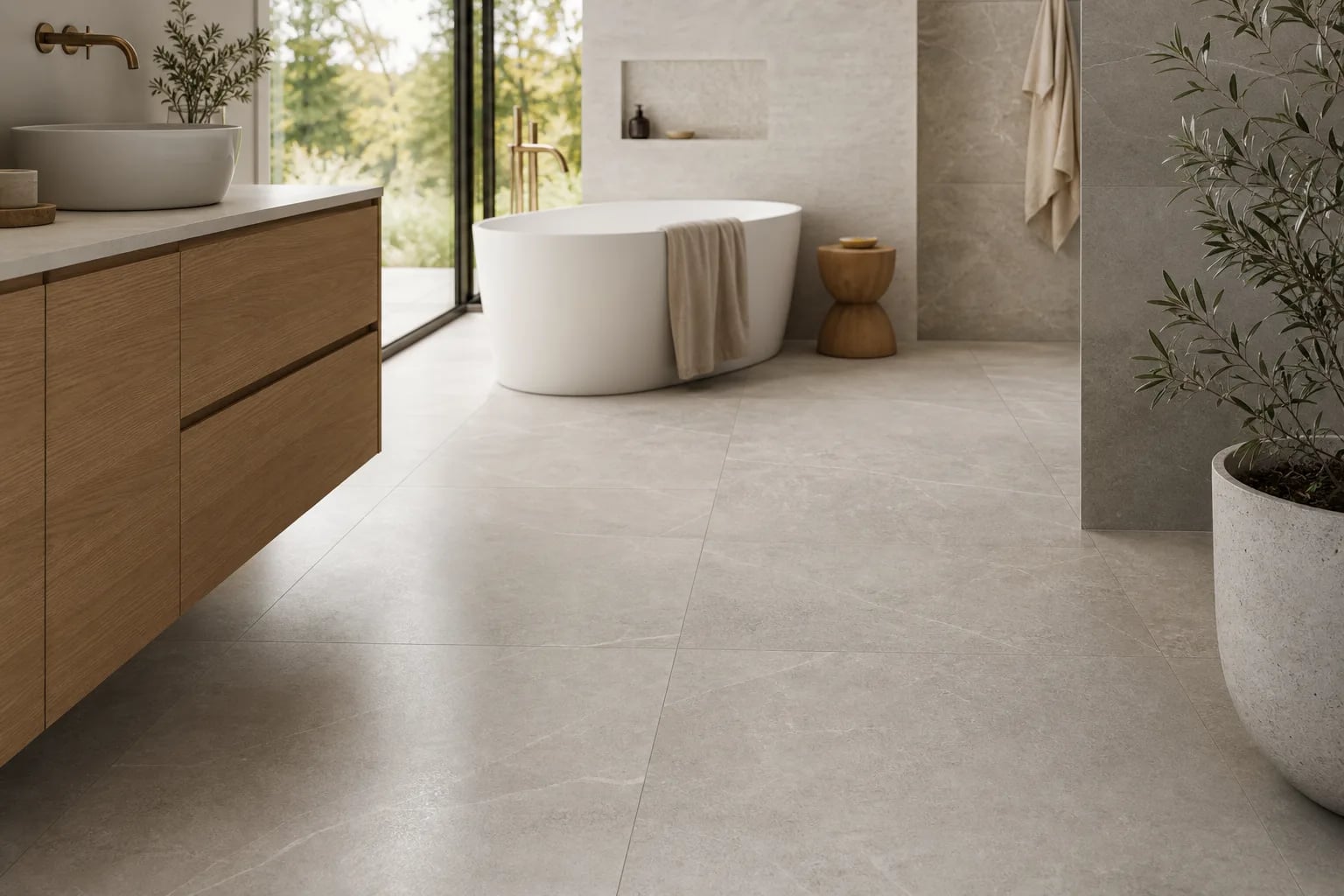
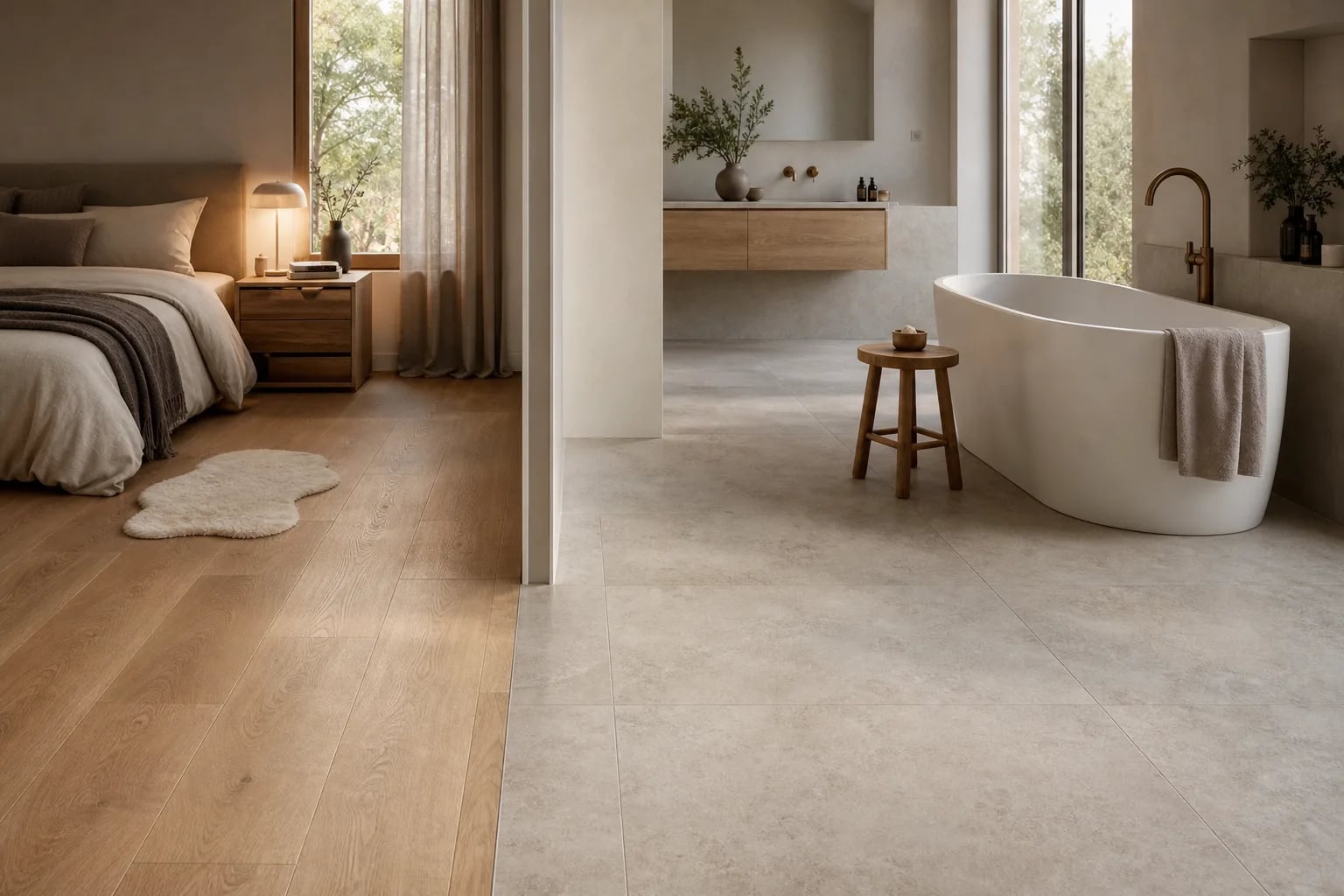
Tiles are among the longest-lived floor coverings there is. Laid properly they last 20–30 years, and they are unbothered by water, dog claws or a dropped pan. Yet two tiles that look alike side by side can differ threefold in price and several times over in durability. This guide puts the criteria that actually matter into a clear order, so you choose on how a tile will behave in your kitchen, hallway or bathroom rather than on how it photographs.
If you are still weighing up coverings in general, start with our guide to choosing a floor — it compares parquet, vinyl and tiles room by room and by budget. This article is for people who have already decided: it is going to be tiles.
Ceramic or porcelain — what is the difference
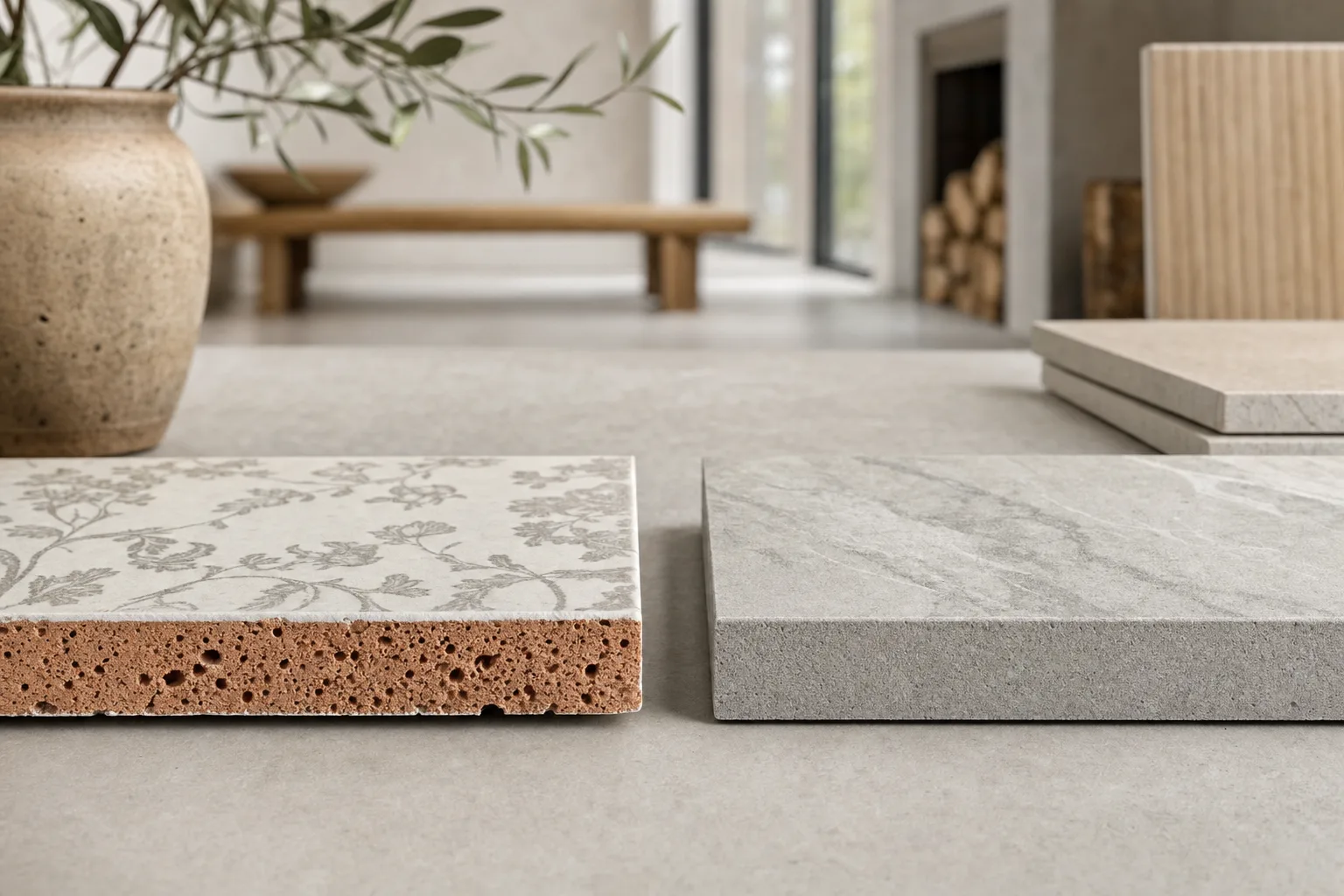
The first and most important decision is the material. Many people use “ceramic” as a catch-all term, but for a floor the real choice is between two types: traditional ceramic and porcelain stoneware.
Ceramic tiles are fired at lower temperatures, which leaves them more porous and more absorbent (typically 3–10% water absorption). They are lighter and often cheaper, but also more brittle and less resistant to wear. In classic ceramic the pattern sits only in the top glaze layer, so a deep scratch exposes a differently coloured body underneath. That is why ceramic is a less common choice for floors and is more often used on walls.
Porcelain stoneware tiles are fired at higher temperatures, making them denser, harder and almost impervious to moisture (water absorption below 0.5%). That makes them ideal for floors, wet areas and even outdoor terraces. In many current collections — the marble-effect EndlessLove Empire, for example — the pattern either runs through the full thickness of the tile or is a strikingly realistic digital print, so scratches show far less. There is more on the material in our article on porcelain stoneware.
Tile types by surface and finishing
Beyond the material itself, tiles differ in surface and edge finish, and that governs both the look and the upkeep:
- Glazed — a protective vitrified layer, easy to clean and stain-resistant. The most popular choice for homes.
- Polished — a glossy, luxurious surface that visually opens up a room, but more slippery and quicker to show fingerprints.
- Matt / satin — a more natural look, less slippery, better at hiding dust. The safest choice for families with children.
- Rectified — after firing, the edges are mechanically trimmed so every tile is exactly the same size. That allows a minimal joint of just 2 mm and an almost seamless surface. Most of our large-format tiles are supplied rectified.
Formats: 60×60, 60×120 or 120×120
Format changes how a room reads more than most people expect. Larger tiles mean fewer joints, a calmer surface and a visually more spacious room. Smaller tiles are easier to lay around awkward details and suit compact areas better. Here is how to orient yourself:
| Format | Where it works best | Advantages |
|---|---|---|
| 30×60 / 60×60 | Bathrooms, small kitchens, hallways | Easy to lay, less waste, flexible around falls and gradients |
| 60×120 | Living rooms, open-plan kitchens, entrance halls | Contemporary look, few joints, the most popular format in 2026 |
| 120×120 and larger | Open-plan layouts, large reception rooms, commercial spaces | Almost seamless surface, a genuinely luxurious impression |
One caveat: large tiles need an exceptionally flat substrate and an experienced fitter — even 2–3 mm of unevenness becomes visible under a big tile. Have your fitter check and, if necessary, level the subfloor before the tiles arrive, and ask us if you would like the format checked against your room dimensions first.
Slip rating: R9, R10 or R11
This is probably the criterion most often skipped, and it bears directly on safety. Slip resistance is expressed as an R rating from R9 to R13 — the higher the number, the less slippery the surface.
- R9 — dry living spaces: living room, bedroom, hallway.
- R10 — kitchens, the dry part of a bathroom, an entrance hall where damp and grit arrive on shoes.
- R11 — shower areas, terraces, balconies and stairs, anywhere the surface is regularly wet.
A note for families: even if a polished gloss tile is the one you love, choose at least R10 for wet areas. The look is not worth a fall. Room-specific advice for kitchens and bathrooms sits in a separate article on our blog.
Tiles and underfloor heating
Tiles are the best covering there is for water-based or electric underfloor heating, because porcelain conducts heat readily and stores it. Unlike some other coverings, porcelain tiles are indifferent to temperature swings and will not deform. What matters is using a flexible adhesive rated for underfloor heating and bringing the system up to temperature gradually on first start-up.
If you are torn between tiles and another covering over heating, our comparisons of tiles versus vinyl and parquet versus tiles are worth a read — both cover heat conductivity and comfort underfoot.
Usage class and durability
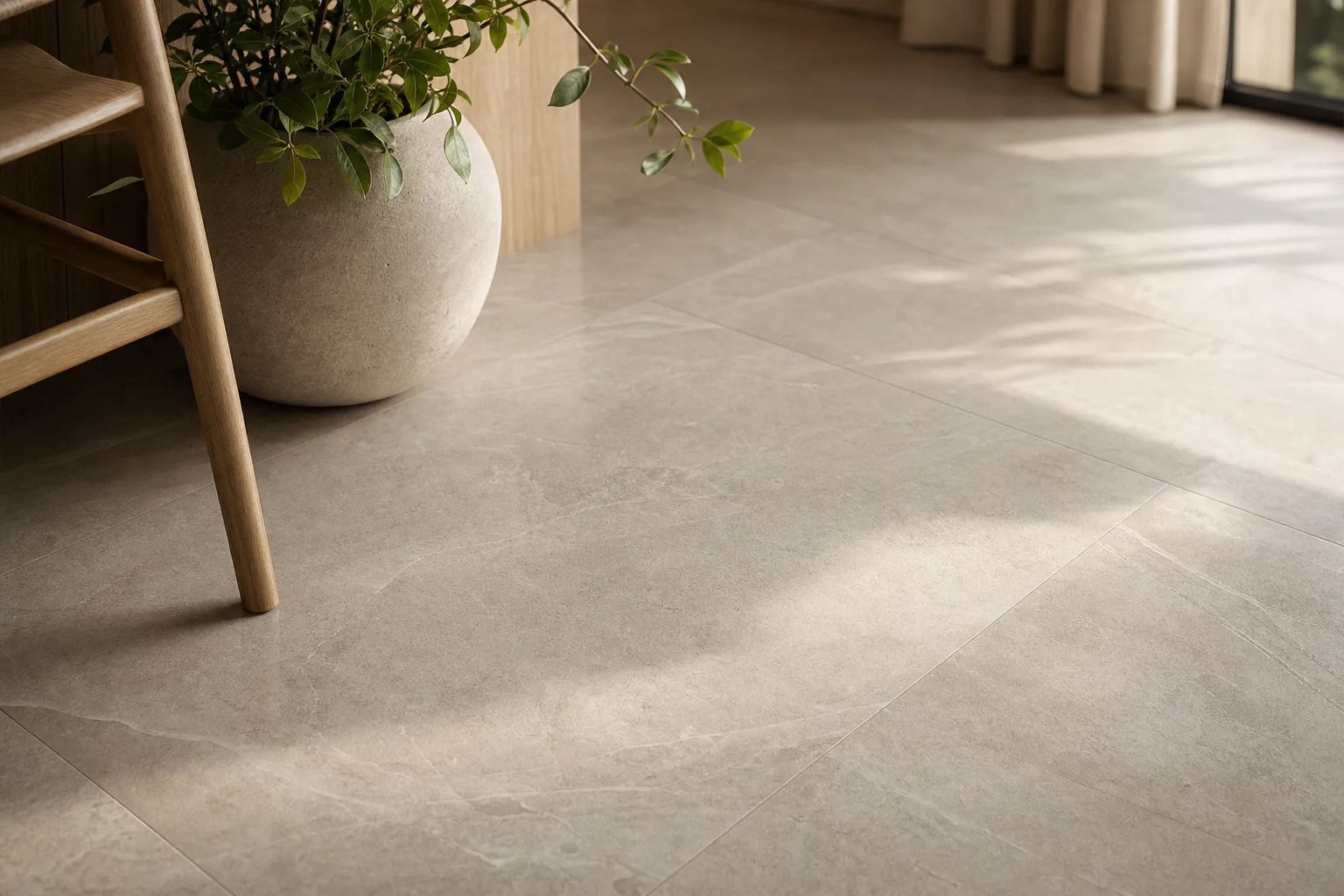
Floor tiles carry a PEI rating for abrasion resistance, from PEI I to PEI V. A home with average foot traffic is well served by PEI III; heavily used hallways and kitchens are worth PEI IV. Commercial spaces call for PEI V. We publish both the PEI and the R rating with every collection so you can choose on real-world use rather than colour alone. Our tiles come with a 10-year guarantee.
How many tiles to order: plan for a surplus
The most common mistake is ordering exactly the floor area. You always need a margin:
- +10% — a simple rectangular room laid straight.
- +12–15% — a diagonal or patterned lay, or a room with many corners, recesses and pipework.
The surplus covers cutting waste and leaves a few tiles in reserve. If one cracks later you will have an identical replacement from the same batch, and shades can vary slightly between production batches. Work out the exact quantity in our quantity calculator, and find the finer points of laying on the blog.
Price: what drives it
Our floor tiles start at €35.95/m². Price is set mainly by material (porcelain costs more than plain ceramic), format (larger tiles cost more), surface treatment (rectified and polished finishes cost more) and design (complex marble or concrete effects with digital printing). The softly veined marble of EndlessLove Perlato, for instance, gives a room the feel of a stone salon at porcelain prices.
The full range sits in our tile category. We supply direct from factories in Germany, Austria and Italy, with pallet delivery across the EU — cost and time are shown at checkout or on request.
Care
Looking after tiles is simple: sweep or vacuum regularly and mop with a pH-neutral cleaner. Avoid aggressive acidic products on polished porcelain. The real maintenance point is not the tile but the joints, which are worth cleaning periodically and re-treating with a water-repellent grout sealer, especially in a bathroom. Rectified tiles with their narrow joints have the advantage here: less room for dirt to gather.
Where to start
The best first step is to narrow the field by room and slip rating. We do not post tile samples: free samples (up to 3) are available for parquet and vinyl flooring only. For a personal recommendation based on your room and budget, write to us through the contact form or arrange a video consultation with our team. We have been helping people choose floors since 2014.
Frequently asked questions
What is the difference between ceramic and porcelain tiles?+
Ceramic tiles are fired at lower temperatures, which leaves them more porous, with 3–10% water absorption, so they suit walls better. Porcelain stoneware is denser and harder and absorbs less than 0.5% moisture, which makes it more durable and ideal for floors and wet areas.
Are floor tiles suitable for underfloor heating?+
Yes. Porcelain stoneware is the best covering for underfloor heating: it conducts and stores heat well and is unaffected by temperature swings. Use a flexible adhesive rated for underfloor heating and bring the system up to temperature gradually the first time.
What slip rating does a bathroom floor need?+
R10 is enough for the dry part of a bathroom; for the shower area, where the surface is constantly wet, choose R11. For safety, even a beautifully polished gloss tile is best swapped for at least R10 in wet zones — the look is not worth the risk of a fall.
How many spare tiles should I order?+
Add 10% to the floor area for a straight lay in a simple rectangular room, or 12–15% for a diagonal or patterned lay, or a room with many corners and recesses. The surplus covers cutting waste and leaves identical tiles from the same batch in reserve.
How much do floor tiles cost?+
Our floor tiles start at €35.95/m². Price depends on material, format, surface treatment and design — larger, rectified porcelain tiles with a marble effect cost more. Pallet delivery across the EU; cost and time are shown at checkout or on request.