Guide · 9 min
Vinyl floor care: how to keep it looking new
1 September 2026
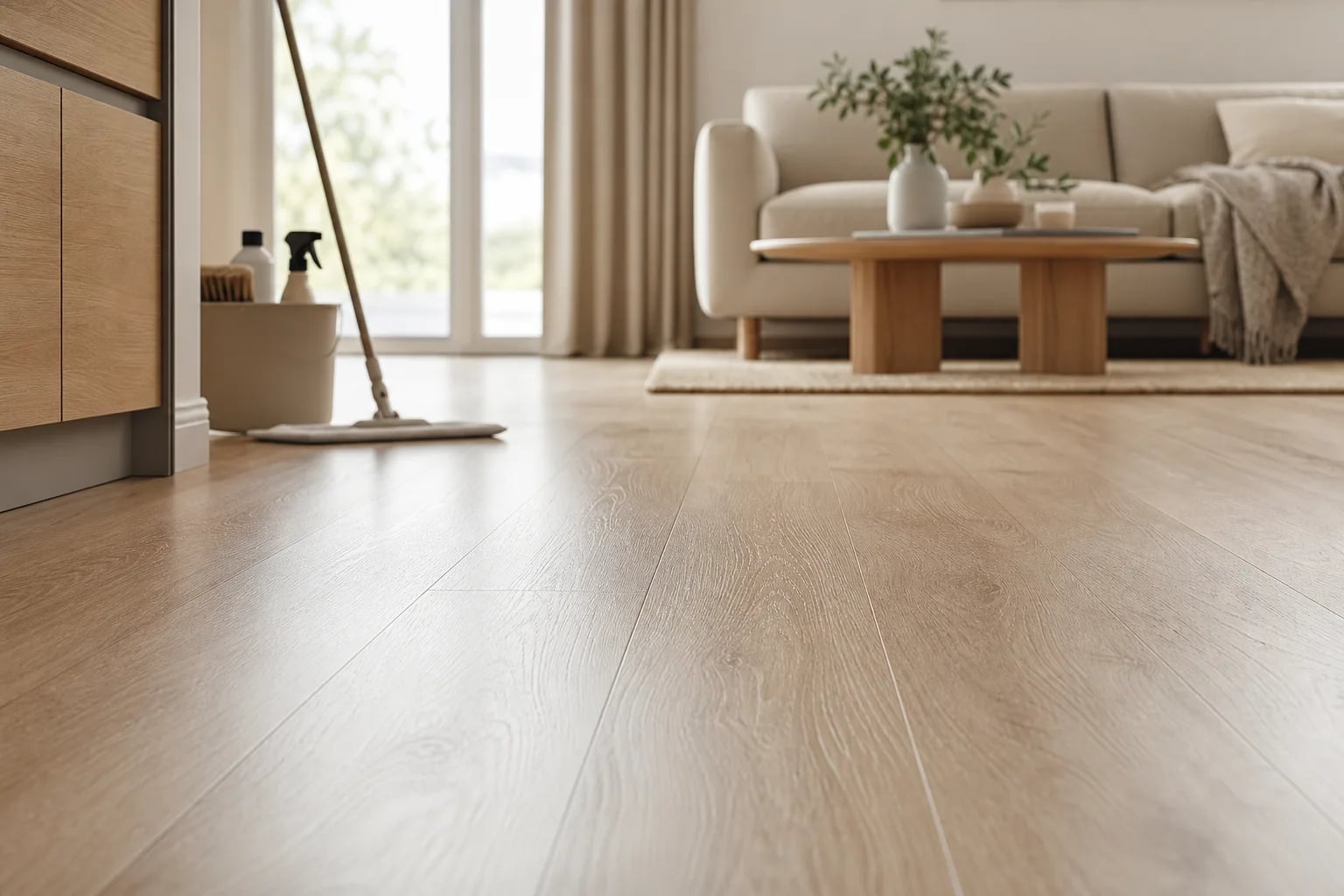
Vinyl flooring owes much of its popularity to how little time it asks for. The wear layer, sealed with a UV-cured or PUR finish, is water-resistant and non-porous, and it needs no further treatment at all — no oiling, no waxing, no periodic refresh. Even so, low-maintenance is not the same as no-maintenance. A handful of simple habits decide whether the wear layer still looks new at the end of its 25-year residential warranty, or whether it turns dull and scratched within a couple of years.
This guide covers how to clean SPC vinyl correctly day to day, what to keep well away from it, how to protect the surface from scratches and how to deal with the stains that actually come up. If you are still choosing a floor, start with the wider picture in our full guide to vinyl flooring, which compares SPC, LVT and the other constructions.
Everyday vinyl floor care
The routine has two steps, and neither takes more than a few minutes.
1. Dry cleaning. A microfibre sweeper, a soft broom head or a vacuum with a hard-floor attachment (no rotating brush bar, which can scratch) is the best daily option. The point is to lift grit and fine dust: it is the abrasive particles trodden in underfoot that leave micro-scratches in the wear layer. The more often the grit goes, the longer the surface keeps its sheen.
2. Damp cleaning. Once a week — more often in high-traffic areas — go over the floor with a well-wrung cloth. Well wrung is the operative phrase: SPC vinyl is water-resistant, but water left standing in the joints does nobody any favours. Add a dash of pH-neutral (around pH 7) floor cleaner to the water. Nothing else is needed to bring up a shine — SPC vinyl has one of its own.
That simplicity is vinyl’s main advantage over timber. To see how differently a wood floor behaves, read our separate article on parquet care — it deals with re-oiling and periodic sanding, neither of which vinyl will ever need.
What to avoid when cleaning SPC vinyl
Most vinyl floor damage comes not from normal wear but from the wrong cleaning product. Here is what to keep away from it:
- Steam cleaners. Hot steam can distort the plank and damage the printed decorative layer and the joints. Even where a steam mop is marketed as vinyl-safe, we do not recommend it on SPC — the warranty would not cover the damage.
- Abrasives. Scouring pads, wire wool and scouring powders scratch the wear layer permanently.
- Wax, polish and oil. Vinyl already carries a factory protective layer. Wax or polish only builds a tacky film that traps dirt, and the floor ends up looking grubby.
- Aggressive solvents. Acetone, bleach, ammonia-based cleaners and turpentine can bleach or soften the surface.
- Rubber mats and rubber feet. Dark rubber can leave a yellow or brown mark that is very hard to shift — so-called rubber staining. Choose felt mats, or ones made specifically for vinyl.
Preventing scratches
SPC vinyl is scratch-resistant, not indestructible. A few measures keep the surface smooth for years:
- Felt pads under furniture legs — the cheapest and most effective protection there is. Check chairs, tables and sofas regularly, because the pads wear down.
- A mat at the entrance door. Most of the grit and small stones arrive on the soles of shoes. Stop them at the door and you protect the whole floor beyond it.
- Lift furniture rather than dragging it. Dragging is the single most common source of deep scratches. Use glides for heavy pieces.
- For office chairs, choose soft castors rated for hard floors, or put a protective mat under the workstation.
Stain removal: what works on what
The SPC surface is non-porous, so most stains never sink in and come away easily. The table below covers the cases that come up most often.
| Stain | How to remove it |
|---|---|
| Food, drink, coffee | Damp cloth with a pH-neutral cleaner |
| Grease, oil | Warm water with washing-up liquid, then rinse with clean water |
| Ink, lipstick, marker pen | Isopropyl alcohol on a soft cloth, applied spot by spot |
| Scuff marks, rubber | A stain eraser, or a melamine sponge used gently |
| Hardened gum, wax | Chill with ice, then scrape carefully with a plastic edge |
| Varnish or paint splashes | Isopropyl alcohol; never acetone |
The general rule is to start with the gentlest option — plain water — and move up only if you have to. Always test alcohol somewhere out of sight first.
Do and avoid — a quick reference
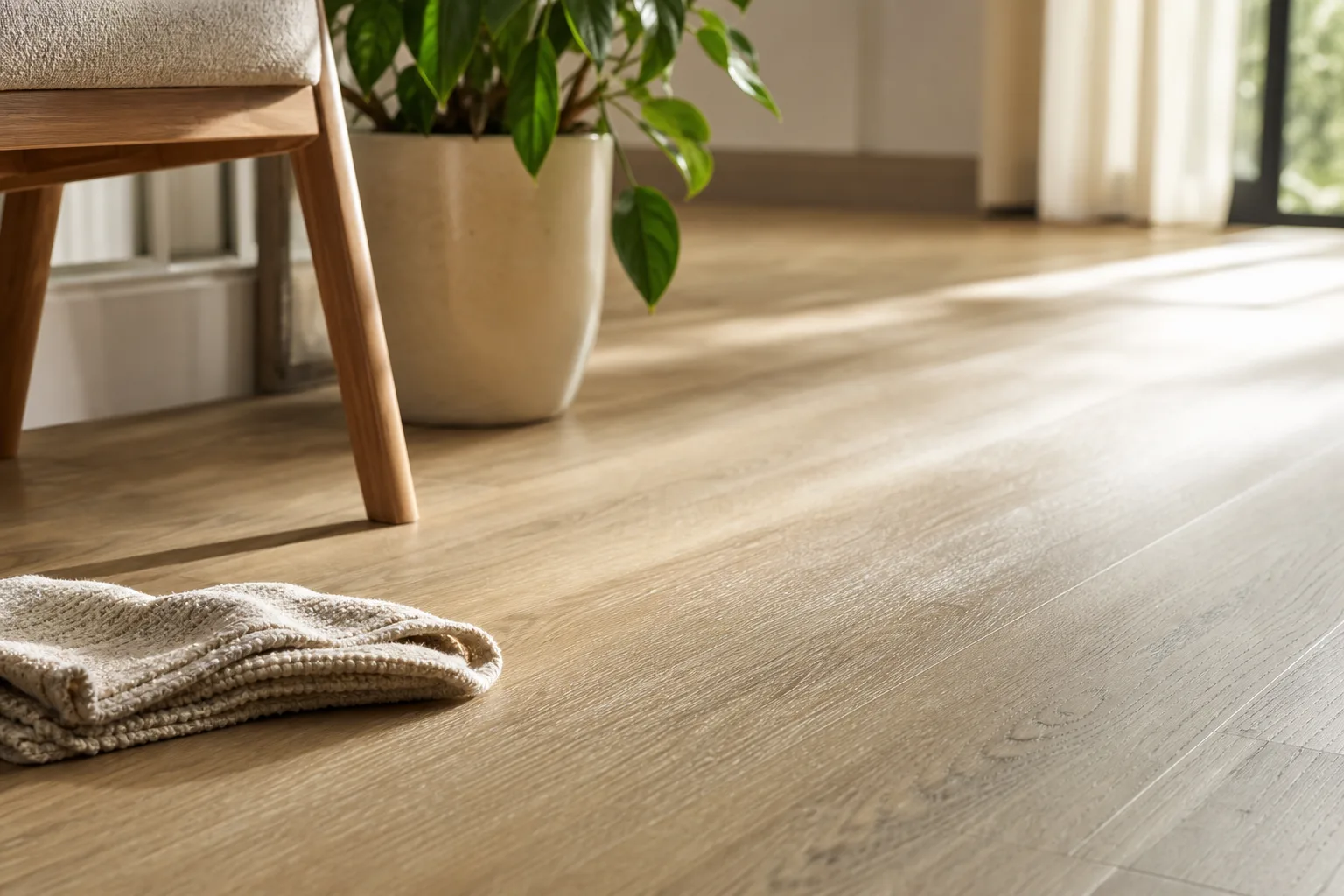
| Do | Avoid |
|---|---|
| Sweep or vacuum dry every day | Steam cleaners |
| Well-wrung cloth + pH-neutral cleaner | Wet mopping and standing water |
| Felt pads and a mat at the door | Rubber mats (staining) |
| Lift furniture, use glides | Dragging furniture |
| Deal with spills straight away | Wax, polish and abrasives |
Why SPC vinyl never needs sanding or lacquering
This is the fundamental difference from a wood floor. On parquet the wear layer is the timber itself, which eventually starts to look tired and, once every few decades, has to be sanded back and given fresh lacquer or oil. On SPC vinyl the decorative print is protected by a factory-applied clear wear layer (usually 0.3–0.55 mm) sealed with a UV-cured PUR film. That layer cannot be renewed and does not need to be — it lasts the service life of the plank. Long-term care costs therefore amount to little more than the price of the cleaner.
If ease of maintenance is what is making you hesitate between vinyl and the alternatives, it is worth seeing how SPC compares with laminate — we cover that in vinyl or laminate. Laminate, unlike vinyl, tolerates water poorly, so in damp rooms a care mistake costs a great deal more.
Underfloor heating and vinyl
Where vinyl is laid over underfloor heating the care principles do not change, but one limit matters: the maximum surface temperature for vinyl is 28 °C. Exceed it and the planks can distort and the joints can suffer, and that kind of damage is not covered by the warranty. Keep the system moderate and the floor will last its full intended life.
Where to buy and how to try it first
Our full SPC vinyl range sits in the vinyl flooring section (from €25.95/m²). Among the most popular decors is SPC Sao Paulo, whose surface embossing follows the structure of real timber while the care routine stays exactly as simple as across the rest of the SPC range.
Before you decide, order 3 free samples to your home — you will see the true colour and surface in your own light and can feel the wear layer for yourself. How much you need and what it will cost is a minute’s work in our flooring quantity and price calculator. We ship on pallets across the EU, with delivery cost and lead time shown at checkout or quoted on request; goods come direct from partner factories in Germany, Austria and Italy.
Frequently asked questions
What should I clean vinyl flooring with?+
Use a well-wrung microfibre mop and a pH-neutral (around pH 7) floor cleaner diluted in water. No abrasives, wax, polish or aggressive solvents are needed — SPC vinyl keeps its sheen without them.
Can I clean vinyl flooring with a steam cleaner?+
No. Hot steam can distort an SPC plank and damage the decorative layer and the joints, and that damage is not covered by the warranty. Use a well-wrung damp cloth instead.
Does vinyl flooring need waxing or lacquering?+
No. SPC vinyl has a factory UV-cured wear layer that cannot and need not be refreshed. Unlike parquet, vinyl never needs sanding, waxing or lacquering, which keeps long-term care costs down.
How do I protect vinyl flooring from scratches?+
Stick felt pads under furniture legs, put a mat at the door to catch grit, lift furniture rather than dragging it, and fit office chairs with soft castors rated for hard floors. Most scratches come from grit underfoot and from dragged furniture.
How do I remove a stain from a vinyl floor?+
Start with the gentlest option: wipe food and drink with a damp cloth, lift grease with warm water and washing-up liquid, and treat ink or lipstick spot by spot with isopropyl alcohol on a soft cloth. Never mix alcohol with acetone, and test in an unseen spot first.