Guide · 9 min
Parquet flooring trends 2026: what is shaping floors this year
1 September 2026
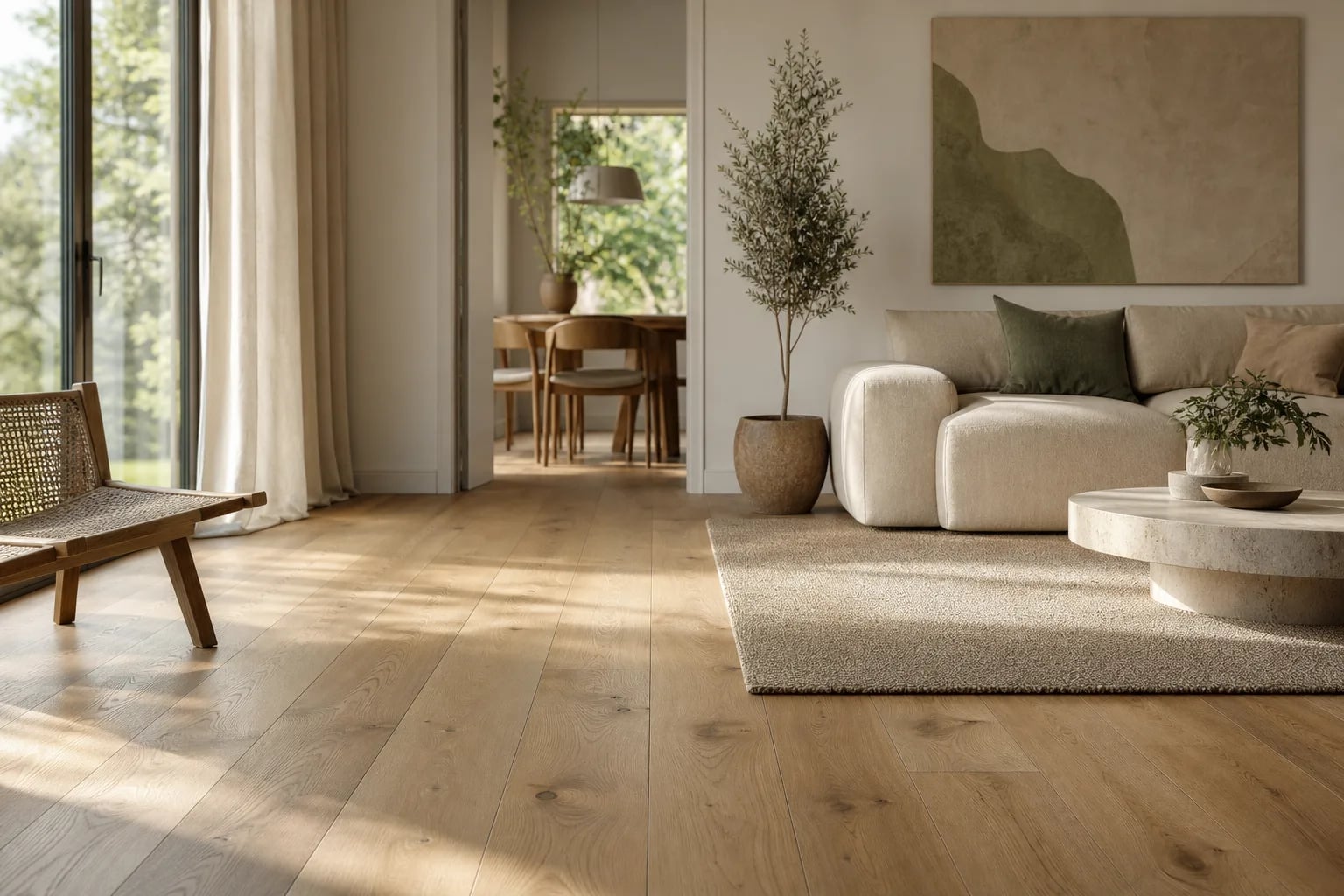
A floor is the largest uninterrupted surface in any room, which is why its tone and texture set the character of everything above it. After several years dominated by grey, almost colourless laminate décors, 2026 marks a clear turn back towards real wood, warmth and longevity. Less shine, more depth. Less imitation, more of the material itself. Below are the seven directions we see both at the international interiors fairs and in the orders our customers place across Europe.
1. Light, natural oak leads the field
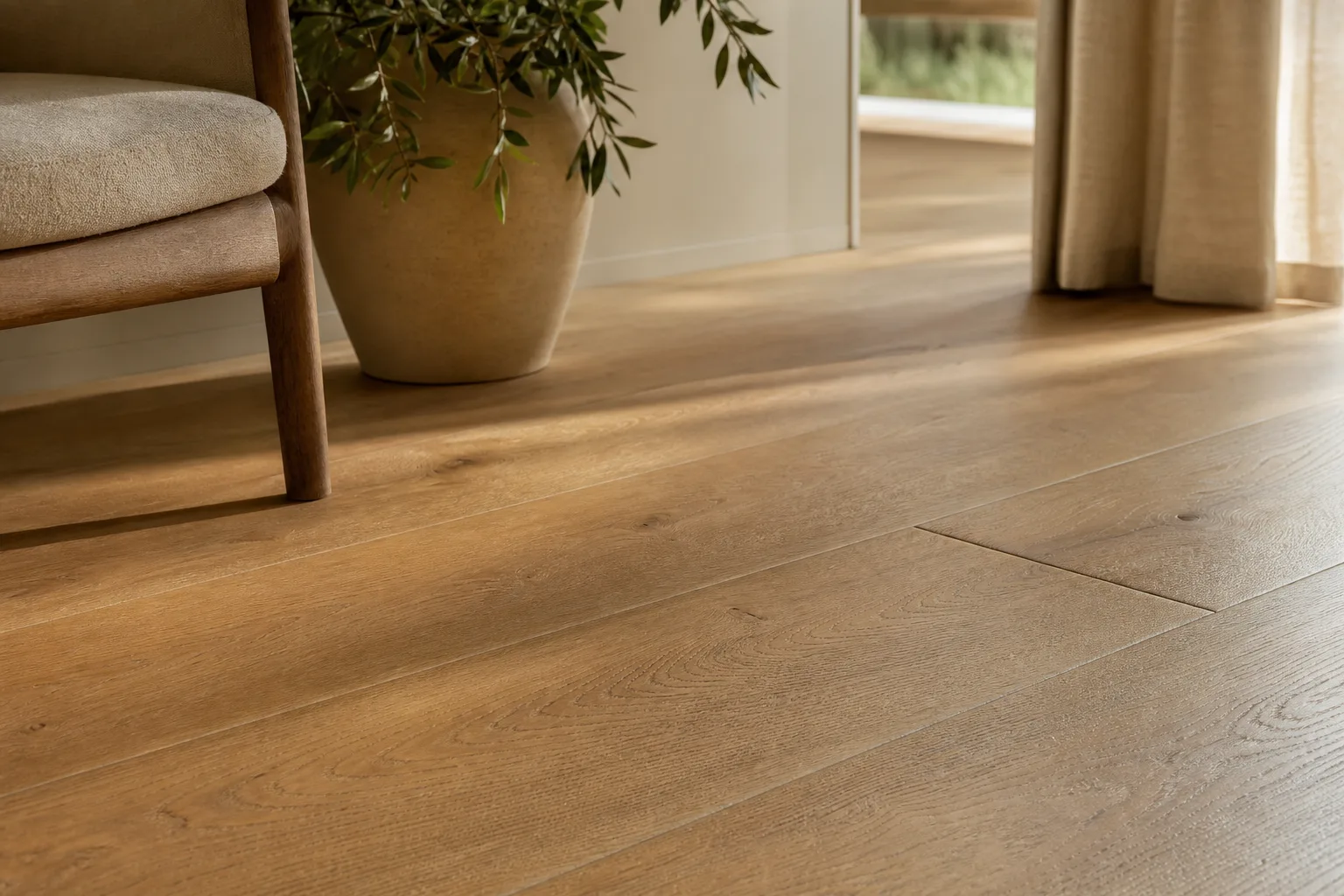
If one flooring trend had to stand for the year, it would be light oak kept as close to its natural state as possible. Nothing stained, nothing bleached — simply oak under a thin coat of oil that lets the warm, sandy, almost honeyed tone come through. Floors like this sit outside fashion: because they imitate no particular era, they never quite fall out of one either.
In our collection the direction is best represented by Oak Milano — a clean, even grain with little contrast, made for Scandinavian and minimalist interiors. If you want more movement and visible knots, look at Oak Vienna. For a deeper look at tone, we have a separate guide to oak parquet colours that compares light, natural and dark shades side by side.
2. Warm, earthy neutrals in place of cool grey
The cool grey that ruled the last few seasons is giving way to warm neutrals — sand, wheat, pale caramel, muted terracotta. These are not loud colours, but they have a temperature: a room finished in them feels calmer and more lived-in, less like a showroom. Designers file the shift under quiet luxury, where the material matters more than the effect.
There is a practical argument as well. Warm mid-tones are forgiving day to day, because dust and fine scratches show far less on them than on very dark or very pale grey floors.
3. Matt and oiled surfaces — depth instead of shine
High-gloss parquet, lacquered until it mirrors the room, now reads as dated. 2026 belongs to matt and naturally oiled surfaces that reveal the structure of the wood rather than sealing it under a glassy film. An oiled surface lets the timber breathe, feels warm underfoot and can be refreshed in place wherever wear starts to show.
It is worth knowing the essential differences before you commit — we cover them in detail in our guide to oiled or lacquered parquet. In short: oil gives the more natural look and easier spot repair, lacquer asks less of you day to day. In 2026 both are specified in matt or satin rather than gloss.
4. Wide planks — the wider the board, the more contemporary the room
Narrow classic strips are moving into the background. The floors people ask for this year are wide planks, from 20 cm upwards. A wide board has fewer joints per square metre, so the floor reads as quieter and more continuous and the room looks visually larger. That suits open-plan living spaces particularly well, and equally smaller flats that need a sense of space.
For more on why format changes the way a room is read, and how to choose it properly, see our guide to wide plank flooring. From our own range, Oak Vienna carries the wide format well — a single board becomes a feature in its own right.
5. Herringbone returns with new force
Geometry is one of the clearest parquet trends of 2026. Herringbone and its sharper relative chevron have moved out of the old European palaces and into contemporary city flats. Neither is merely a classical detail any more; both are a deliberate design statement, because the same oak laid in herringbone looks more considered, and more expensive, than a straight plank floor.
The difference is simple. Herringbone blocks meet at 90° and form the familiar fish-bone optic, while chevron boards are cut at 45° at the ends so they close into perfectly straight arrows. Which one suits your space is covered in our guide to chevron and herringbone parquet. Bear in mind that laying either pattern is skilled work and belongs with an experienced fitter; if you would like help specifying the job, talk to us first.
6. Mixing patterns and marking zones
In 2026 there is no fear of combining. One space might carry herringbone across the central seating area, framed by a border of straight planks. In open-plan homes the floor pattern increasingly marks functional zones: dining, seating, the transition into the hallway. The rule that holds it together is that the species and the shade stay the same throughout, which is what makes different patterns look deliberate rather than chaotic.
7. Sustainability becomes a buying argument
More and more customers ask not only how a floor looks but where the wood came from. In 2026 sustainability is a genuine decision criterion rather than a marketing word. Our parquet comes directly from German and Austrian mills, and the oak carries FSC and PEFC certification — traceable timber from responsibly managed forests. The engineered three-layer construction is economical with precious hardwood too, since the oak goes only into the top, visible wear layer.
The trends at a glance
To make them easier to hold in mind, here are all seven directions with the essence of each.
| Trend | What it means | Best suited to |
|---|---|---|
| Light natural oak | Unstained, oiled timber in warm sand tones | Minimalist and Scandinavian interiors |
| Warm neutral tones | Sand, wheat and caramel in place of cool grey | Calm, quiet-luxury rooms |
| Matt / oiled surfaces | Depth and texture instead of shine | Lovers of natural materials, family homes |
| Wide planks | Boards from 20 cm wide, fewer joints | Open-plan and smaller spaces alike |
| Herringbone pattern | Herringbone and chevron geometry | A premium accent, classic or modern |
| Mixed patterns | Zoning within a single shade | Large open-plan homes |
| Certified origin | FSC / PEFC oak from EU mills | Considered buyers |
How to bring the trends into your own home
Trends inspire, but the final decision always comes down to the specific room: its size, how much daylight it gets, the colour of the furniture and the way you live. A family with children or pets needs wear resistance and easy care; a rental property is better served by a neutral, broadly acceptable shade; a representative interior can carry herringbone or a wide format.
The most reliable way to avoid a mistake is to see the wood in your own light. Order 3 free samples to your door, lay them against your furniture and look at them at different times of day. If you are unsure about tone, format or quantity, book a video consultation — we will go through the room together, narrow down the options and help you work out the exact area. For trade projects and larger orders, ask us about project pricing.
Frequently asked questions
Which parquet colour is most in demand in 2026?+
Light, natural oak in warm sand and caramel tones. The cool greys of recent years are giving way to earthy, welcoming neutrals with a matt or oiled surface.
Is herringbone still fashionable?+
Yes. Herringbone and chevron are among the clearest trends of 2026. Both work as a premium accent in classical and modern interiors alike, and the laying is best left to an experienced fitter.
Which plank format is most popular this year?+
Wide planks, from 20 cm and upwards. A wide board has fewer joints per square metre, so the floor reads as calmer and more continuous and the room looks larger.
Is a matt surface practical in everyday use?+
Yes. Scratches, fingerprints and dust show far less on a matt or oiled surface than on gloss lacquer. An oiled floor can also be refreshed in place, without sanding the whole area.
What does on-trend oak parquet cost?+
Terris Timber engineered oak parquet starts at €37.95/m² incl. VAT. We ship on pallets across the EU, with the cost and lead time shown at checkout or confirmed on request, and 3 samples to your door are free. Our parquet carries a 15-year warranty.