Guide · 9 min
Parquet in the hallway: choosing a floor that stands up to traffic
2 September 2026
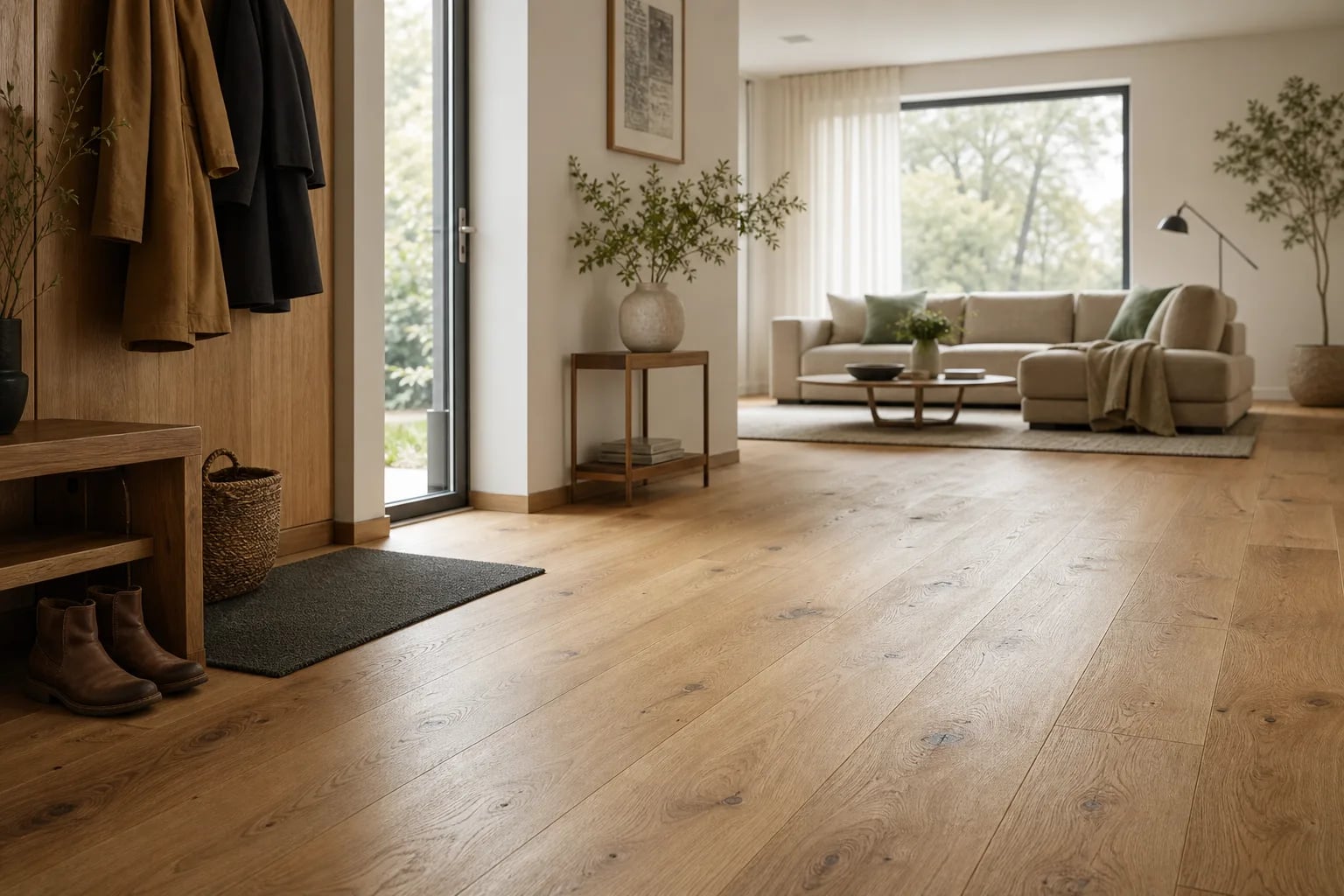
The hallway is a home's calling card. It is the first space a visitor sees and the last one you cross on the way out. It is also the hardest floor in the house to specify: it is walked over dozens of times a day and takes in street dirt, grains of sand and the damp off shoes. So the question — will parquet survive corridor traffic? — is entirely fair. The short answer is yes, provided you make a few right decisions at the point of buying.
Why the hallway is the toughest floor in the house
Unlike a living room or a bedroom, a hallway meets the floor shoes-on. That puts three specific demands on the covering:
- Abrasive wear. Grains of sand and hardened grit behave like sandpaper — every step scratches a surface that is not properly protected.
- Concentrated traffic. A corridor is a narrow strip, so every footfall lands on the same line. Over a year that strip takes more steps than a whole living room.
- Damp and de-icing salt. Through the winter months, and in the colder parts of Europe especially, melting snow carries road salt off shoes, and that attacks both the timber and the finish.
The good news is that all three are solvable. Before you settle on a particular covering, it is worth reading our general guide to choosing a floor — it helps you set priorities room by room.
Which wood species suits a corridor
The first decision is hardness. The harder the species, the less you will see of the dents left by heels, pet claws or a dropped set of keys. For hallways and corridors we recommend oak — the most popular species in European homes, and the most hard-wearing.
Oak scores high on the Brinell hardness scale, has a handsome grain and takes daily punishment well. If you want to go deeper into the species, a separate article on the properties of oak parquet explains why it is treated as the benchmark. And if you are weighing darker tones against lighter ones, it helps to see how oak parquet shades compare — in a hallway the mid-tones are the most practical, as explained below.
Oiled or lacquered parquet in a hallway
This is the decision that matters most in a high-traffic area. The surface finish governs how the floor handles dirt, moisture and daily scuffing. In short, a hallway is safer with a lacquered surface or a hard wax oil. Here is how the two differ:
| In the hallway | Lacquered surface | Oiled surface |
|---|---|---|
| Resistance to abrasion and grit | Very good — the lacquer film shields the timber | Good, but the surface wears faster without upkeep |
| Resistance to damp off shoes | High — water sits on the surface | Moderate — wipe it up promptly |
| Everyday cleaning | Simple — a damp mop | Simple, but avoid excess water |
| Repairing a local mark | Harder — the whole run of boards is re-lacquered | Easy — re-oil the affected spot |
| Feel underfoot | Smoother, slightly “sealed” | More natural, a matt timber feel |
In practice we usually suggest a lacquered parquet for a hallway, for its higher abrasion resistance and simpler upkeep, or a hard wax oil finish if you like a matt, natural timber feel and do not mind refreshing the maintenance oil from time to time. A fuller comparison of the two is in our article on oiled versus lacquered parquet.
Moisture resistance: a corridor is not a bathroom
There is more moisture in a hallway than in a living room, but it is still not a wet room. The main sources are melting snow and rainwater off shoes. Three simple habits keep that under control:
- A mat inside the front door — choose a dense, absorbent mat that holds back both grit and water before anyone steps onto the parquet.
- A shoe rack or tray — wet shoes should not stand directly on the parquet.
- Prompt wiping — deal with a puddle as soon as you see it, before the water works its way into the joints.
If your hallway is permanently damp — a house with no porch, say, where rain and snow blow straight in at the door — it is worth considering an alternative. Vinyl flooring and floor tiles are entirely unbothered by water and suit that kind of space. The same principle applies to kitchens, which we cover in detail in our article on parquet in the kitchen, where the moisture questions are very similar.
A shade that hides dust and dirt
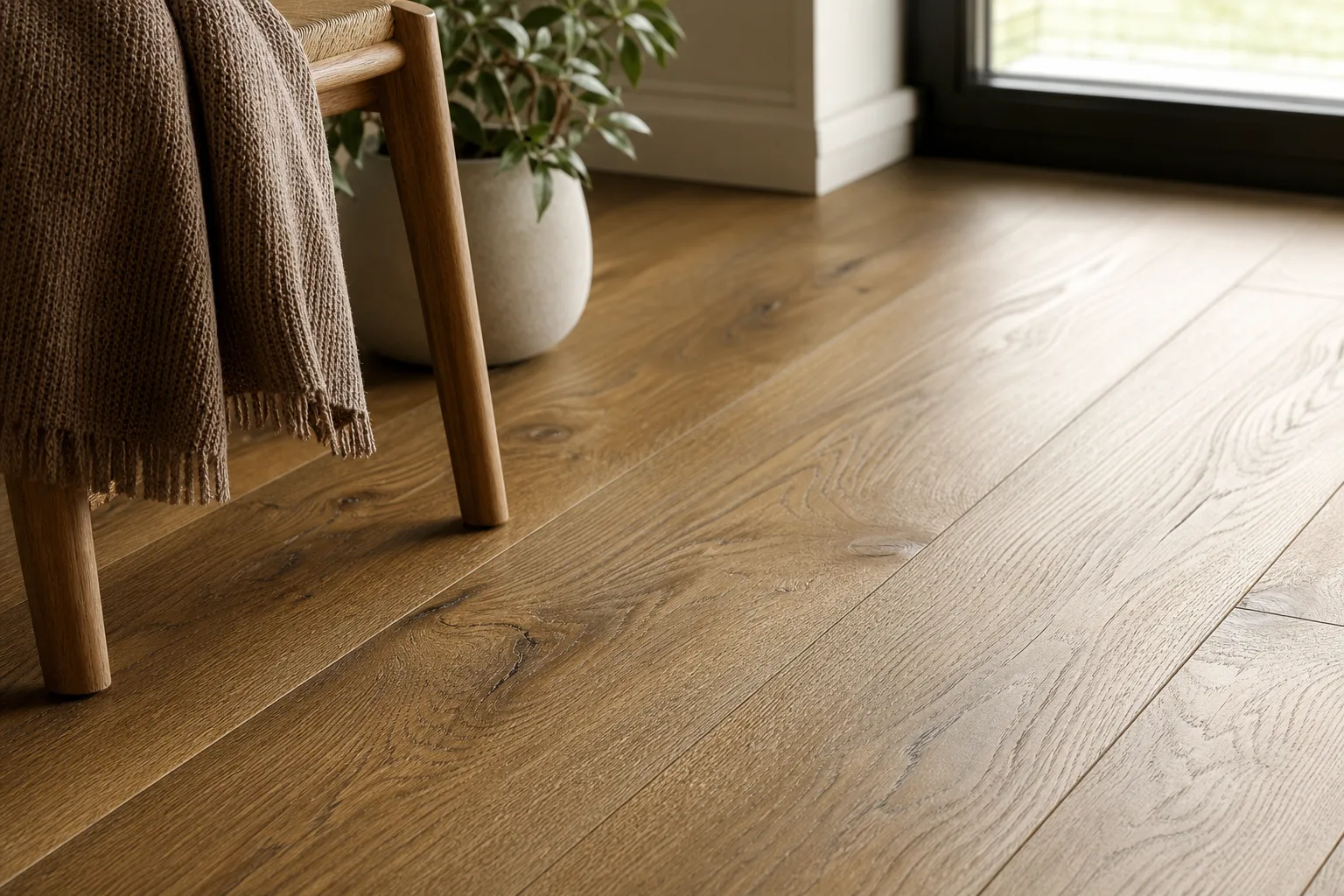
Here is a practical point that often gets forgotten: the shade of a hallway floor has a direct bearing on how often you will be cleaning it. Very pale floors (near-white oak) open the space up beautifully, but every grain of sand and every shoe print shows on them. Very dark floors look elegant, and show dust and pet hair just as plainly.
The middle ground is a mid-tone natural oak. It hides pale sand and darker dirt alike, so the corridor stays looking clean for longer between cleans. Those tones also sit comfortably between the practical demands of an entrance and the rest of the house.
Laying and buying: the practical details
In a corridor we recommend running the boards along the direction of travel — it lengthens the space visually and makes the joints less noticeable. In a narrow hallway that matters even more. Before ordering, work the quantity out precisely, with an allowance for cuts: use our flooring calculator so you do not run short of boards from the same batch.
When it comes to a specific model for a high-traffic area, the versatile and robust Oak Oxford is a sound choice, as is the warmer-toned Oak Innsbruck. Both are oak, supplied direct from German mills, with warranties of up to 15 years. The full engineered parquet collection is in the catalogue, with prices from €37.95/m² incl. VAT.
Not sure which shade will suit your hallway? Order three free samples to your home and hold them against your own front door to judge how the colour reads in natural light and whether it hides everyday dirt. Samples are sent free of charge; the flooring itself travels by pallet across the EU, with the cost and lead time shown at checkout or given on request.
Everyday care, so the floor lasts
Looked after properly, parquet in a hallway lasts for decades. The basic rules: vacuum regularly with a soft brush head to lift out abrasive grit; clean with a well-wrung damp mop, never a wet one; and avoid harsh household chemicals. A lacquered floor needs no extra oiling at the joints, while an oiled one benefits from a yearly refresh of maintenance oil in the busiest spots. We set the whole routine out — daily, monthly and annual — in our article on parquet care.
Frequently asked questions
Will parquet stand up to heavy hallway traffic?+
Yes, provided you choose a hard species (oak), a lacquered or hard wax oil surface and put a mat inside the front door to catch grit and moisture. On those terms, parquet in a hallway lasts for decades.
Lacquered or oiled parquet: which is better for a hallway?+
A lacquered surface is usually the safer choice for a hallway — it stands up better to abrasion, grit and the damp that comes off shoes, and it is simpler to clean. Hard wax oil suits people who prefer a matt, natural timber feel and do not mind refreshing the maintenance oil now and then.
Which parquet shade is best for a hallway?+
Mid-tone natural oak is the most practical. It hides pale sand and darker dirt alike, so a hallway looks clean for longer between cleans. Very pale and very dark floors need cleaning more often.
Is parquet suitable for a very damp hallway with no porch?+
If rain and snow blow straight in at the door and the humidity stays high, vinyl flooring or tiles are the better choice, as neither is troubled by water. Parquet suits a standard hallway where moisture is managed with a mat and prompt wiping.
How much does parquet for a hallway cost?+
Oak parquet in the Terris Timber catalogue starts at €37.95/m² incl. VAT. The final figure depends on the floor area, the model and the finish. Before ordering you can request three free samples to your home; the flooring itself ships by pallet across the EU, with the delivery cost and lead time shown at checkout or given on request.