Design · 9 min read
Parquet in the Living Room: A Design and Practical Guide
2 September 2026
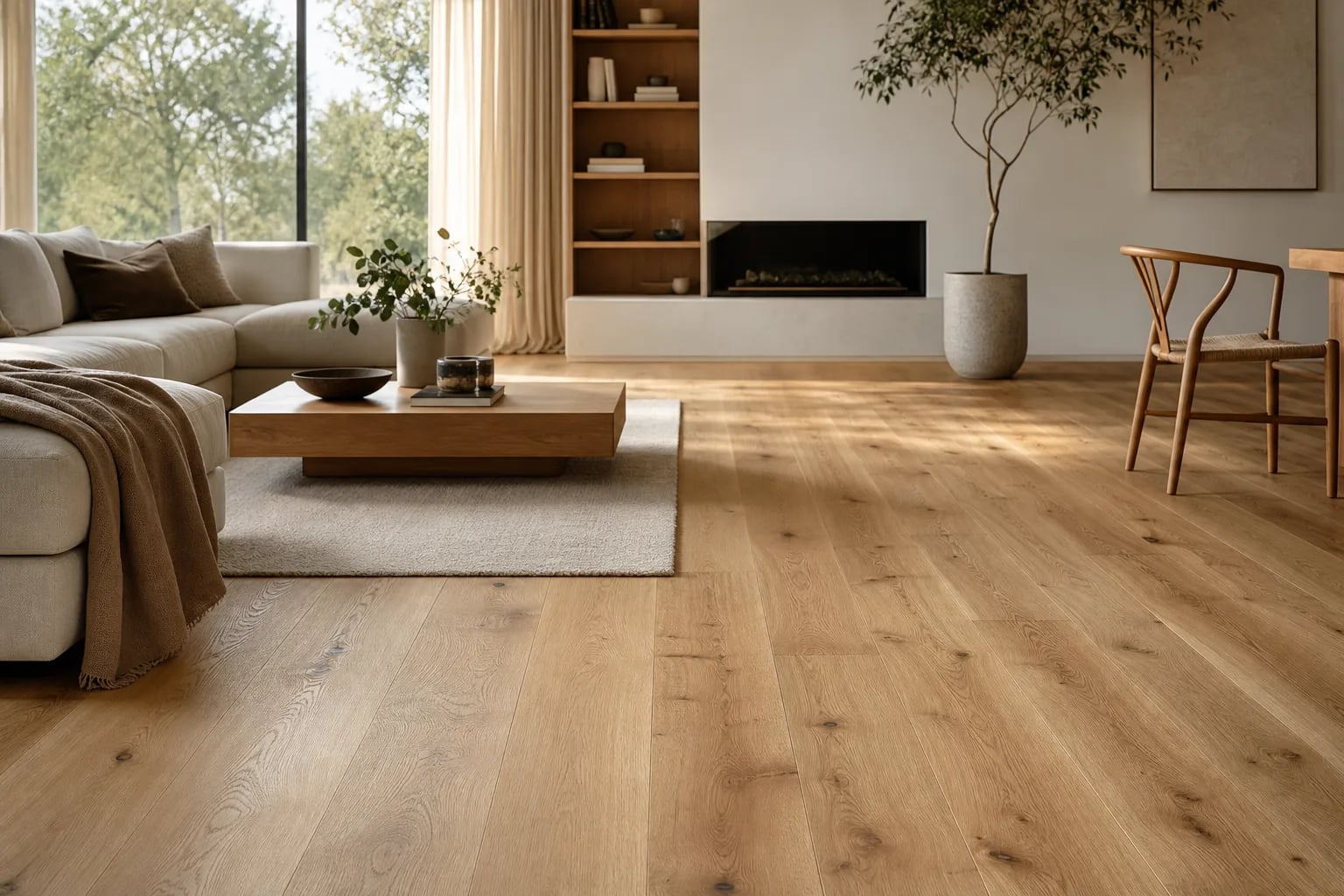
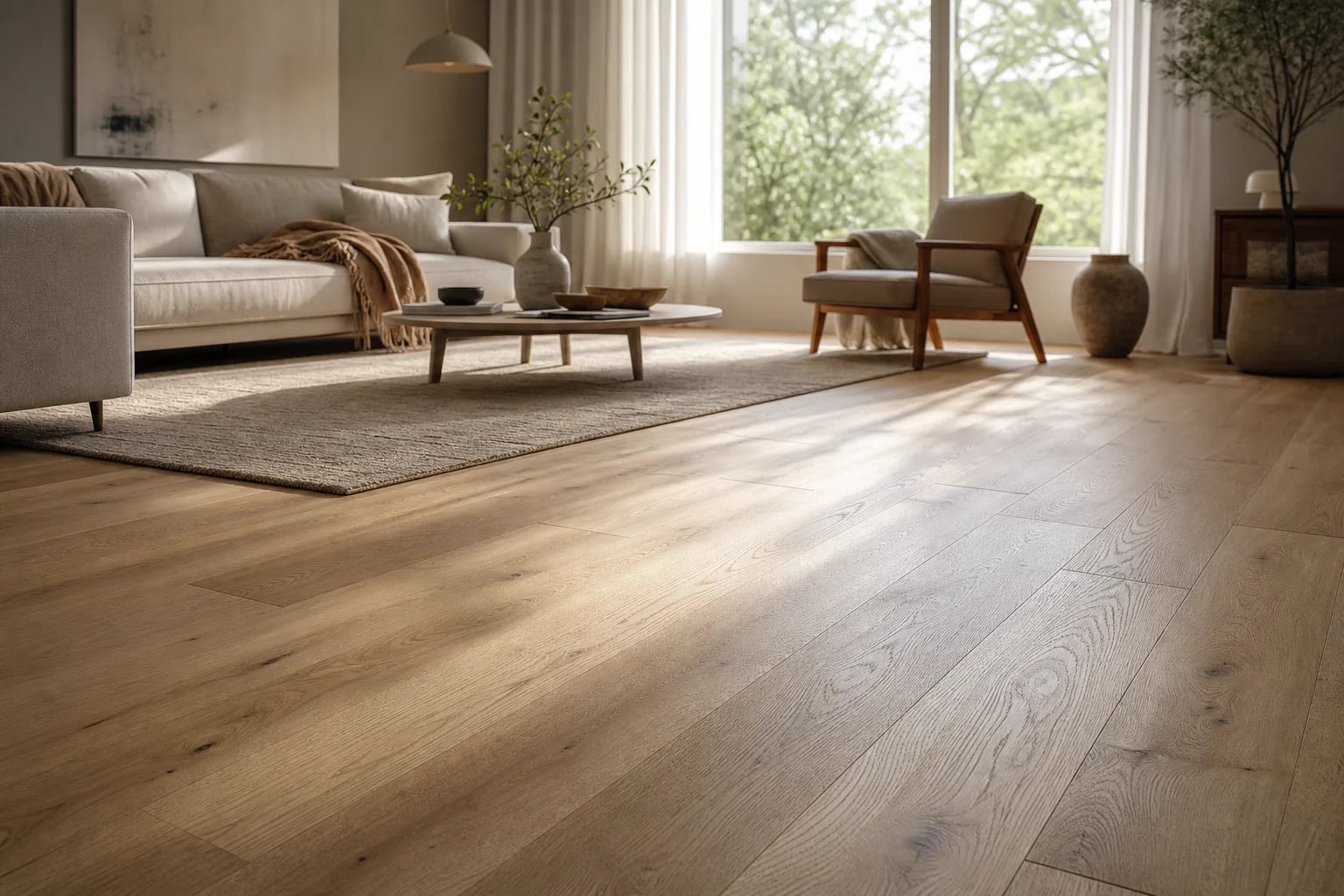
Why the living room suits parquet so well
- Dry conditions — none of the moisture load you deal with in a bathroom or a kitchen
- Moderate traffic — not a hard-wearing route like an entrance hall
- The room people see — the living room sets the tone of the whole house, and wood gives it depth
- Thermal comfort — wood feels warm underfoot, particularly over underfloor heating
- Acoustics — wood softens reflected sound, which suits an open living space
Choosing a shade for the light you have
Bright rooms (south-facing or large windows)
Here you can go dark with confidence — plenty of daylight balances a deep tone and gives the room a calm, weighty feel. A good example: Oak Oxford, dark brown oiled, which works in classic and contemporary schemes alike.
Average light (east- or west-facing)
The all-round answer is a natural oak tone. It looks right in any light, at any hour of the day. Try Oak Vienna or Oak Bergen.
Darker rooms (north-facing or small)
Choose a light floor — it bounces back what daylight there is and makes the room read larger. Try Oak Milano (white-oiled) or Bergen (matt lacquer).
Four schemes that work
Scandinavian / minimalist
Pale walls, neutral furniture, as much daylight as the room allows. Light white-oiled oak gives you that unmistakable Nordic calm. Go wide — boards of 190 mm and up reinforce the sense of space.
Modern classic
High ceilings, period detail, colours that do not date. Dark brown-oiled oak or a herringbone pattern strengthens the classical feel.
Industrial / loft
Exposed brick, metal fittings, open plan. Rustic brushed oak with pronounced grain sits naturally in an industrial interior. XL widths of 240 mm and up are the best match.
Warm natural / boho
Layered textiles, plants, warm tones. Naturally oiled oak is the obvious choice — Vienna or Lucerne.
Which way to run the boards
The general rule is to lay parquet at right angles to the main source of daylight. Doing so:
- Makes the room look longer
- Keeps the joints between boards visually quiet
- Lets the daylight work with the grain rather than across it
In open-plan living spaces, keep a single direction across the whole floor so the surface reads as one plane. Our step-by-step guide: how to lay parquet.
Herringbone in the living room
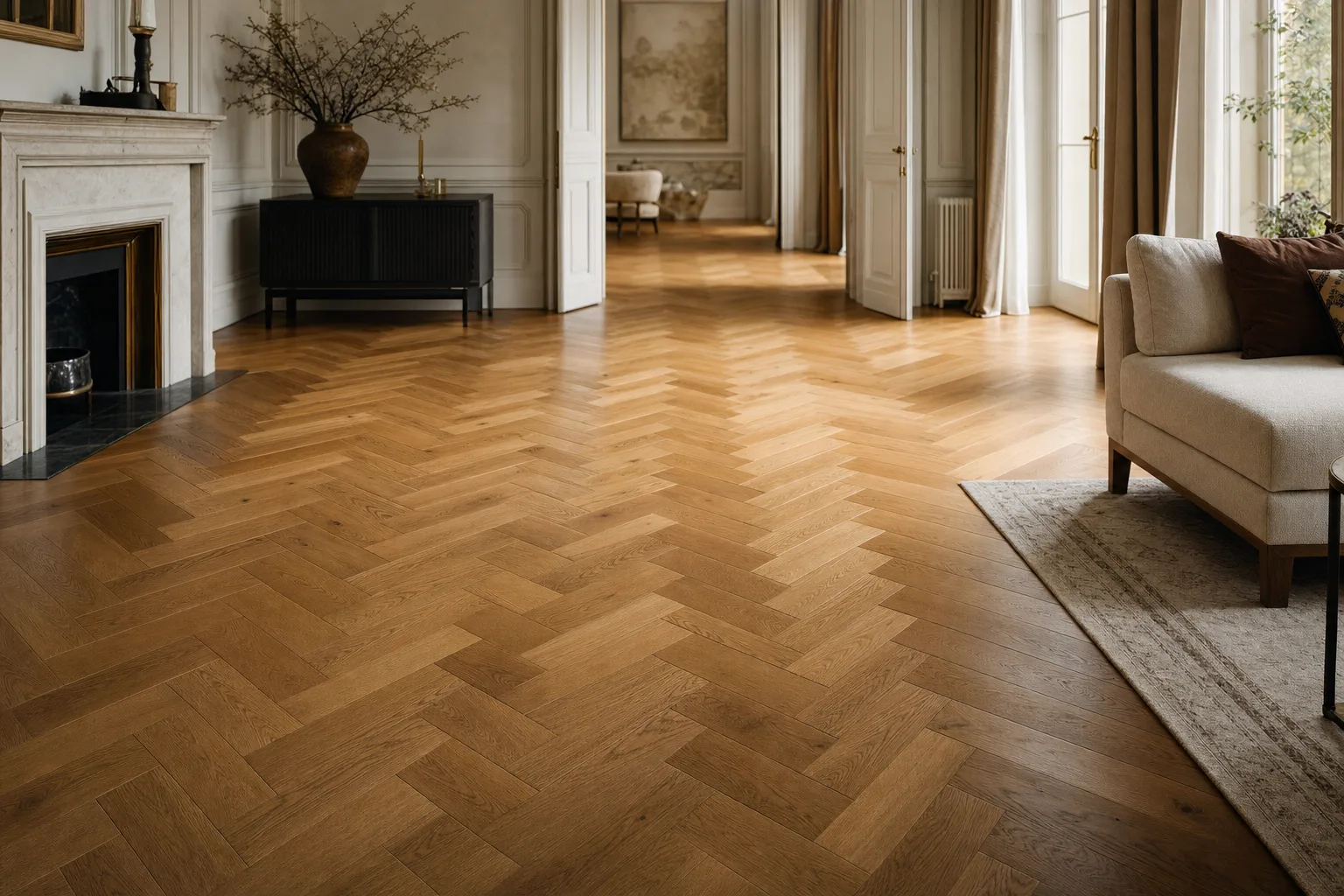
Herringbone and chevron are the luxury option for a living room — a strong visual statement that lends the space something of a stately interior. They suit larger rooms, from roughly 15 m² upwards, and classical schemes in particular. More detail in our guide to herringbone parquet. From our collection: Verona and Torino.
Living with it, practically
Furniture
Fit felt pads under every leg. Never drag heavy pieces such as sofas and bookcases — lift them clear. Use protective cups under table and chair legs.
Rugs
A rug under the sofa or the dining table protects the areas that take the most wear. Bear in mind that the covered floor ages differently: after a year you may see a colour step at the edge of the rug, where UV has reached the surrounding boards. Move rugs from time to time so the floor tones evenly.
Pets
Dogs and cats with untrimmed claws are a scratching risk. More on this in our article on parquet and pets.
Underfloor heating
Every floor in our collection is suitable for underfloor heating — though in a living room, a fully glued-down installation is the better choice. Full guide: parquet over underfloor heating.
Controlling humidity
Across most of Europe, winter indoors is dry — once the heating is on, relative humidity in a living room can fall to 25–30 %. Wood responds by shrinking, and fine gaps open between the boards. What helps:
- Hold relative humidity at 40–60 % — a humidifier through the heating season
- A hygrometer (indicatively €10–20, depending on country and retailer) so you can see the humidity in real time
- Bring the heating up and down gradually rather than in sudden steps
Care
- Daily: vacuum with a soft brush head
- Weekly: damp-mop with WOCA wood floor soap
- Yearly: an oiled floor benefits from a maintenance oiling
More in our care guide.
FAQ
Which parquet is best for a living room?
Three-layer engineered oak parquet. Lacquered or oiled, depending on the look you are after. A thickness of 14 mm is the all-round choice.
Which direction should the boards run?
At right angles to the main source of daylight — in practice, towards the windows.
Do I need a rug under the dining table?
It is worth having one: chair legs are the main cause of wear in that spot. Choose a rug without a rubber backing, since rubber stops the wood breathing.
Is it suitable for families with young children?
Yes — there is more on this in our article on parquet and children.
Ready to choose?
Order up to 3 free samples, or book a video consultation.